A Kafkaesque Haunting in Budapest
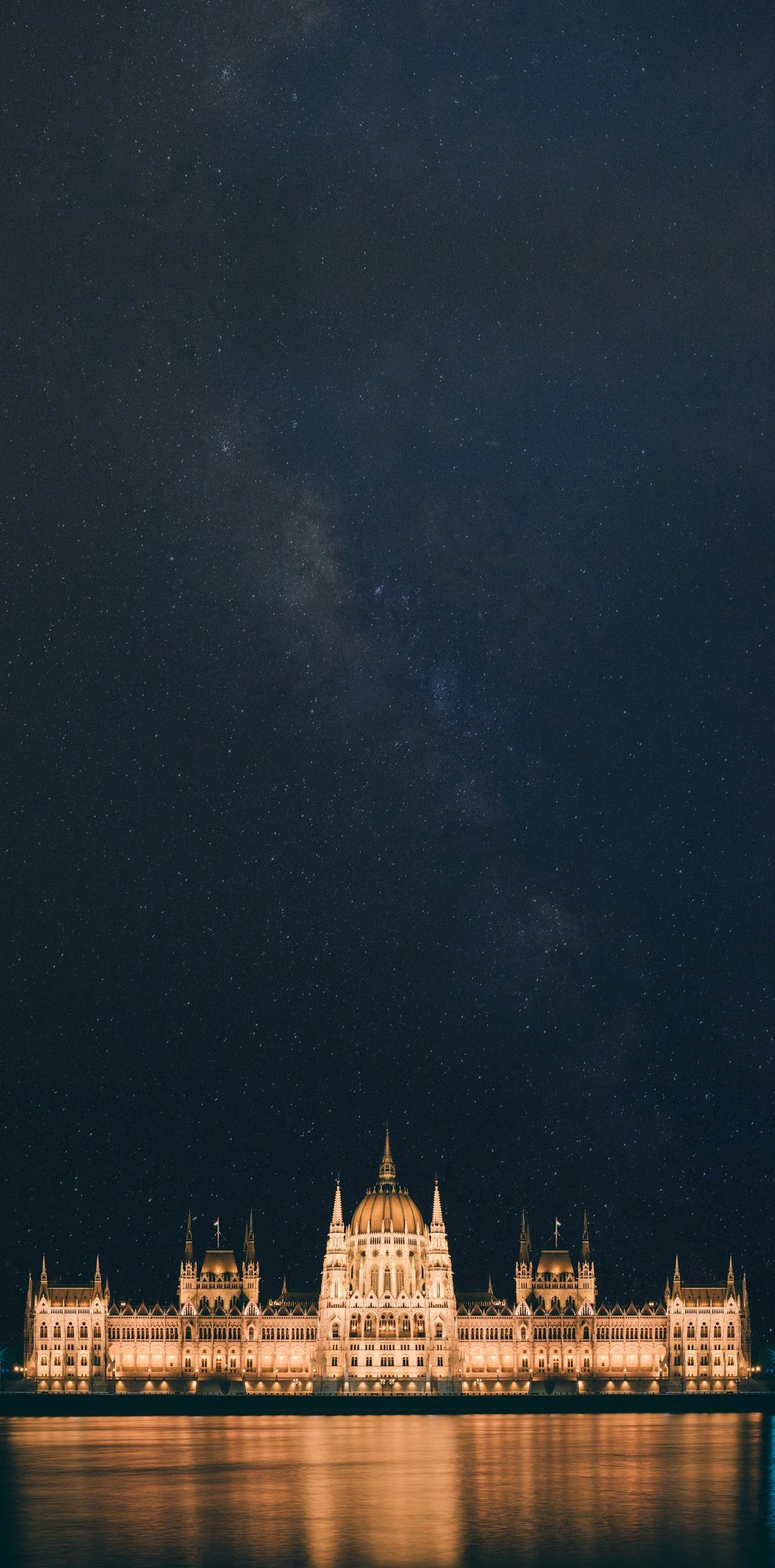
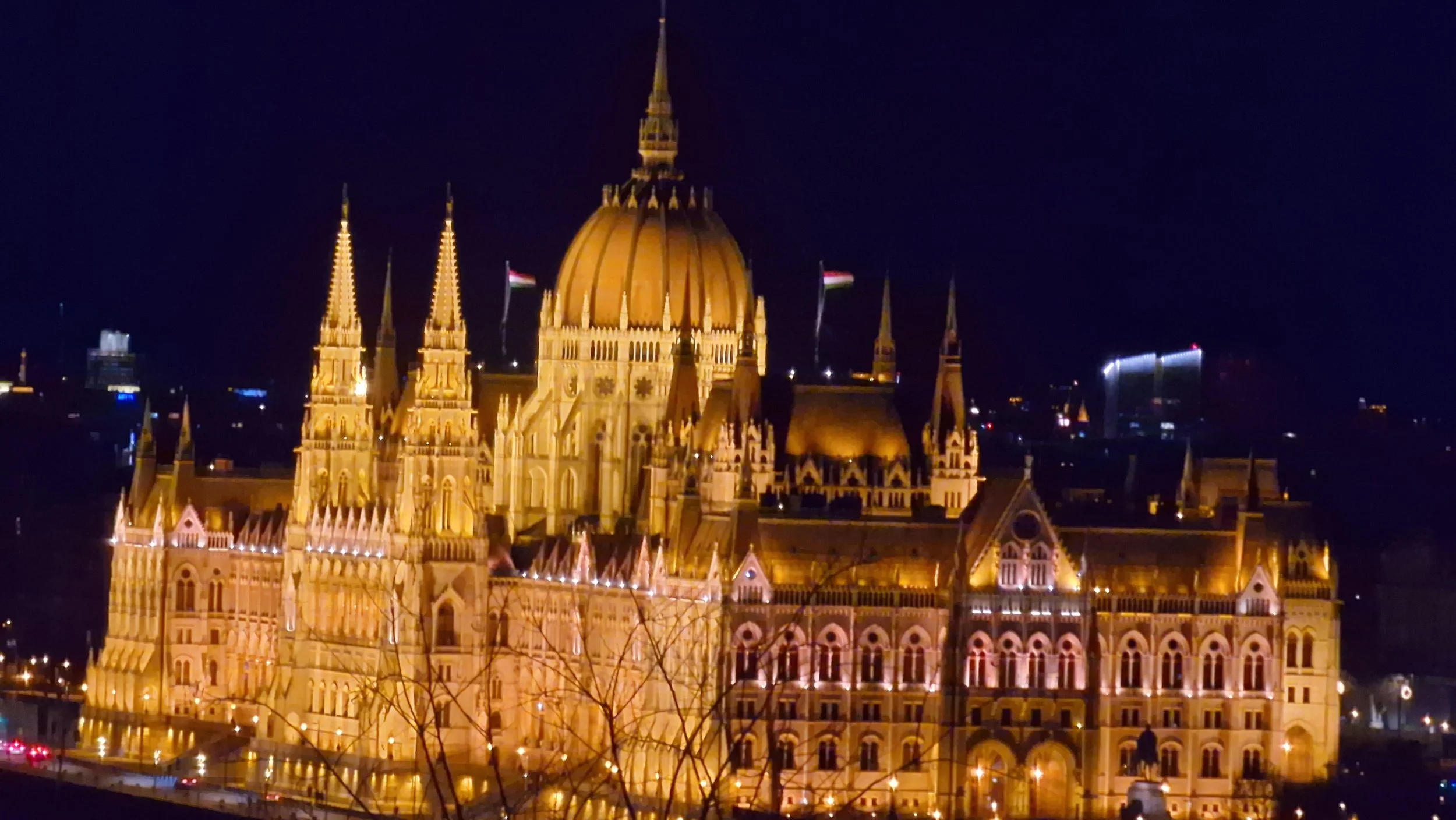
The Hungarian Parliament Building
Budapest in late December wears the cold like a tailored velvet coat. The sky hangs low and pearl-gray, wrapping the twin cities of Buda and Pest in a soft, frosty breath. Arriving on Christmas Day in 2025, my husband, our daughter, and I sought a quiet space to bridge the space between the holidays and the looming edge of a new year. We made our temporary home at the Marriott in Pest, a glass-and-steel anchor resting right on the banks of the Danube.
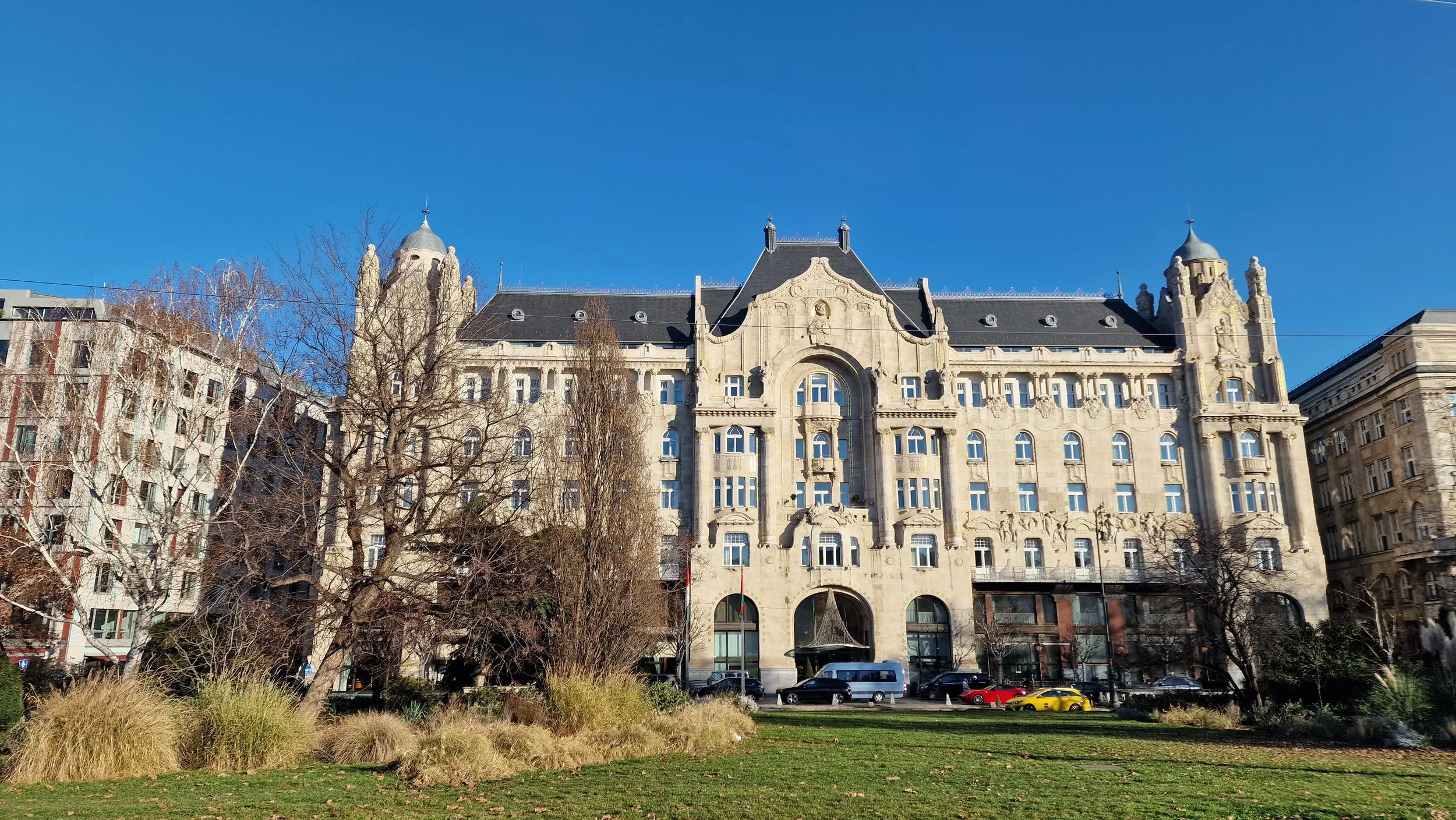
The Budapest Marriott Hotel sits gracefully on the bustling Danube promenade, a relic of 1969 born as the Duna InterContinental. Conceived during the late Communist era and envisioned by architect József Finta, its T-shaped concrete and glass form embodies the brutalist aesthetic of the time. Though its stark, utilitarian facade on the Pest side has drawn criticism for clashing with the city's historic charm, the structure redeems itself with its thoughtful design, offering uninterrupted, iconic views of Buda Castle and other parts of the city.
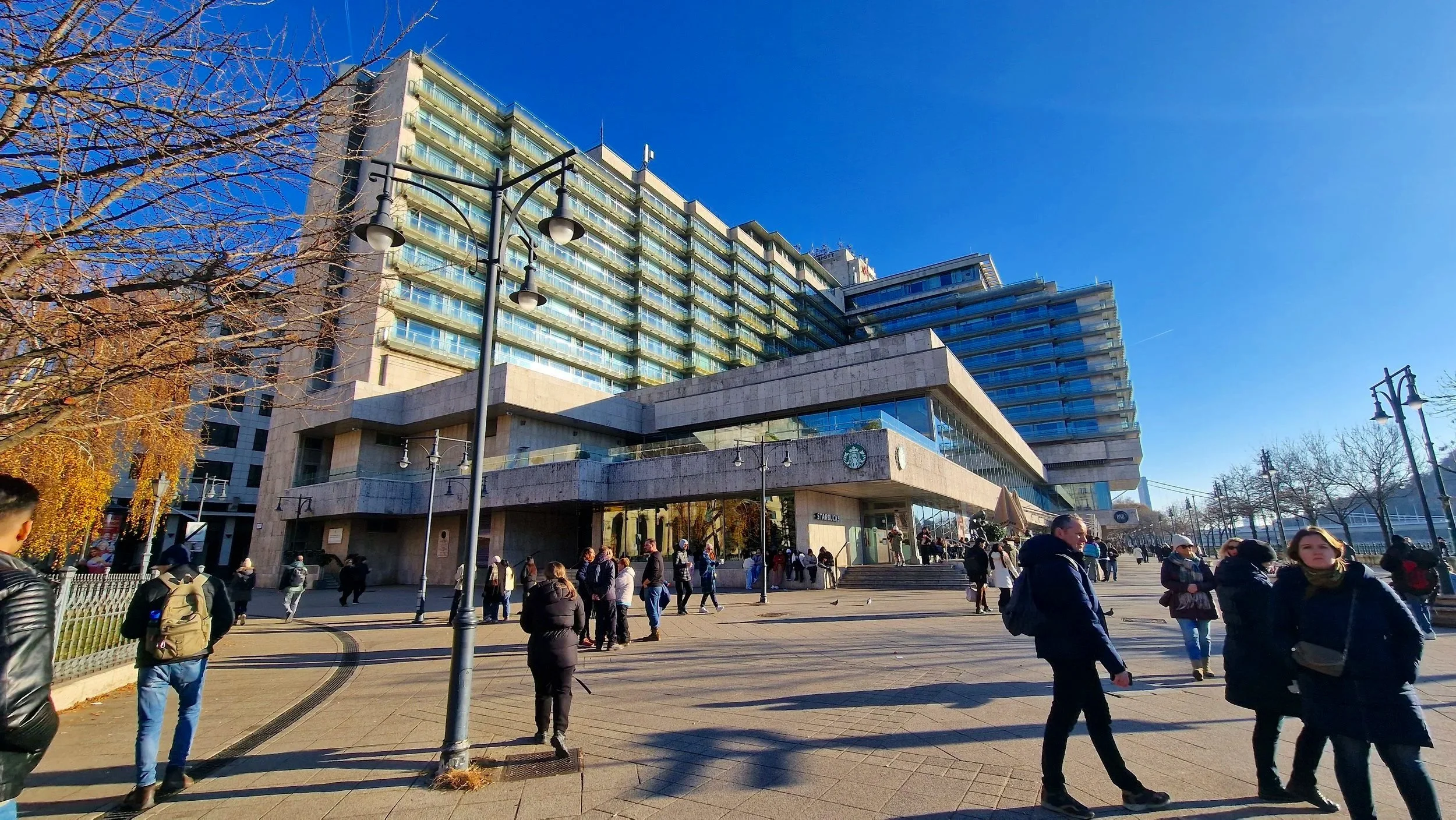
The exterior of the Marriott
While some may brand it as the "ugliest" structure in the city, its revitalized interiors and prime location have secured its standing as a luxury destination, marrying history with modern comfort. From our window, the river was a dark ribbon of mirrored glass, separating the flat, bustling energy of Pest from the crowned, hilly grandeur of Buda.
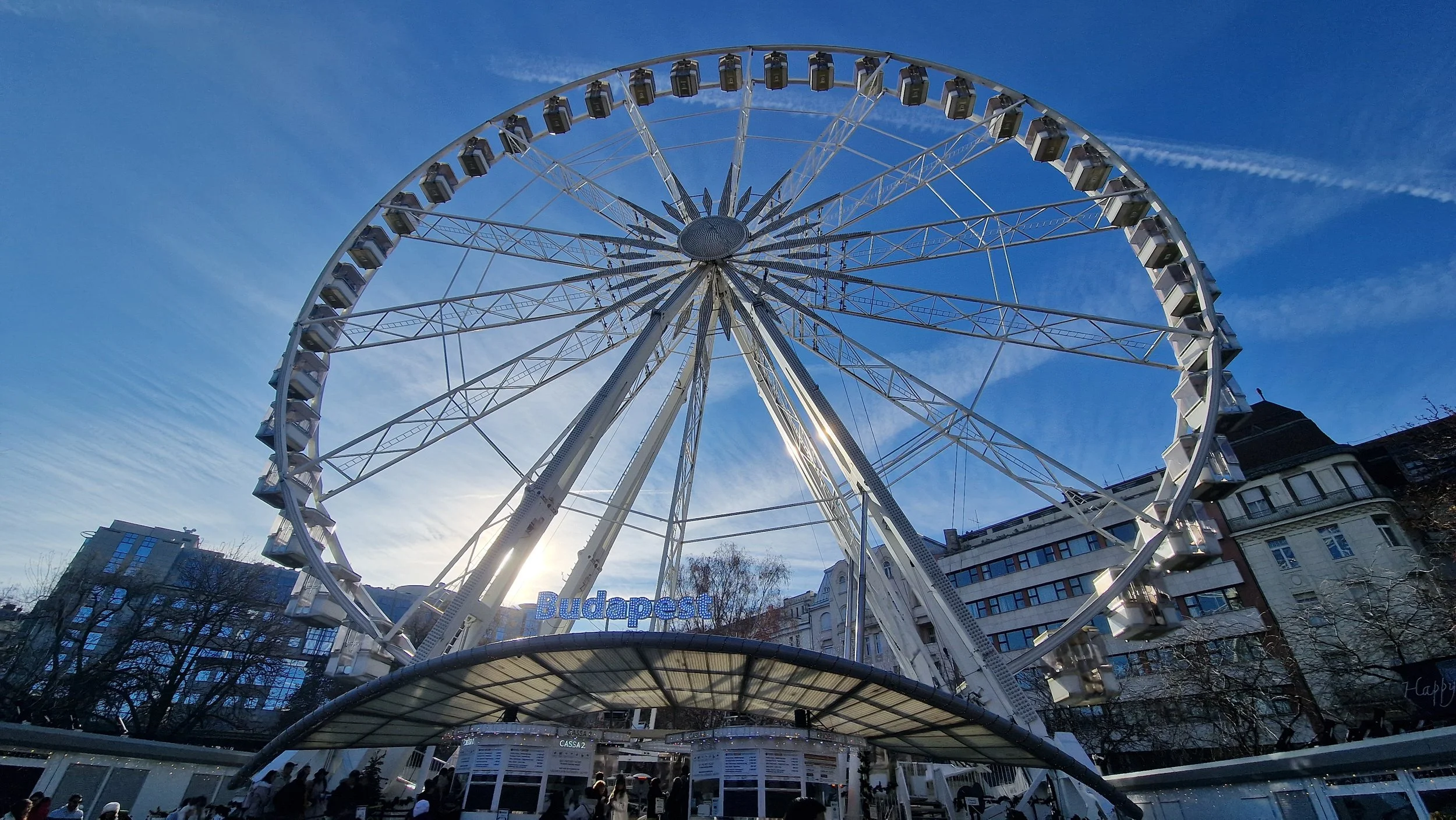
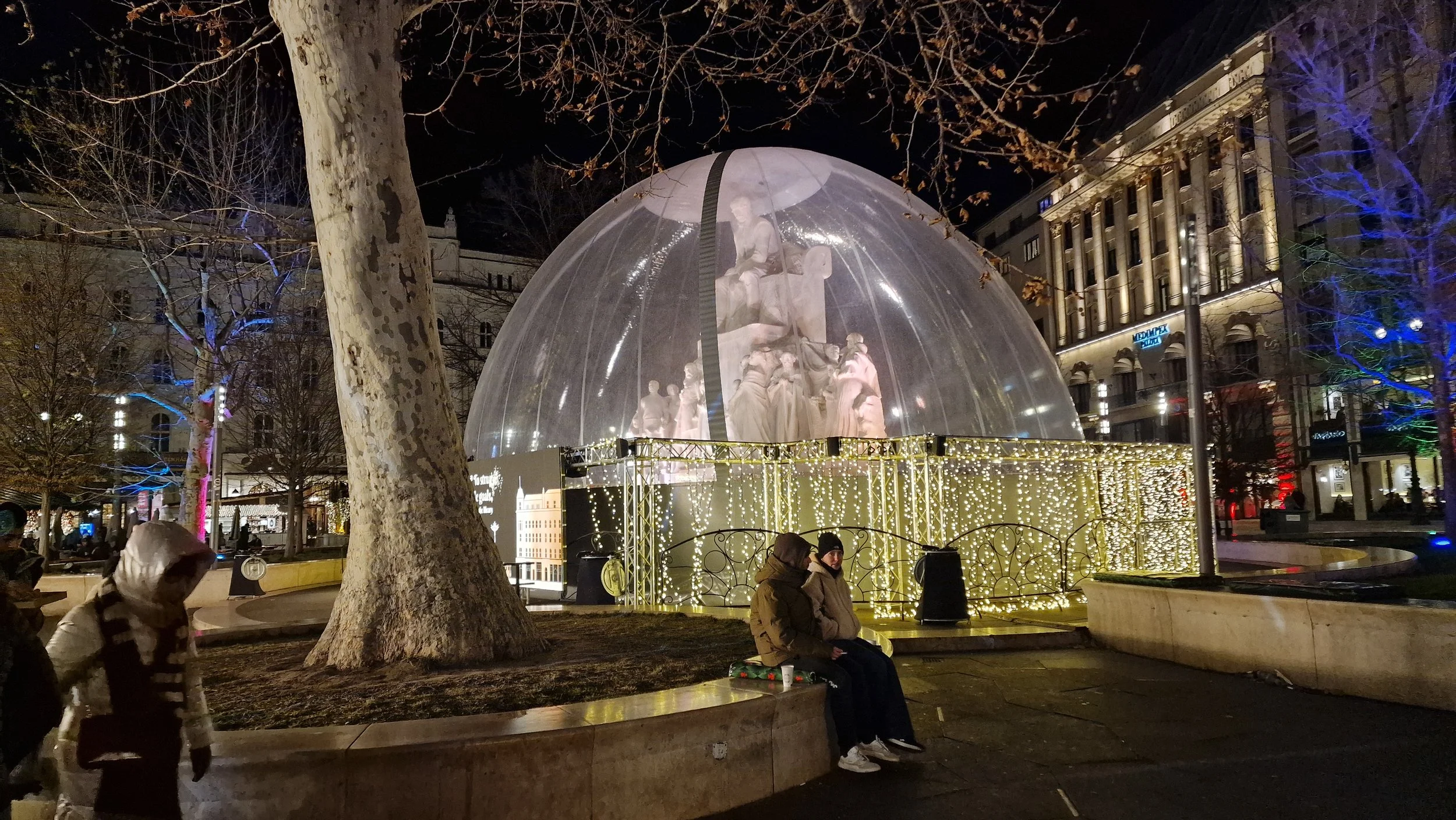
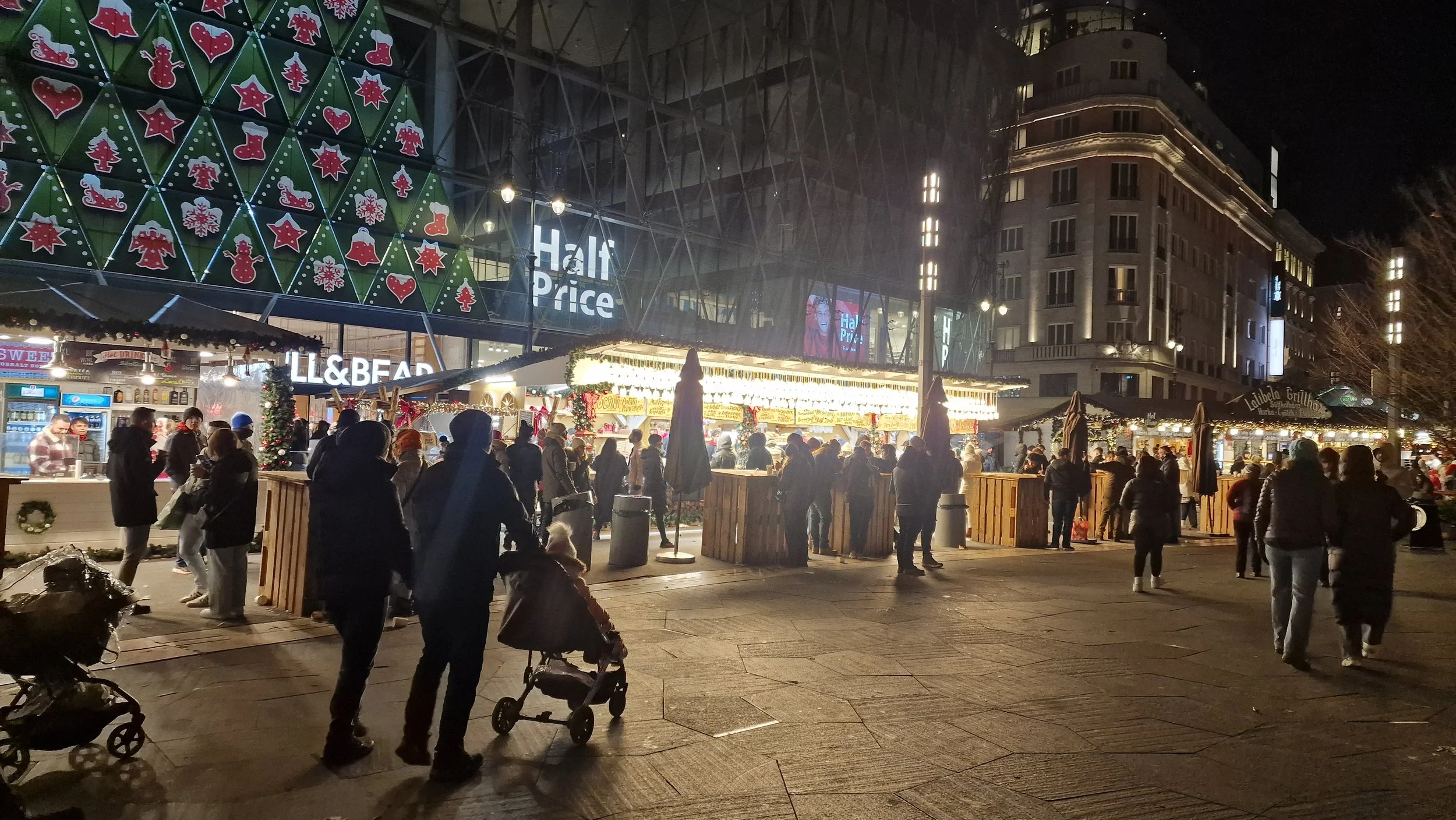
To walk through Budapest during the holidays is to walk through a living, breathing puzzle. The air hummed with the scent of roasting chestnuts, spiced hot wine, and cinnamon-dusted chimney cakes. We wandered through the sprawling Christmas markets, our boots tapping against the cobblestones. Our primary mission, aside from consuming as much local pastry as humanly possible, was a scavenger hunt of sorts. We were on a quest to find the perfect Rubik’s Cube, invented by Budapest native Ernő Rubik, for our daughter and her classmate who happens to be a champion. Born from the mind of a Hungarian architect, the colorful cube felt like the perfect metaphor for the city itself—complex, vibrant, and requiring patience to fully understand.
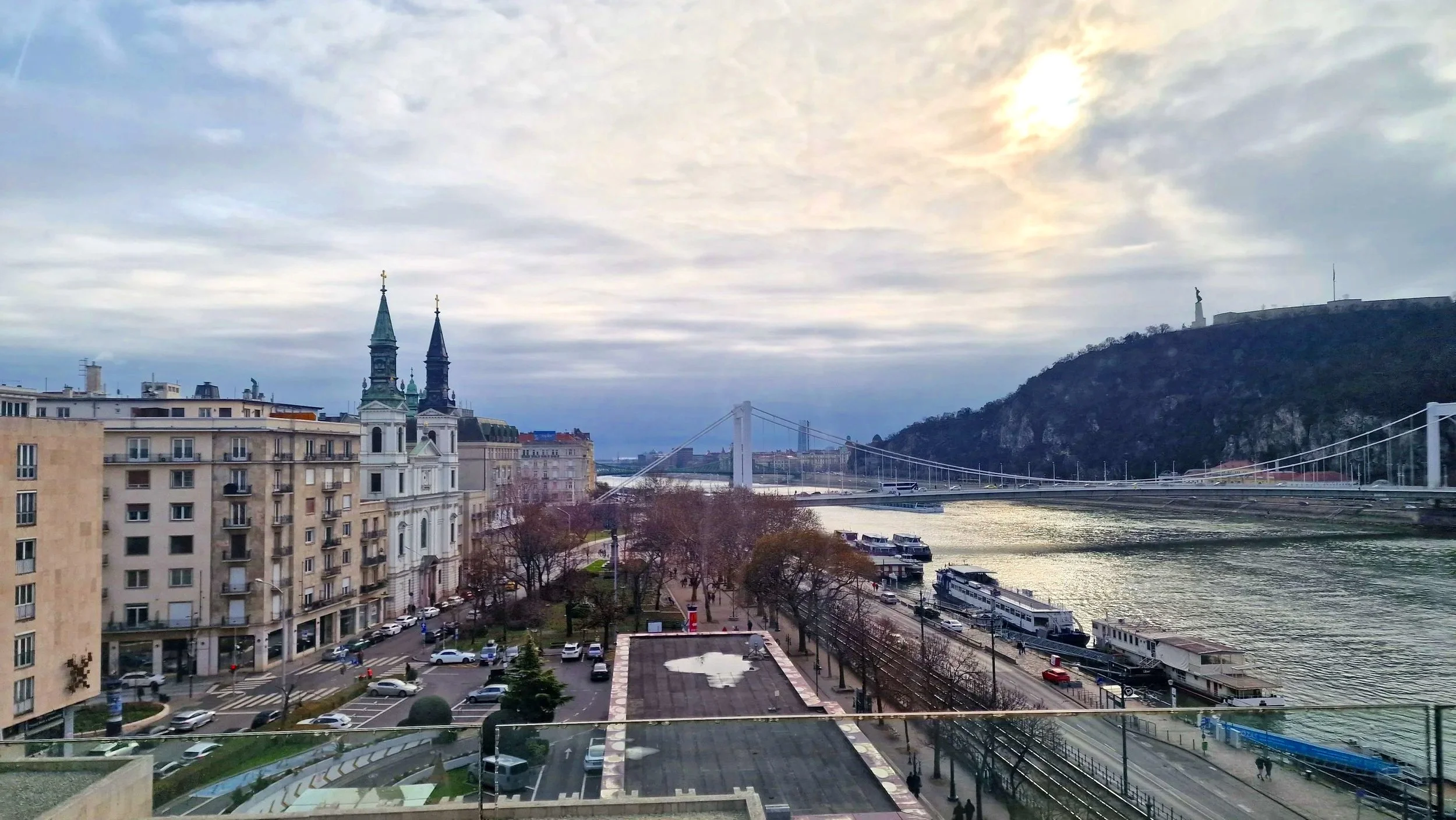
The view from our room
Yet, as we twisted and turned through the winding streets, I found myself navigating a completely different kind of labyrinth.
It started in the lobby of the hotel.
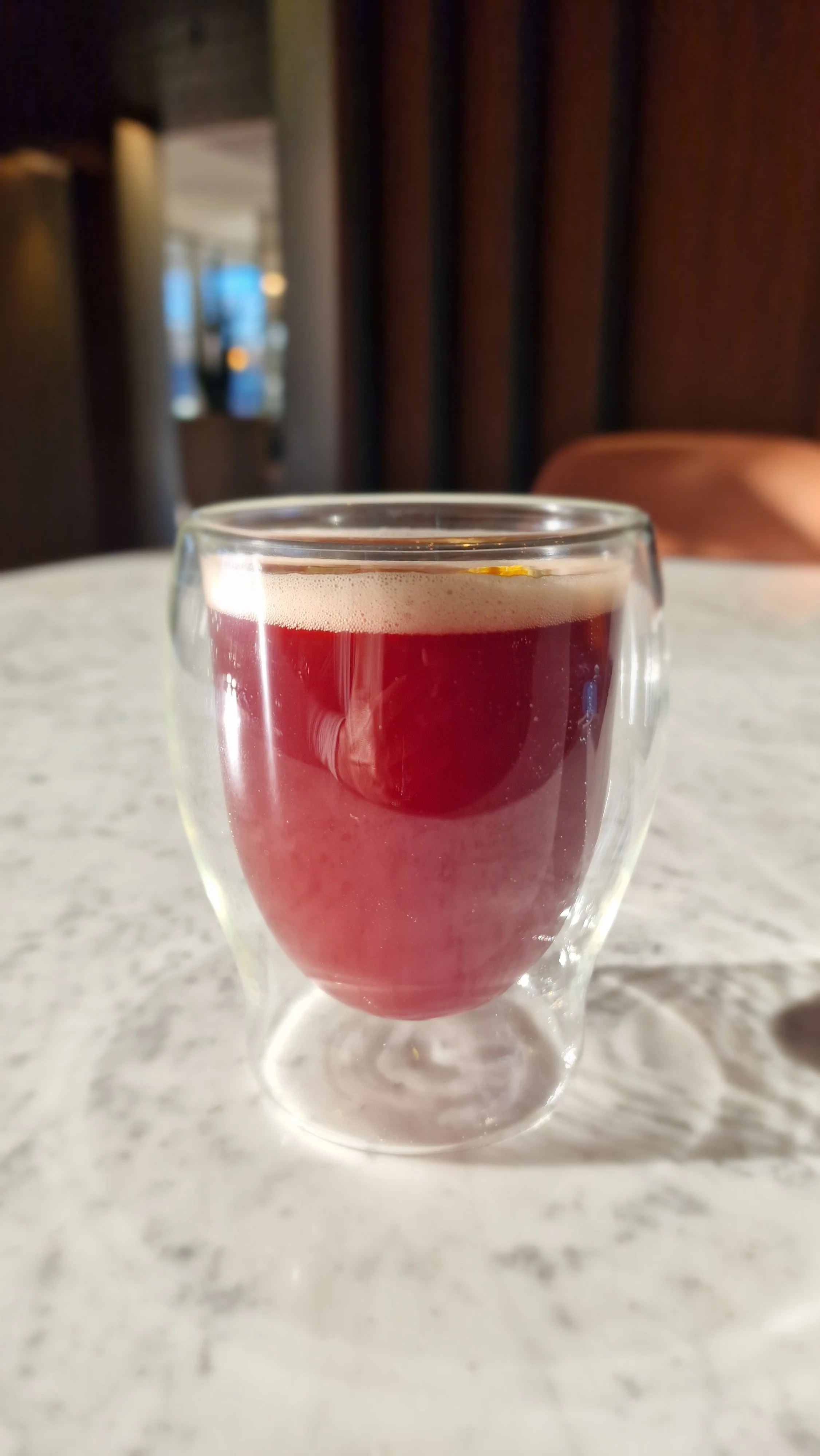
We had arrived at the hotel earlier than expected, the hum of the cab fading into the background as we stepped into the grand, yet oddly intimate lobby. The air carried the subtle aroma of polished wood and faint traces of lavender, calming but fleeting. With time to spare before check-in, we sat in a section with chairs and a long sofa, ordering a hot black tea. The deep amber liquid swirled in its porcelain cup, a momentary solace in the stillness of waiting. Iselda, quietly tired from the morning’s travels, resting her cheek on her hand to sneak in a nap on one of the plush sofas nearby, her head tipping back in restful surrender.
I sat across from her, savoring the warmth of the tea, yet something stirred—a prickle of awareness, like a whisper tugging at the edges of perception. The stillness of the lobby, while serene, felt charged, as though the air held the weight of unseen eyes. I glanced around, half-expecting to lock gazes with a curious observer.
However, this was no typical glance of a traveler. A man in a dark suit sat in an armchair quietly by a pillar, his olive complexion complemented angular, sharp cheekbones and dark hair. He looked so much like Franz Kafka. I blinked, dismissing it as a trick of the winter light. But the universe, it seems, has a delightfully absurd sense of humor.
He was reading a local newspaper, the folded pages crackling faintly as he turned them, though his attention kept drifting. Every so often, he would glance over at us—subtle, but deliberate enough to tease at the edges of my awareness. We sat quietly, sipping tea, the steam curling like fleeting whispers between us. Iselda, across from me, was nodding off in her chair. Her head would tilt forward as though surrendering to sleep, only for her eyes to flutter open momentarily before retreating again into fragments of dreams. The rhythm of her drowsing was almost hypnotic, a quiet counterpoint to the steady presence of the man by the pillar.
When Alex finally arrived, a relieved expression softening his usually serious demeanor, he announced that our room was ready. I set my cup down and leaned over to gently nudge Iselda awake. Groggy but compliant, she murmured something incoherent as I helped her to her feet. Together, we gathered our belongings and made our way toward the front desk and elevators. But to reach them, I had to pass the doppelgänger, still seated by the pillar. His gaze, steady and unwavering, locked onto mine as we approached. The closer we came, the more striking the resemblance became—those piercing eyes, that impossibly solemn demeanor, the haunted curve of his expression. It wasn’t just a passing similarity. He truly did look like Kafka.
It struck me then, how rare it is these days to see a man in his late thirties, perhaps early forties, engrossed in the quiet ritual of reading a newspaper, as if time itself had paused to accommodate the weight of his contemplation.
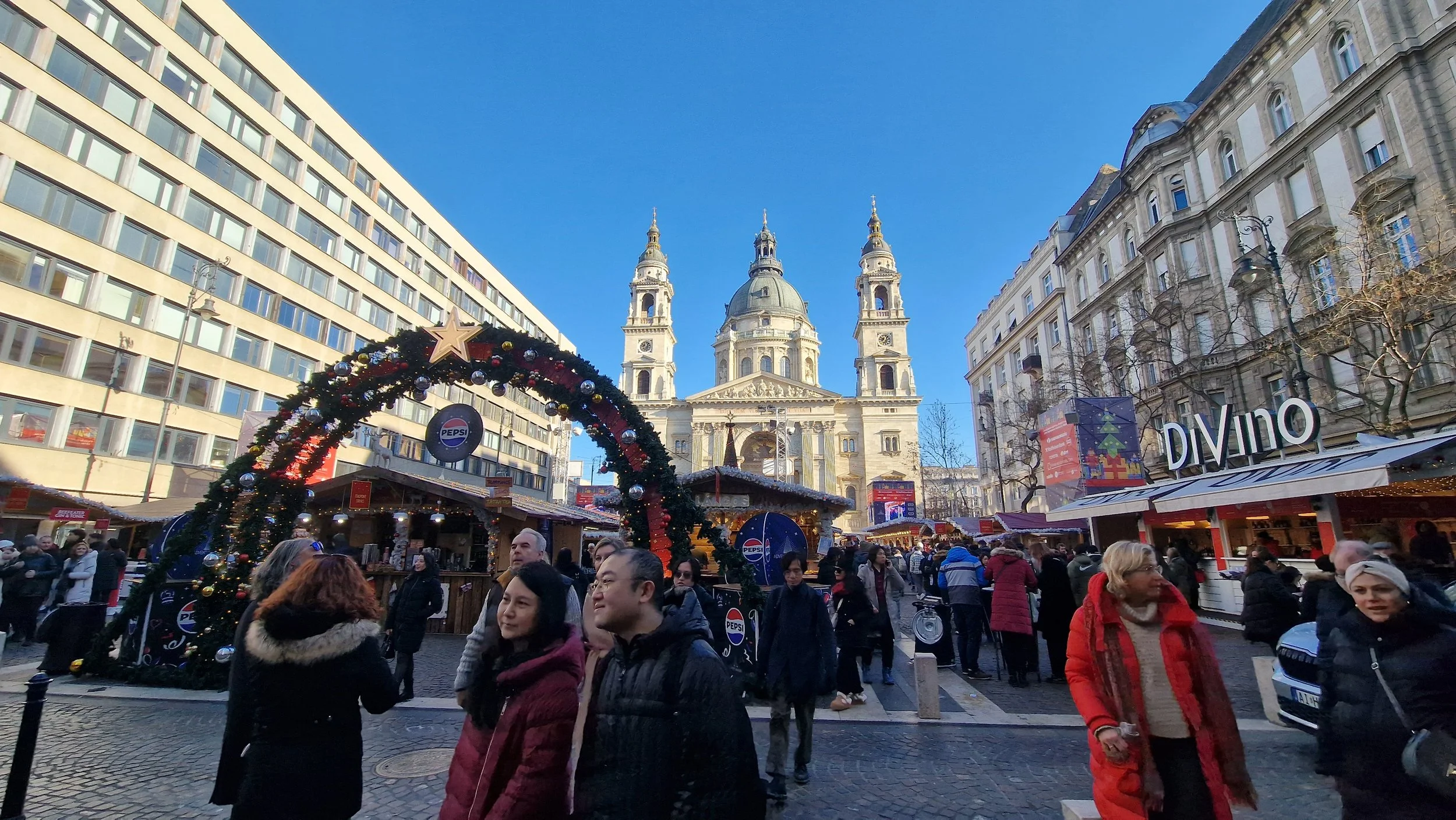
St. Stephen’s Basilica Market
I offered him a brief, polite smile in acknowledgment, the kind you give to dispel tension while silently asking with your eyes, “Who are you?” Yet, even as we walked past, his eyes followed us, dark and unrelenting, as though he were unraveling some mystery only he could see. The hair on the back of my neck prickled. Uneasy, I turned to chat quietly with Iselda, my words a thin veil over the sensation of being watched. But in the periphery of my vision, his gaze lingered, tethering me to a peculiar, restless curiosity I couldn’t quite shake.
Over the next few days, the ghost of Kafka seemed to photobomb our family vacation. At a crowded historic café, beneath the warm glow of Belle Époque chandeliers, a Gen Z version of Franz sat across the room, resting his chin on his hand in comic resignation while his companion chattered away. Later, while walking through the grand aisles of the Great Market Hall near our hotel—a cavernous iron-and-glass cathedral filled with strings of red paprika and fresh produce—a tall, dark-haired man brushed past me. The same look, build, and height. The same intense, unyielding stare.
It was all a blur
Was the city conspiring to force me into deep self-confrontation, or was Budapest simply prone to producing Kafka lookalikes? I decided to lean into the poetry of it. There is a strange liberation in realizing that even amidst the joyous chaos of a family trip, a little bit of surreal mystery can quietly follow you down the street.
Funny enough, I wondered if Alex was noticing this too as I was doing my best not to stare. His eyes darted around, scanning the market as if searching for an elusive certainty amidst the vibrant blur. He muttered a few times, "I don't like it here," and I couldn't help but laugh a little to myself. I couldn't blame him if he actually was noticing the parade of Kafkas. There was something intoxicatingly odd about being enveloped in this place—an unspoken synchronicity between the buzzing stalls and my wandering thoughts, a collision of the ordinary and the absurd. I kept those moments to myself until nighttime when I had time to sketch more Kafka'-inspired pieces.
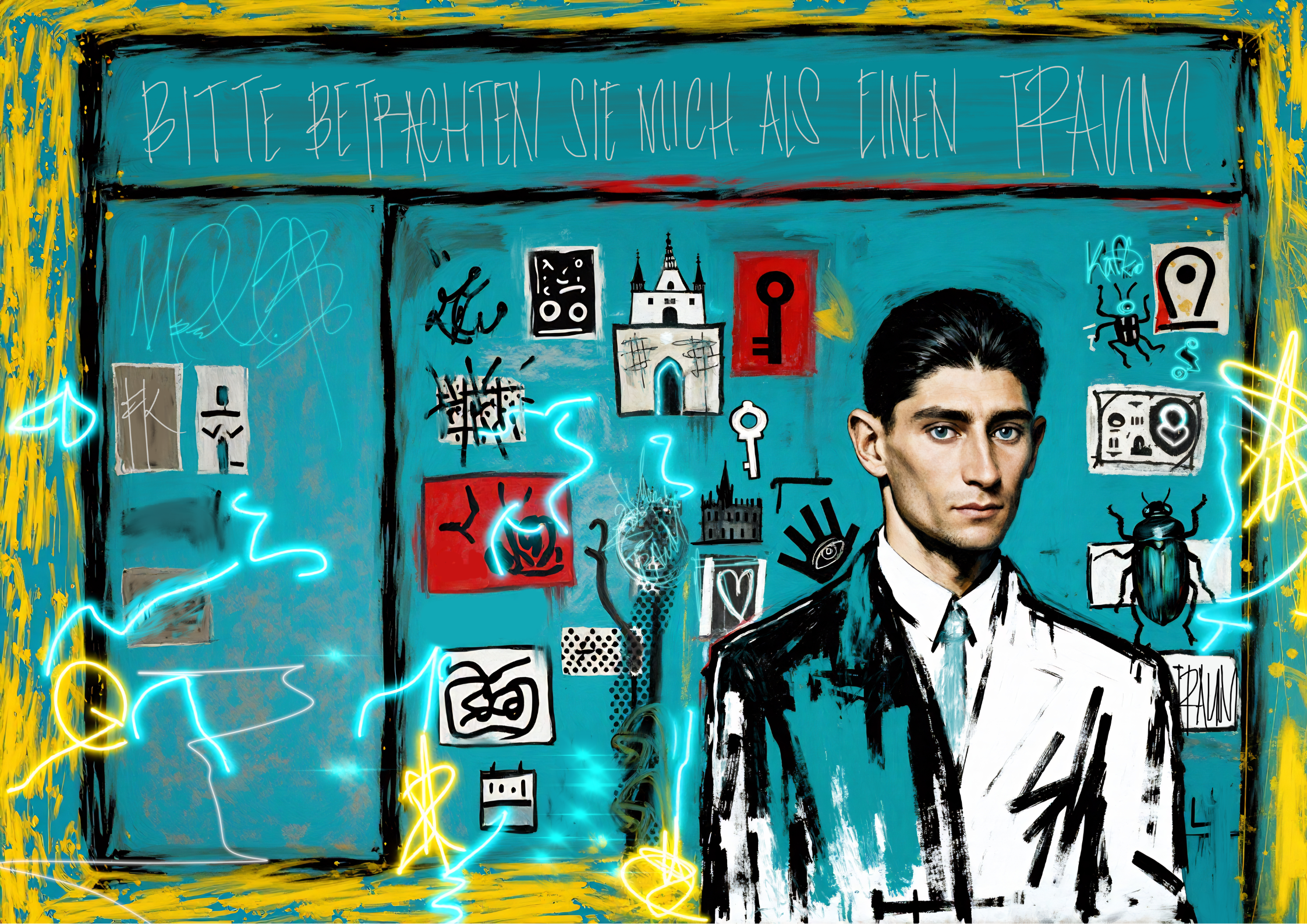
Please consider me to be a dream…
The next day, we visited the House of Terror, a museum housed in the former headquarters of the fascist and communist secret police. While video and photography are mostly restricted, one couldn't help but want to communicate how heavy this place feels.
The House of Terror is more than a museum; it is a dense archive of human suffering and ideological enforcement during Hungary's mid-century turmoil. Its permanent exhibition charts the oppressive grip of Communism, including rooms filled with the stark reminders of surveillance, forced labor, and propaganda. Yet, while the Fascist Arrow Cross regime is acknowledged, the weight leans heavily upon the era of Soviet-backed control. The curation feels deliberate, a sculpted narrative wherein certain shadows loom larger than others. Even the bookshop, tucked neatly at the exit, betrays this slant—with shelves notably featuring pro-Orbán and pro-Kremlin volumes with silly Lenin bust candles. It’s a juxtaposition that lingers, reflecting the museum’s own choreography of history, memory, and power.
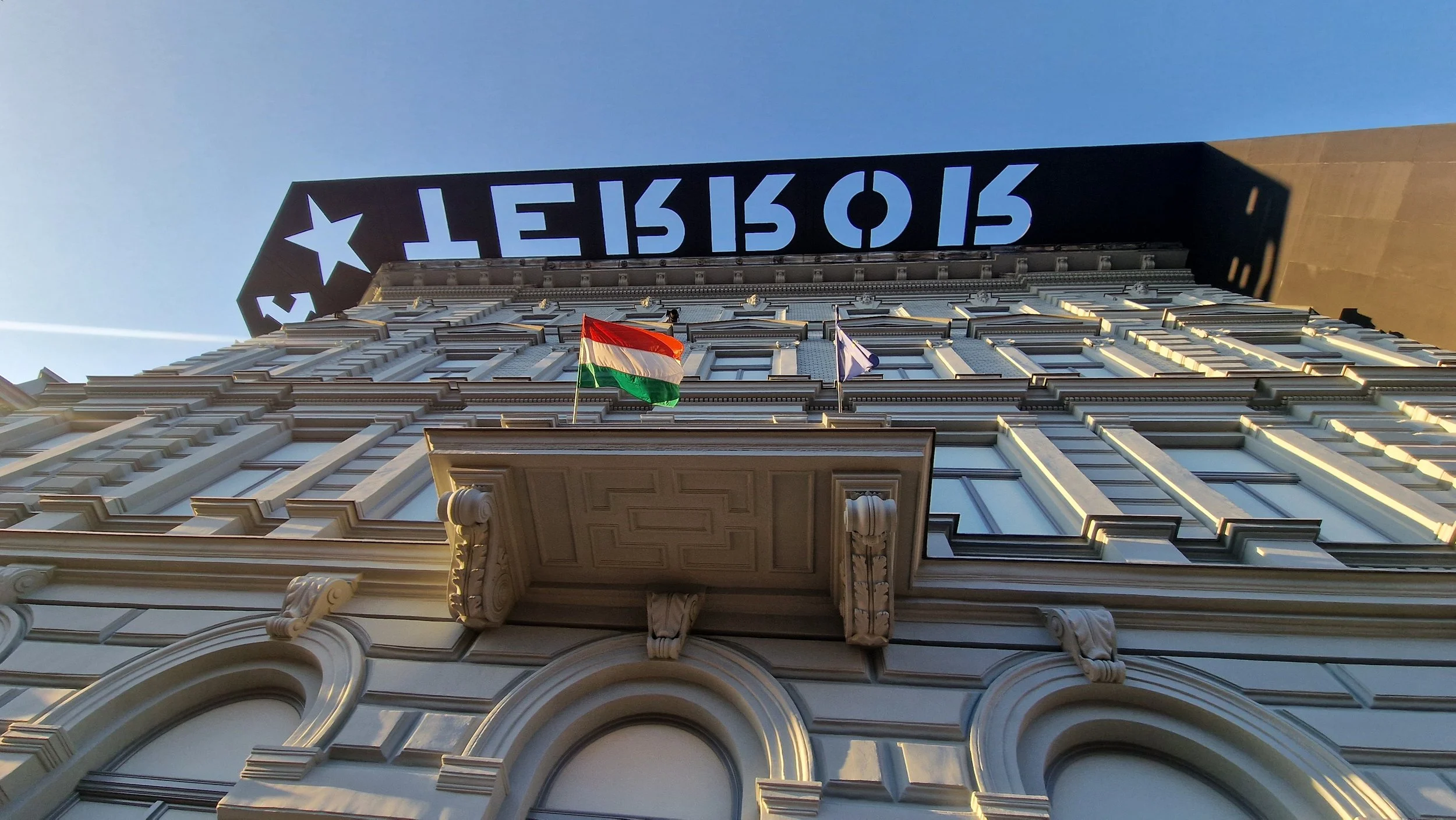
Museum of Terror
The heavy, utilitarian walls within echo with the unimaginable weight of the past. It is not an easy place to visit, but it is a necessary one. To truly see a city, you must look at its scars. Budapest does not hide its fractures; it stands tall despite them, a testament to the fierce resilience of the human spirit. Yet, the curation leaves one to wonder.
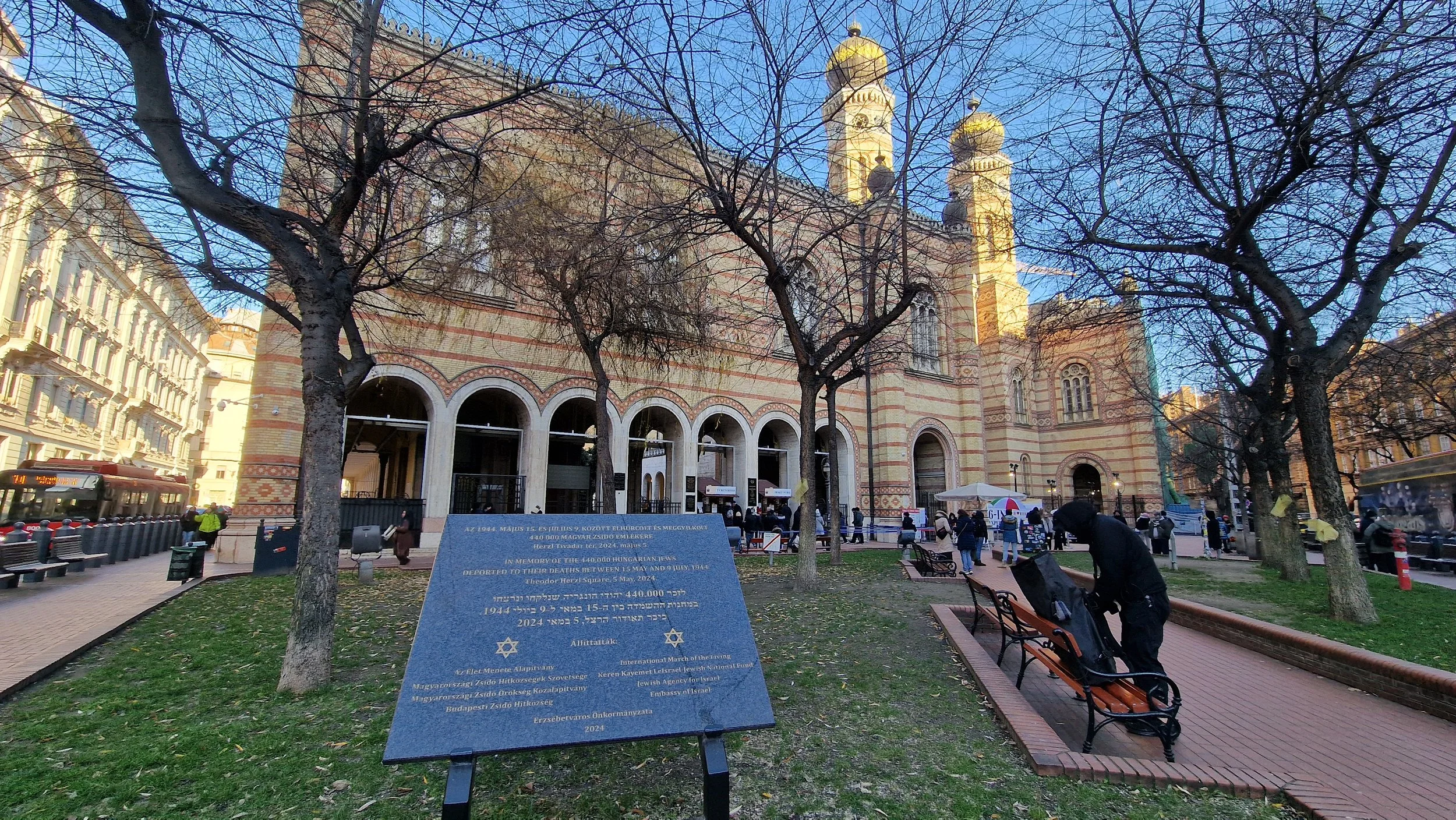
Of course, Budapest holds much deeper, darker histories than my spectral literary encounters. We stepped out of the cold and into the cavernous hush of the Dohány Street Synagogue. The sheer scale of its beauty is staggering, but it is the weeping willow memorial in the courtyard—each metal leaf bearing the name of a lost loved one—that anchors you to the earth. By this time, I had sighted Kafka at least five times, but the synagogue marked the sixth.
The Dohány Street Synagogue, often referred to as the Great Synagogue, is the largest in Europe and the second largest in the world. Constructed between 1854 and 1859, its Moorish Revival architecture reflects a blend of cultural influences, inspired by Islamic and Romantic styles. This sacred place bore witness to Budapest’s darkest hours during the Holocaust, as it stood at the border of the Jewish Ghetto. Within its walls, thousands sought refuge, while the courtyard became a burial ground for those who lost their lives during the brutal winter of 1944-1945. Today, the synagogue remains a monument of resilience and remembrance, intertwining beauty with the weight of history.
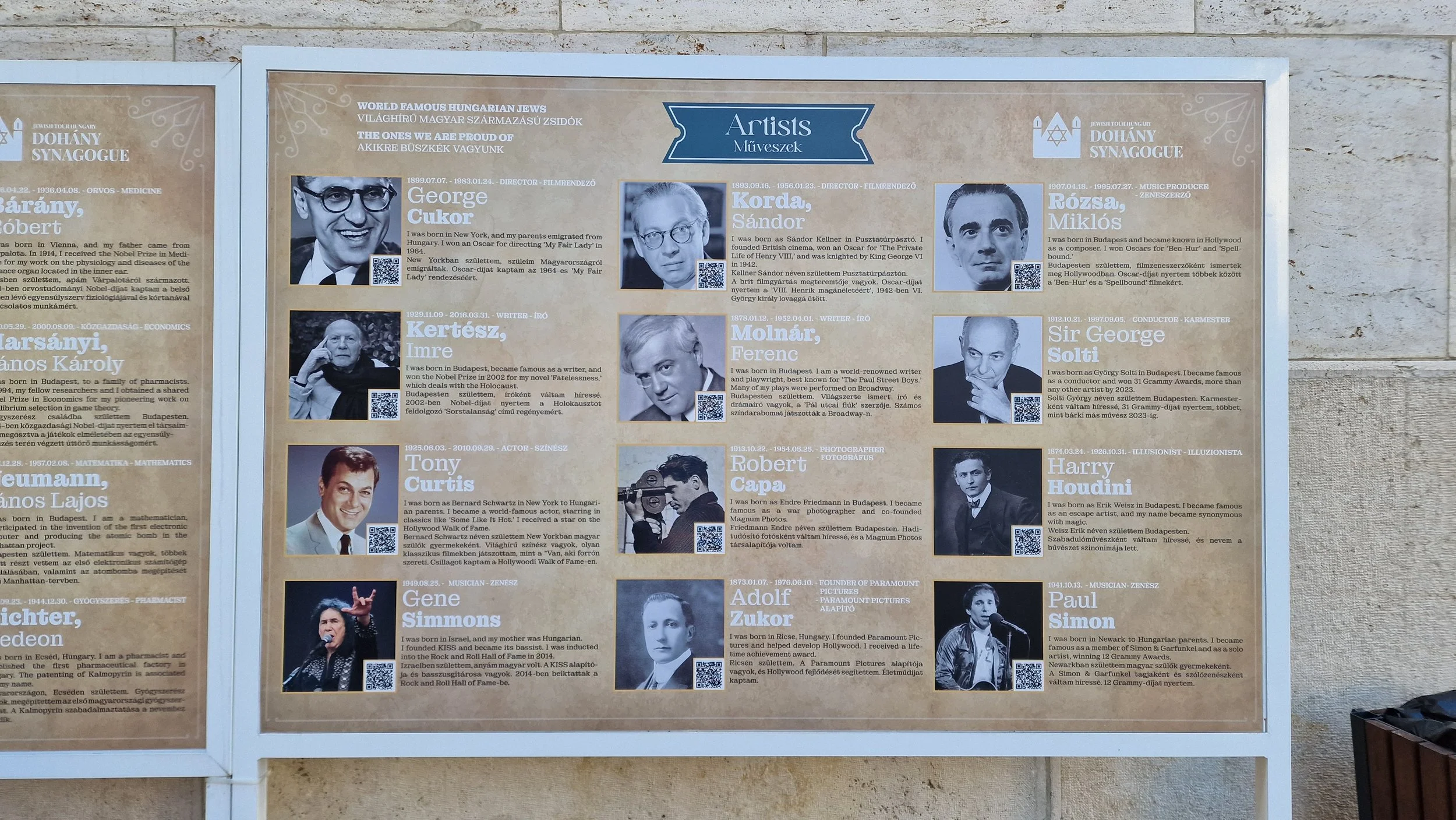
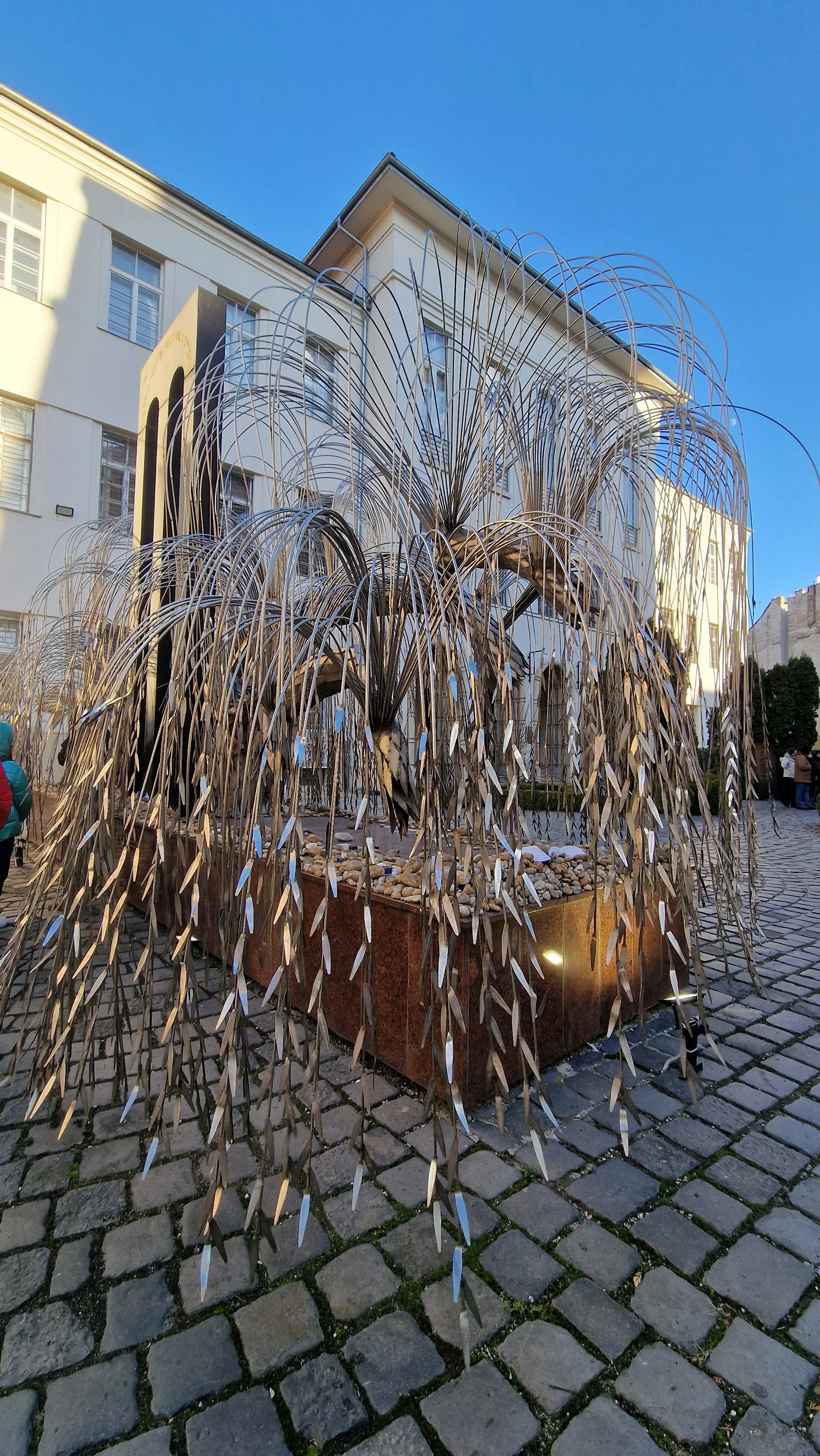
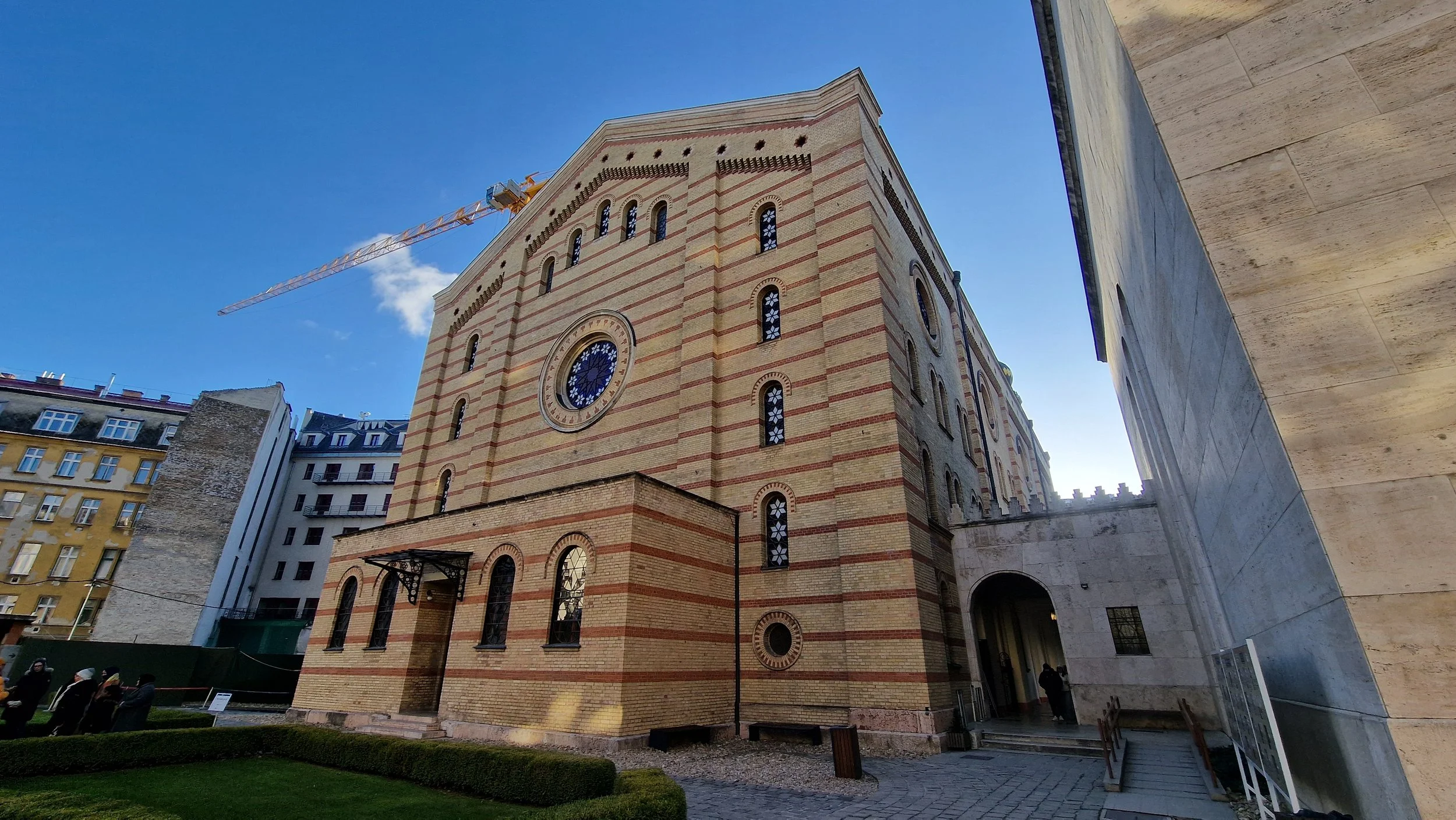
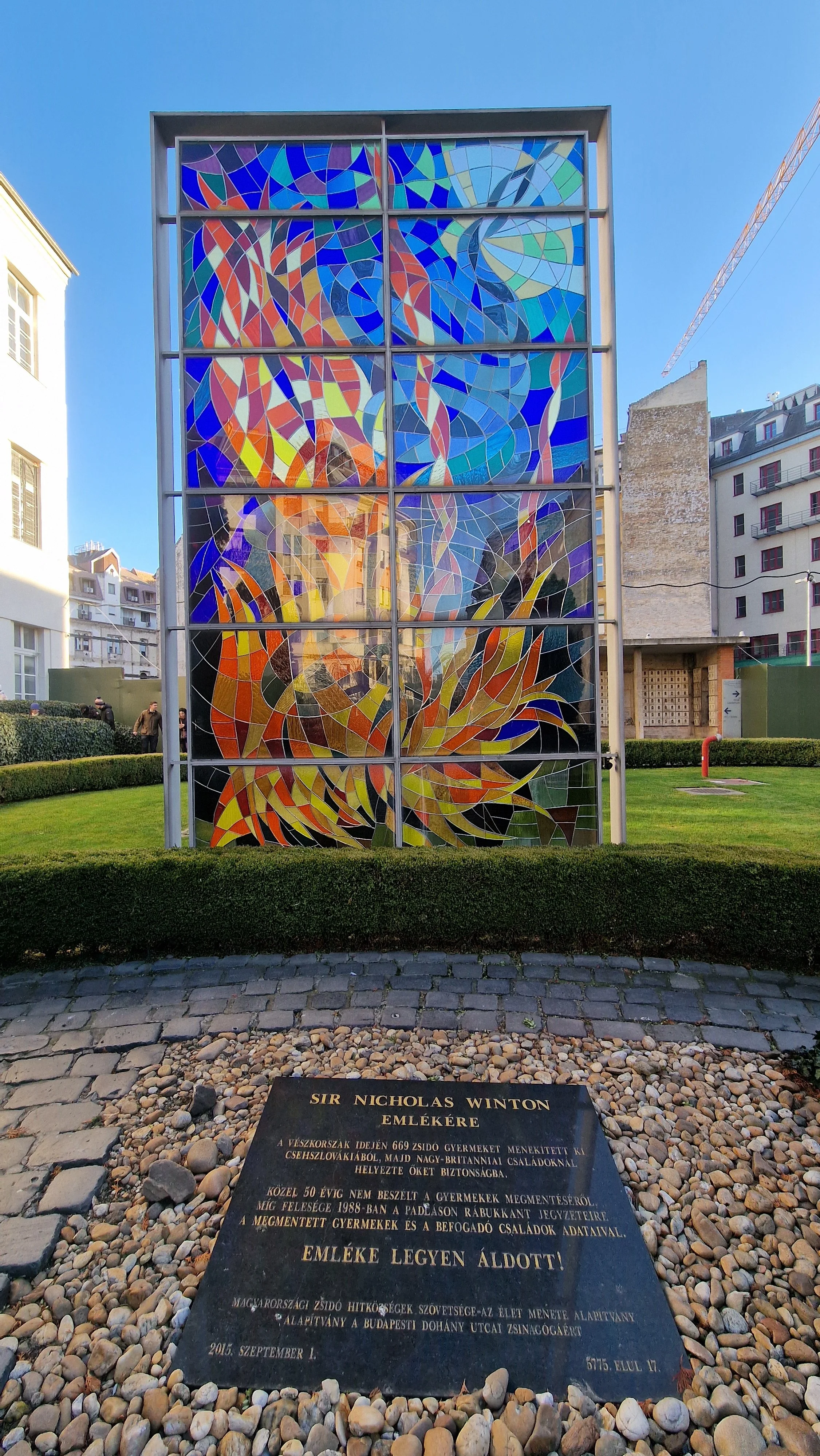
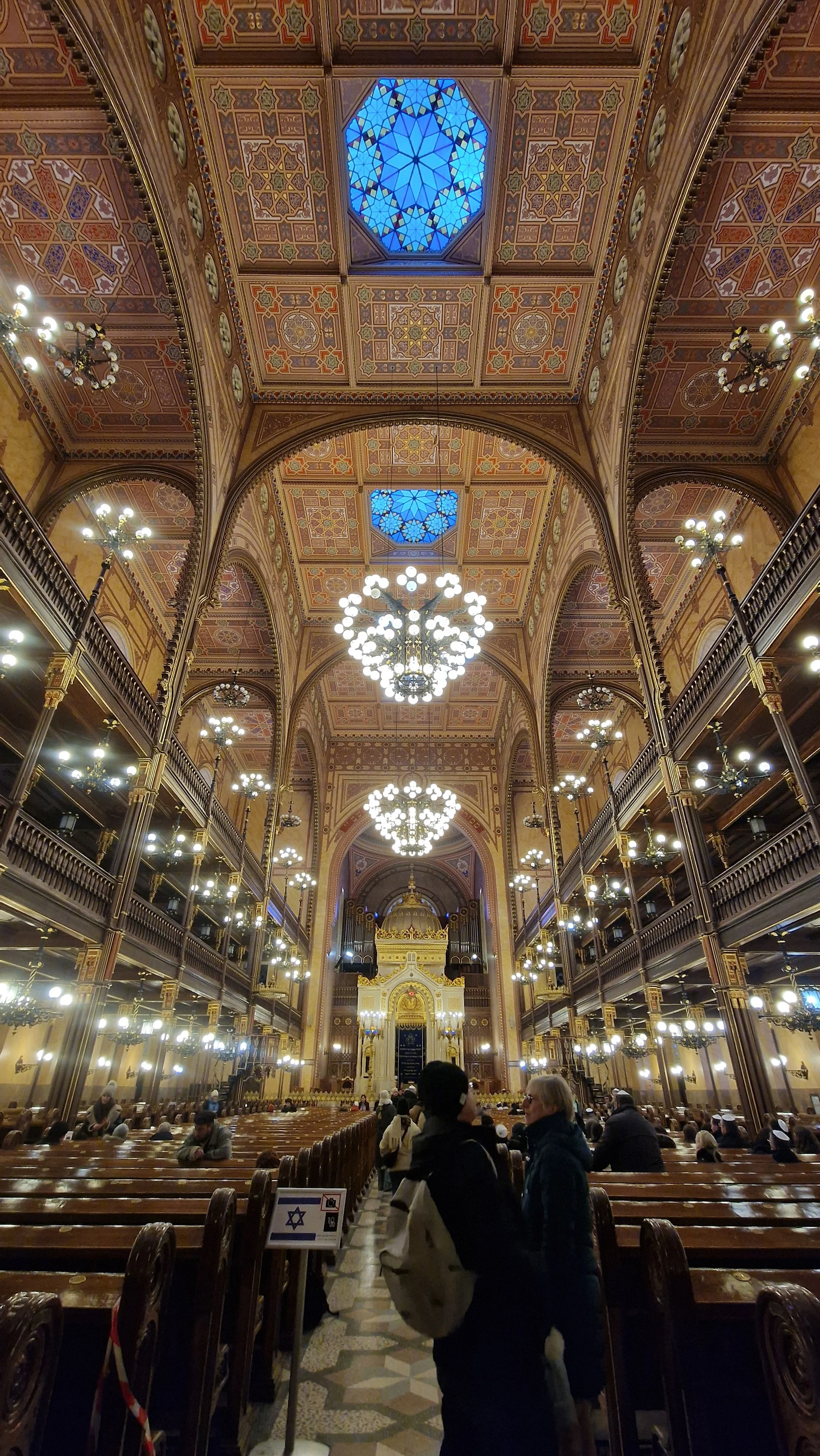
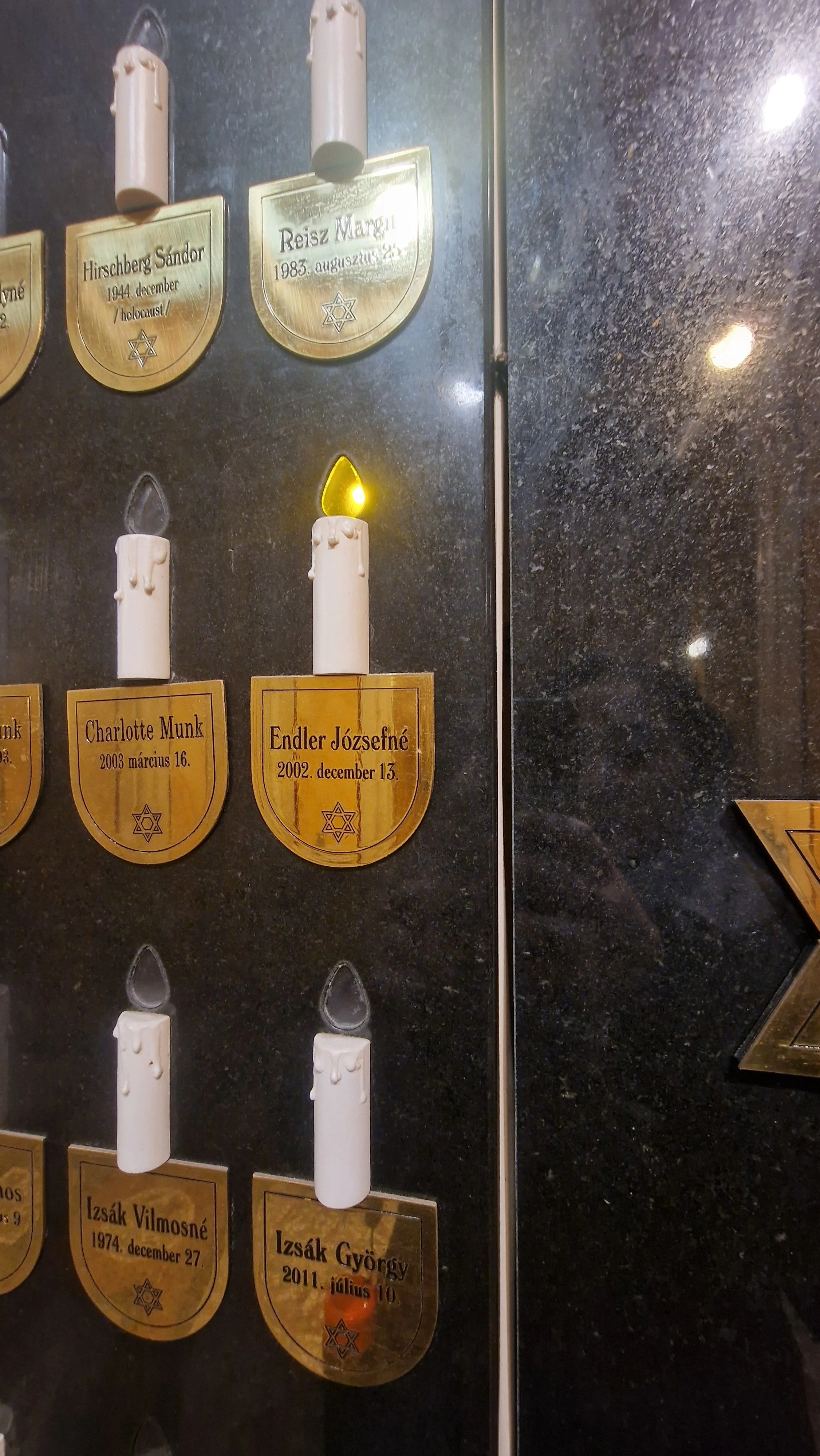
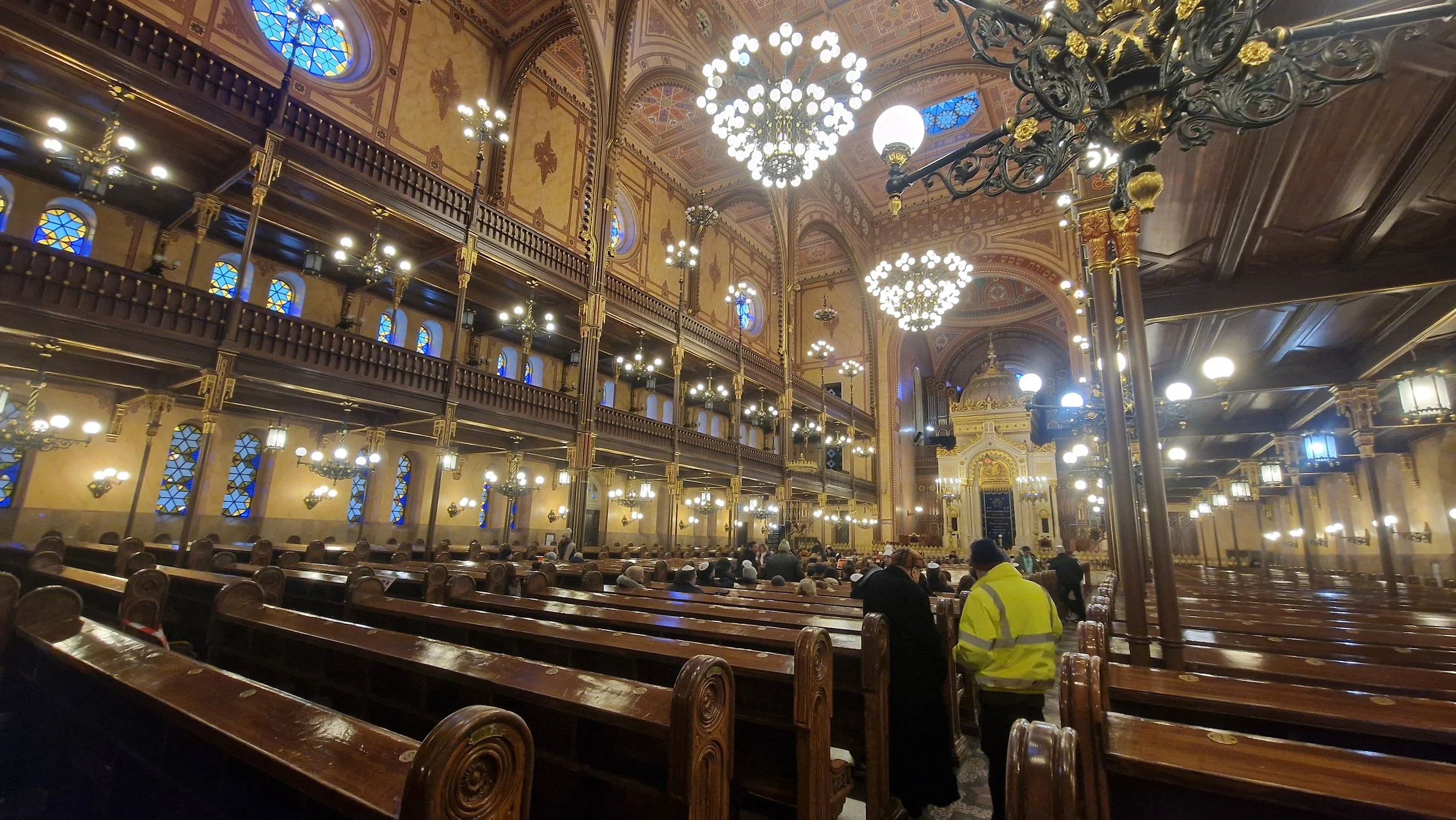
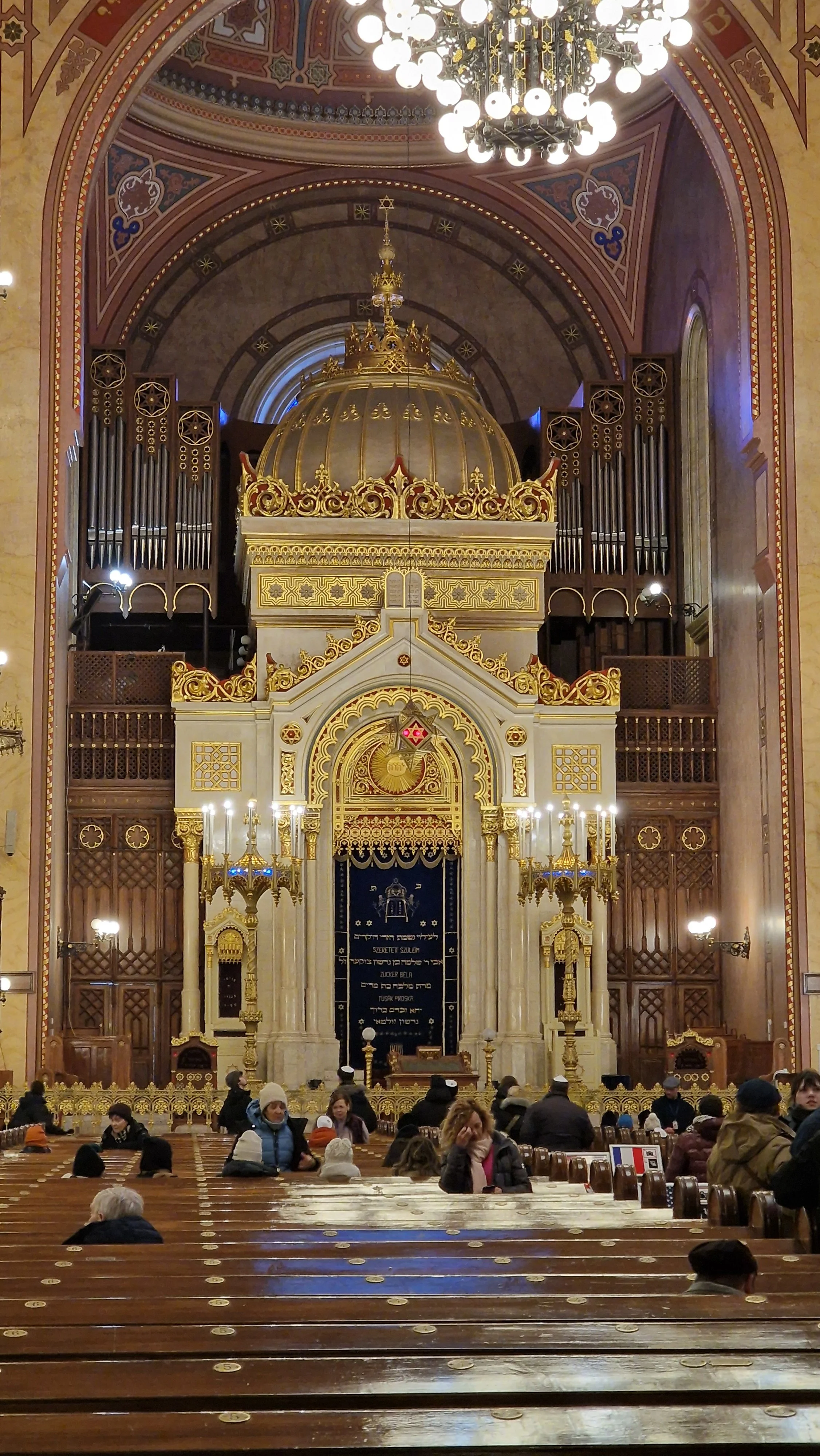
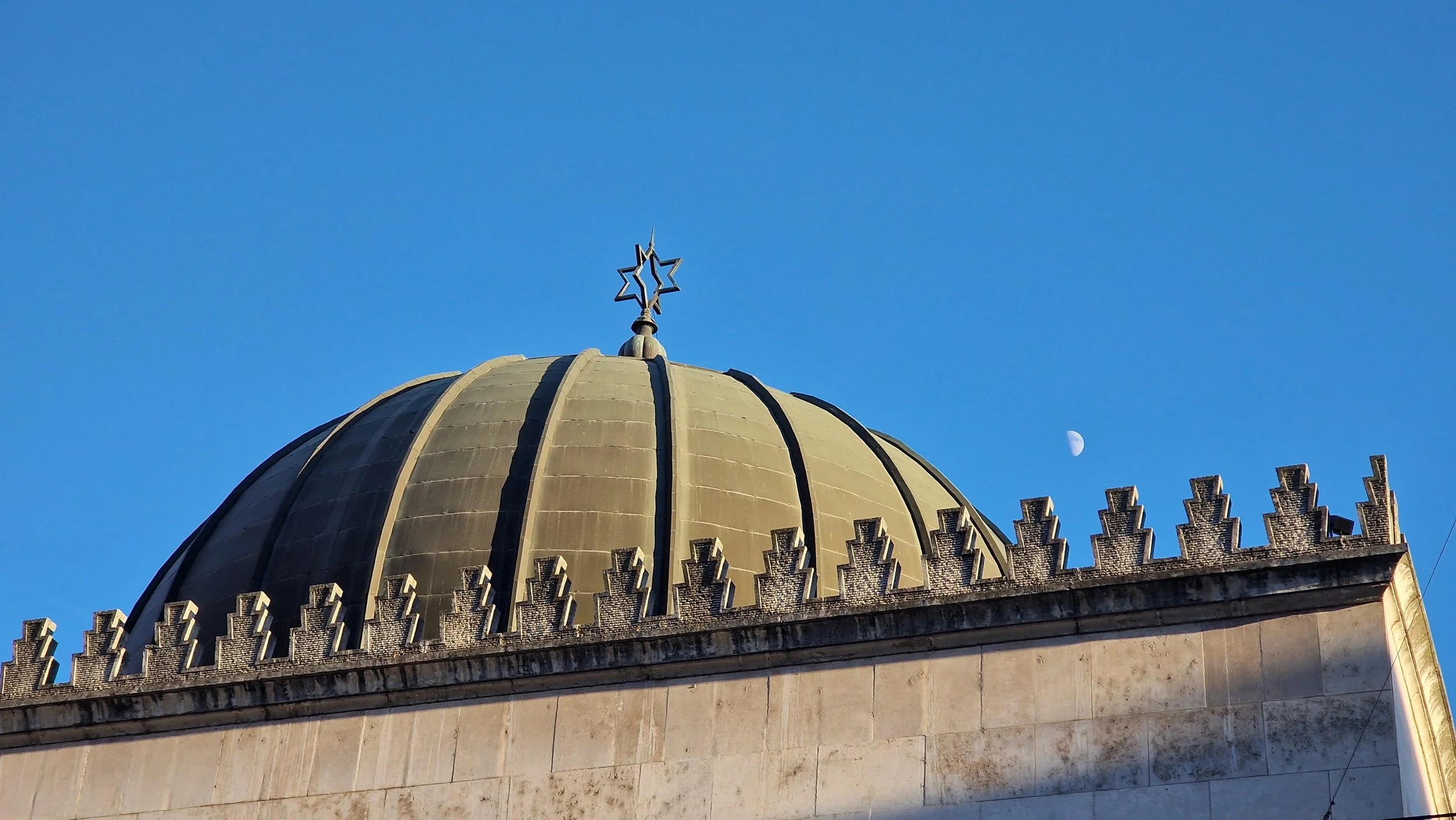
Wandering through this famous architectural gem, I paused and gazed down the main aisle, captivated by the symmetry and grandeur stretching endlessly before me. My fingers hovered over my camera, ready to line up the perfect shot, framing the world through the quiet precision of its lens. But then, a presence—the subtle weight of being watched or perhaps imagined—drew my attention. I turned, instinctively moving aside, assuming someone wished to pass by. Instead, I saw him—a tall, shy man with a faint, knowing smile, his demeanor calm, his steps purposeful as he walked past me. Alex wasn’t looking this time, oblivious to the moment while I stood rooted in place, my mind teetering on the edge of disbelief. I looked away, my heart quickening, as if acknowledging the impossible made it all too real. Was I losing my sense, caught in some unseen thread that tied the past, the present, and the inexplicable? Why was this happening? Why here, and why now?
These questions churned within me, unraveling threads of certainty I thought I’d tied tightly. Before this trip, life had felt curiously complete in its incompleteness. I’d finished my manuscript, "Koffee With Kafka," pouring my days and nights into it, convinced it encapsulated everything I needed to say. Yet here in Budapest, amidst its cobblestone streets and whispers of old empires, something shifted. My mind stirred, restless, as though the city itself was speaking—not through words but moments, glimpses, and shadows on the edge of my perception.
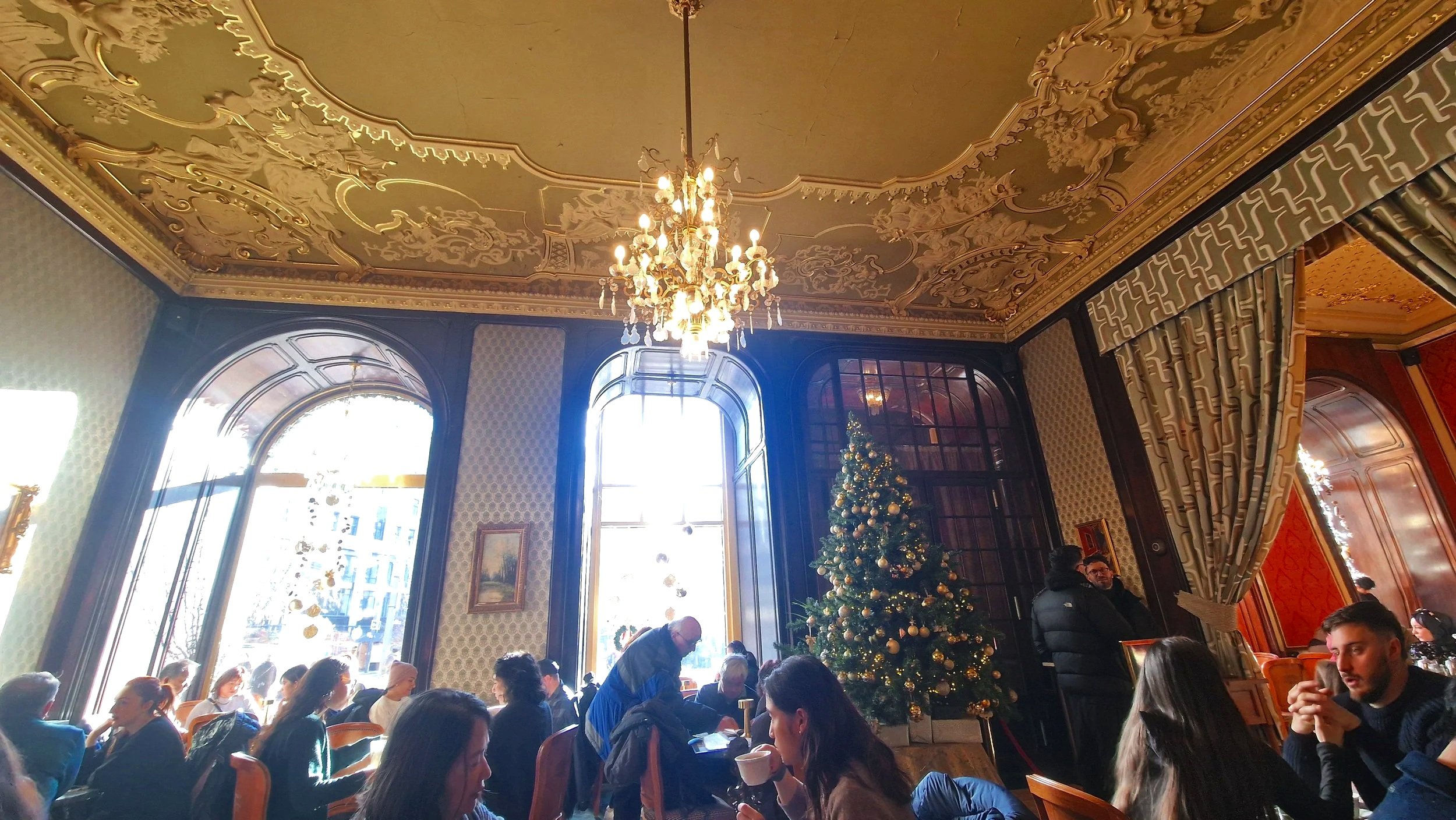
Café Gerbeaud
Was it the rhythm of this place, timeless yet alive, that made my story feel unfinished? Or was it the man with the faint, knowing smile who flickered in and out of my reality, as though plucked from a world beyond mine? A realization weighed on me that perhaps stories, like cities, are never truly complete. Suddenly, I couldn’t escape the sense that Budapest was offering me something—a new layer to the narrative, an unseen element threading its way through me, whispering secrets about uncertainty, destiny, and the things left unsaid. The manuscript no longer felt like an ending but a doorway, and now I wondered what lay beyond it.
To thaw our spirits and our hands, we retreated to the city's historic cafés. We sat at marble-topped tables, sipping bitter black coffee and slicing into rich, flaky strata of cheese strudel. In these golden spaces, time seems to slow down, offering a quiet sanctuary from the biting wind outside.
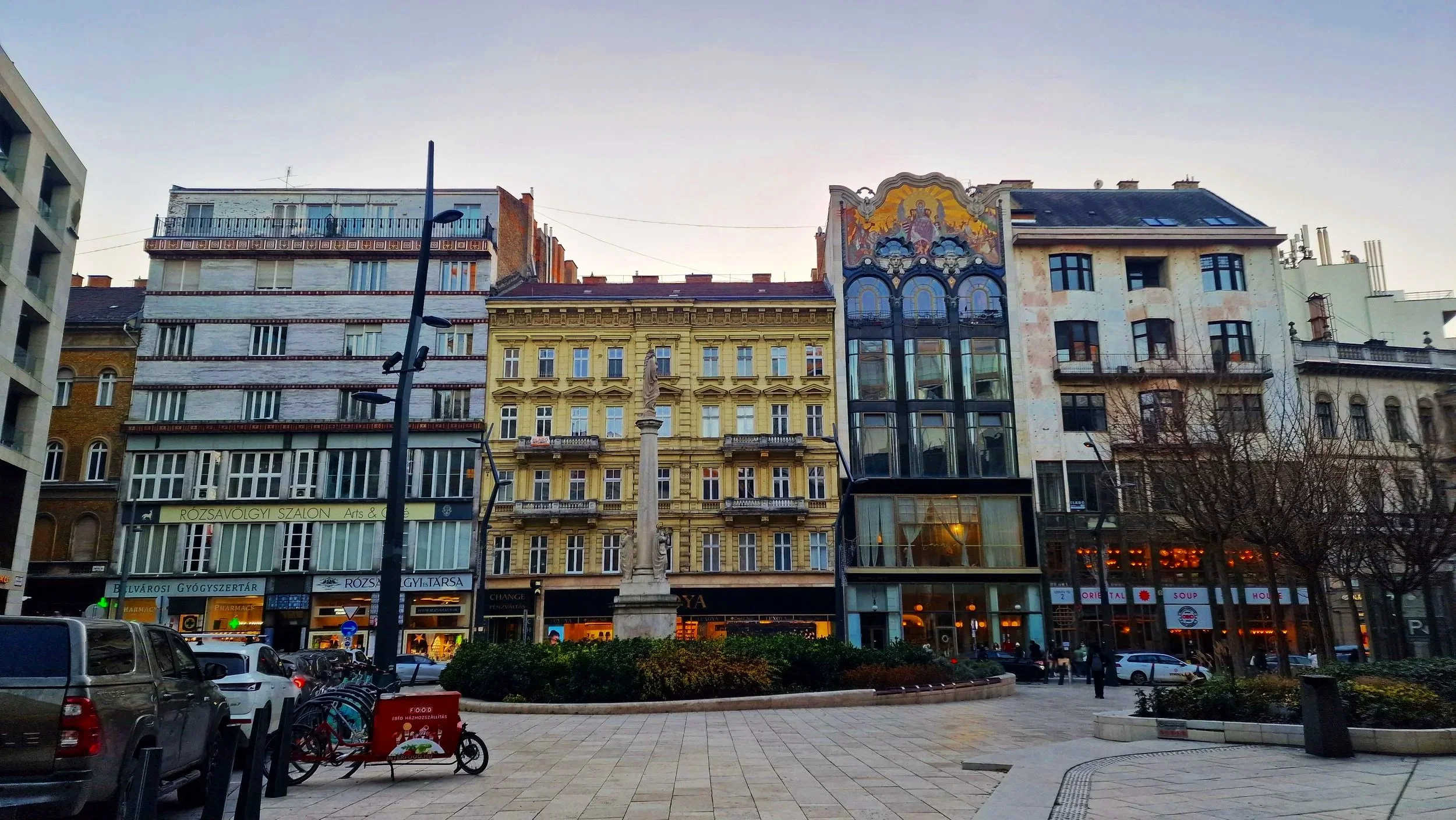
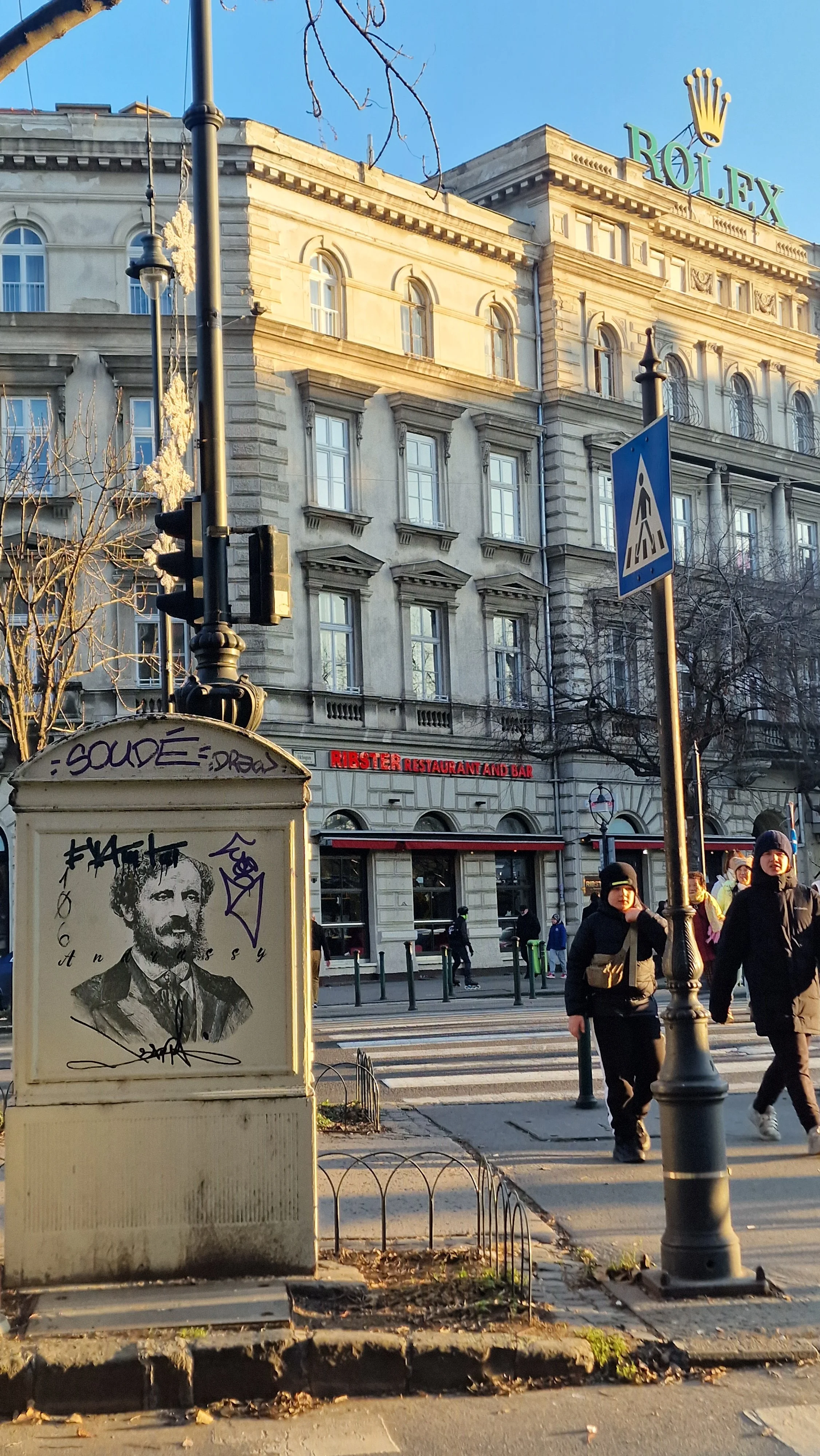
Szervita tér
Iselda, with her sharp eye for detail, remarked more than once how parts of Budapest reminded her of Prague. The cobblestone streets, the grand facades, and even the way the light hit the Danube seemed to echo memories of another city she’d loved. Watching her take it all in, I couldn’t help but feel a quiet pride in how travel has shaped her sense of wonder and connection to the world.
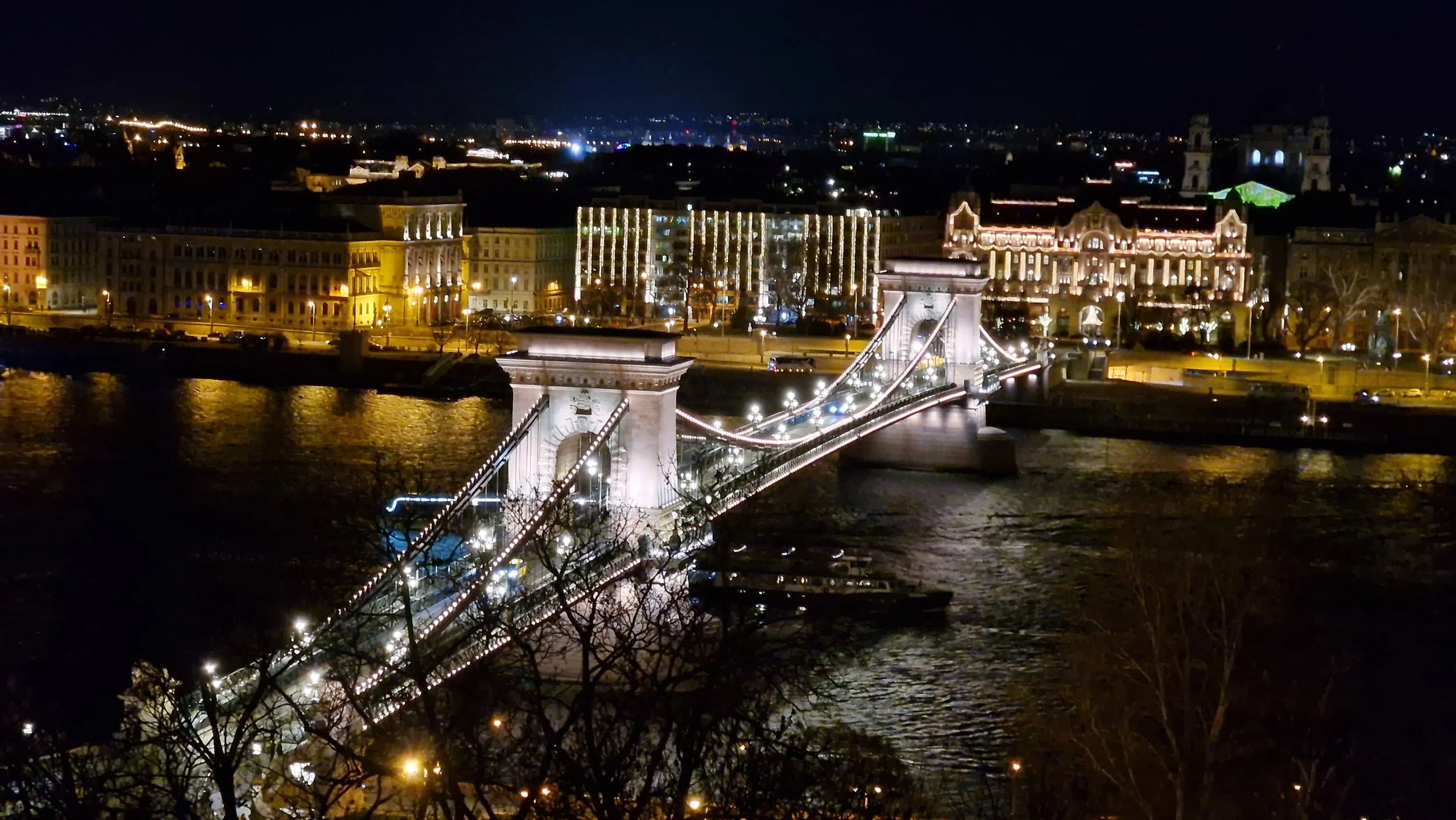
One evening, we boarded a modern boat for an evening cruise on the Danube. As we drifted over the black water, the city illuminated the night. The Hungarian Parliament Building glowed like a palace of spun gold, its reflection shimmering and breaking in the river's wake. We sat inside, shielded from the blistering cold outside with my husband and daughter, and felt a profound sense of peace.
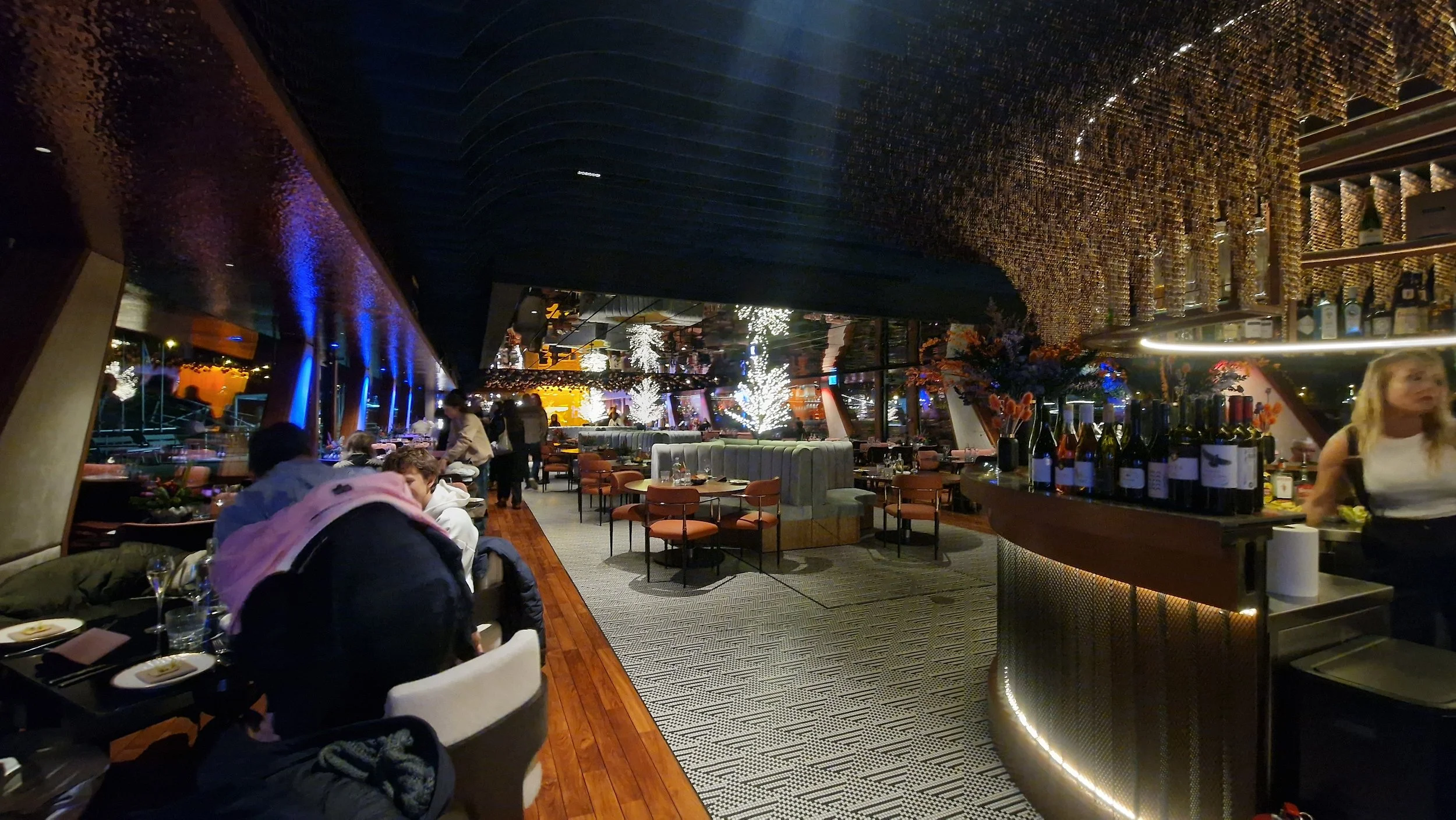
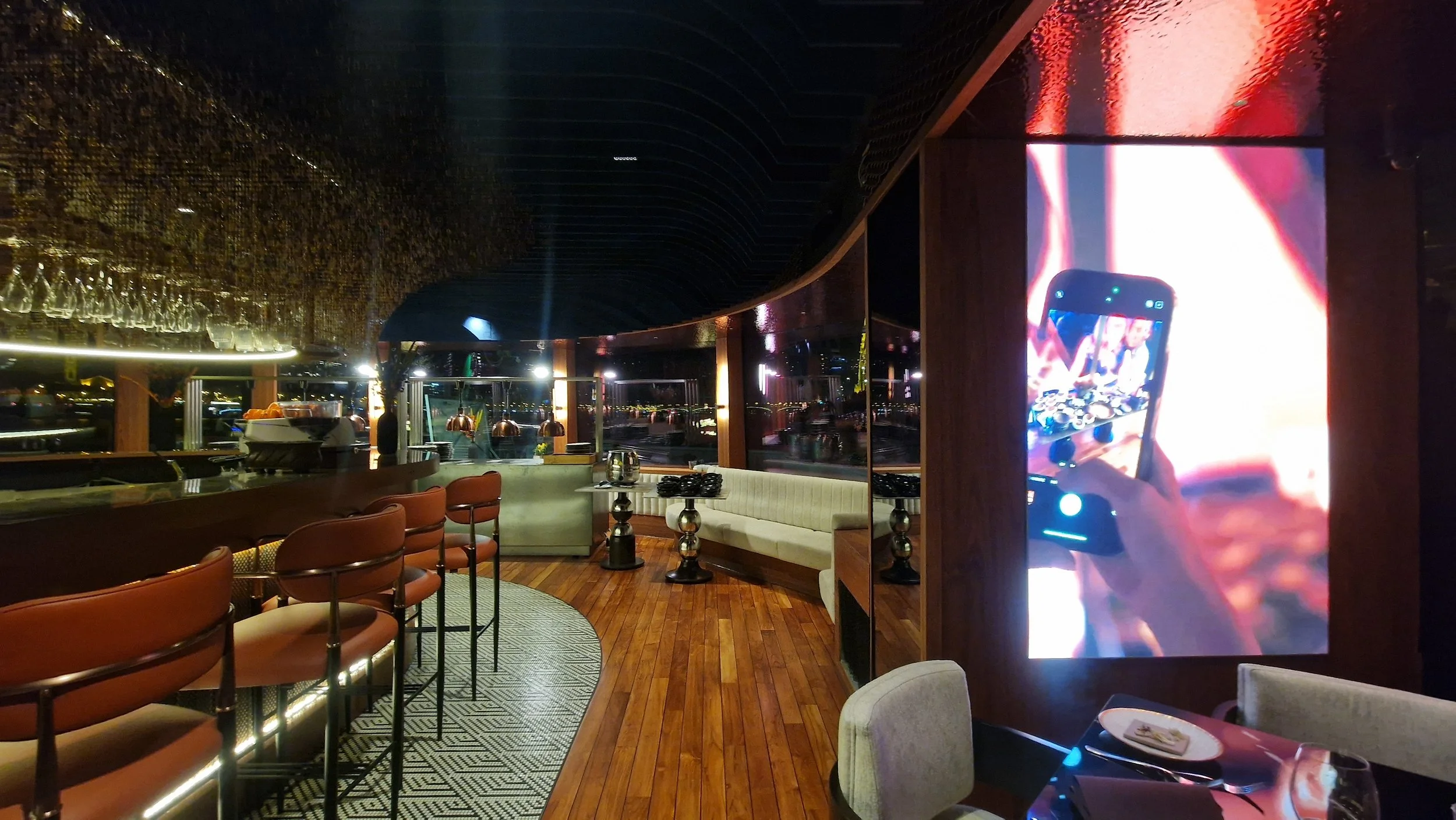
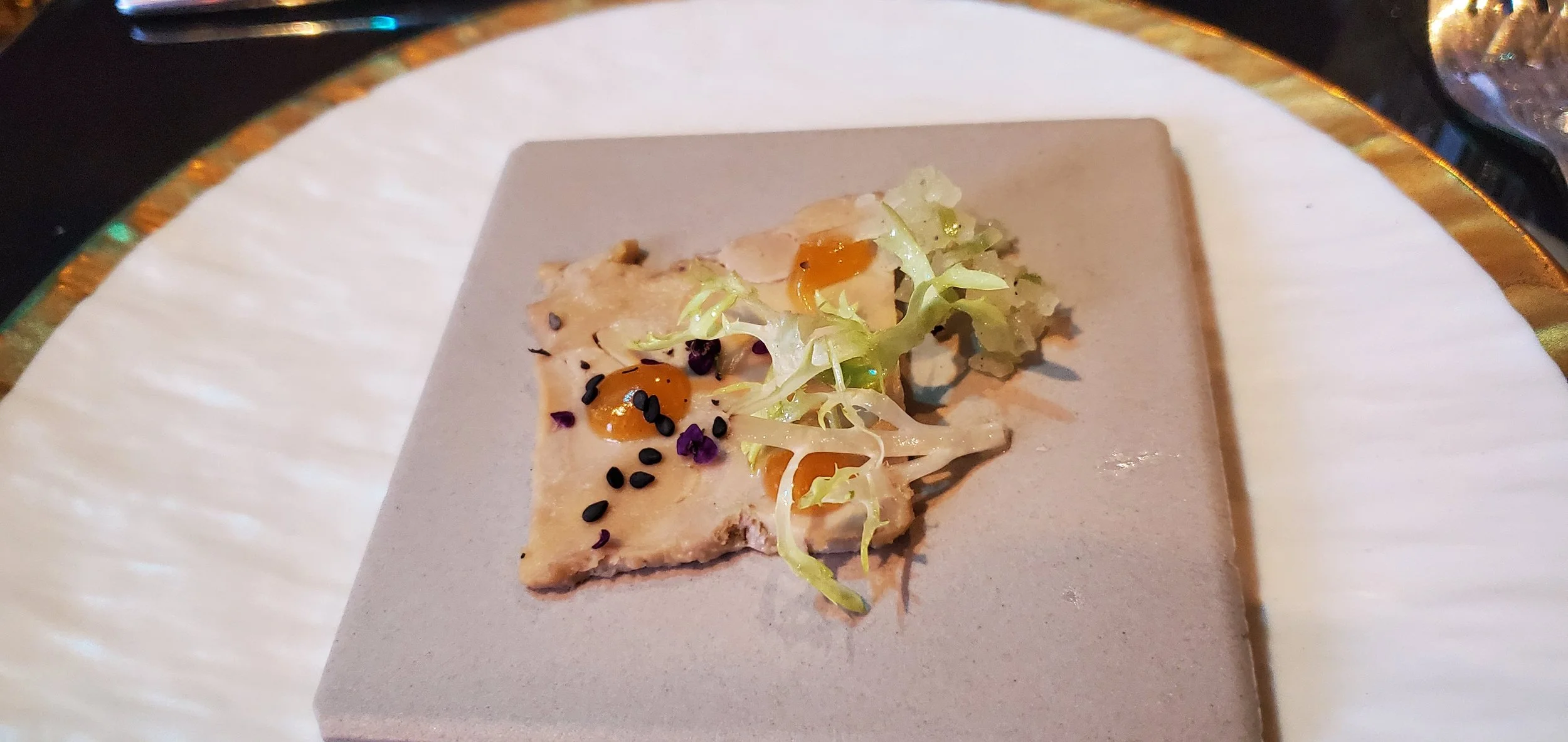

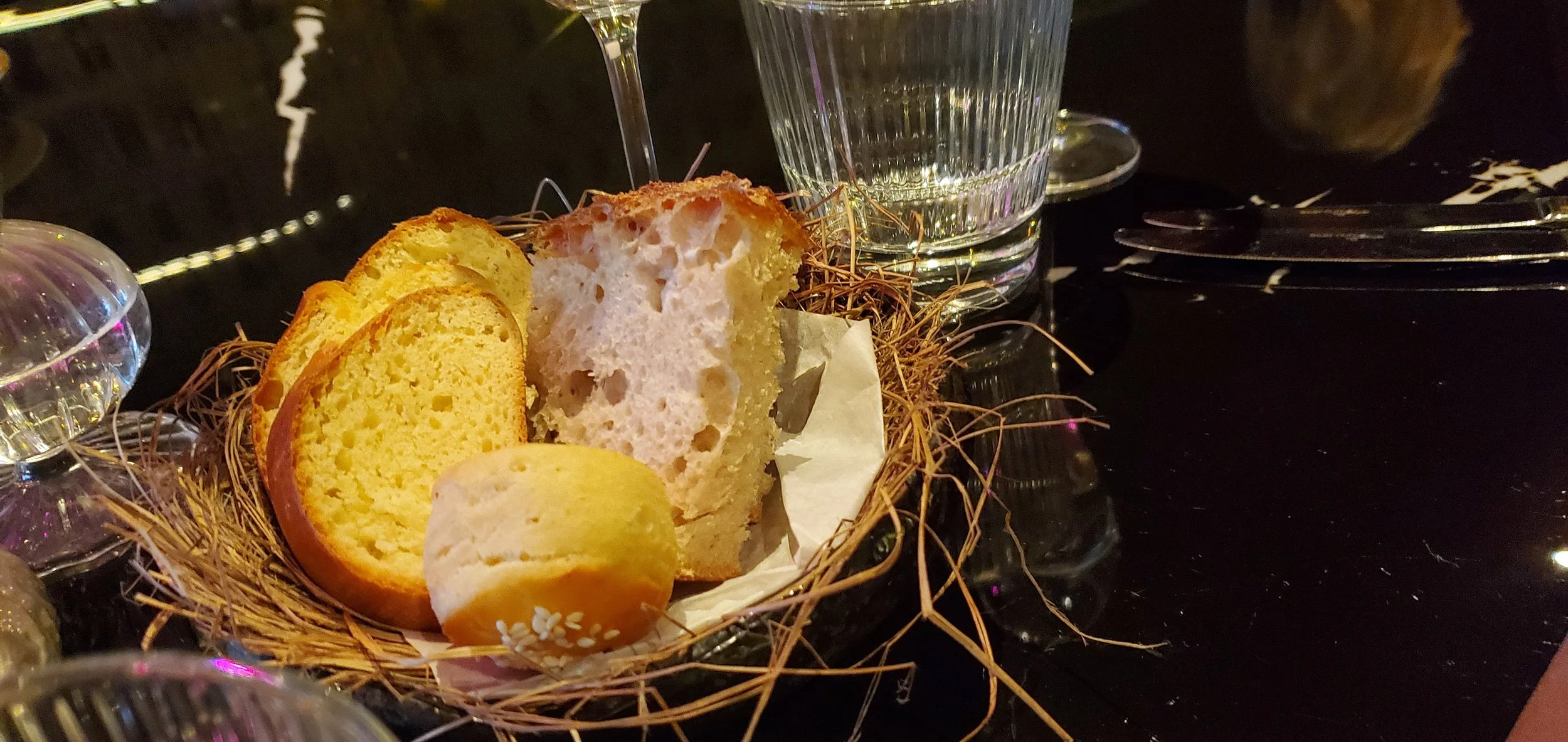
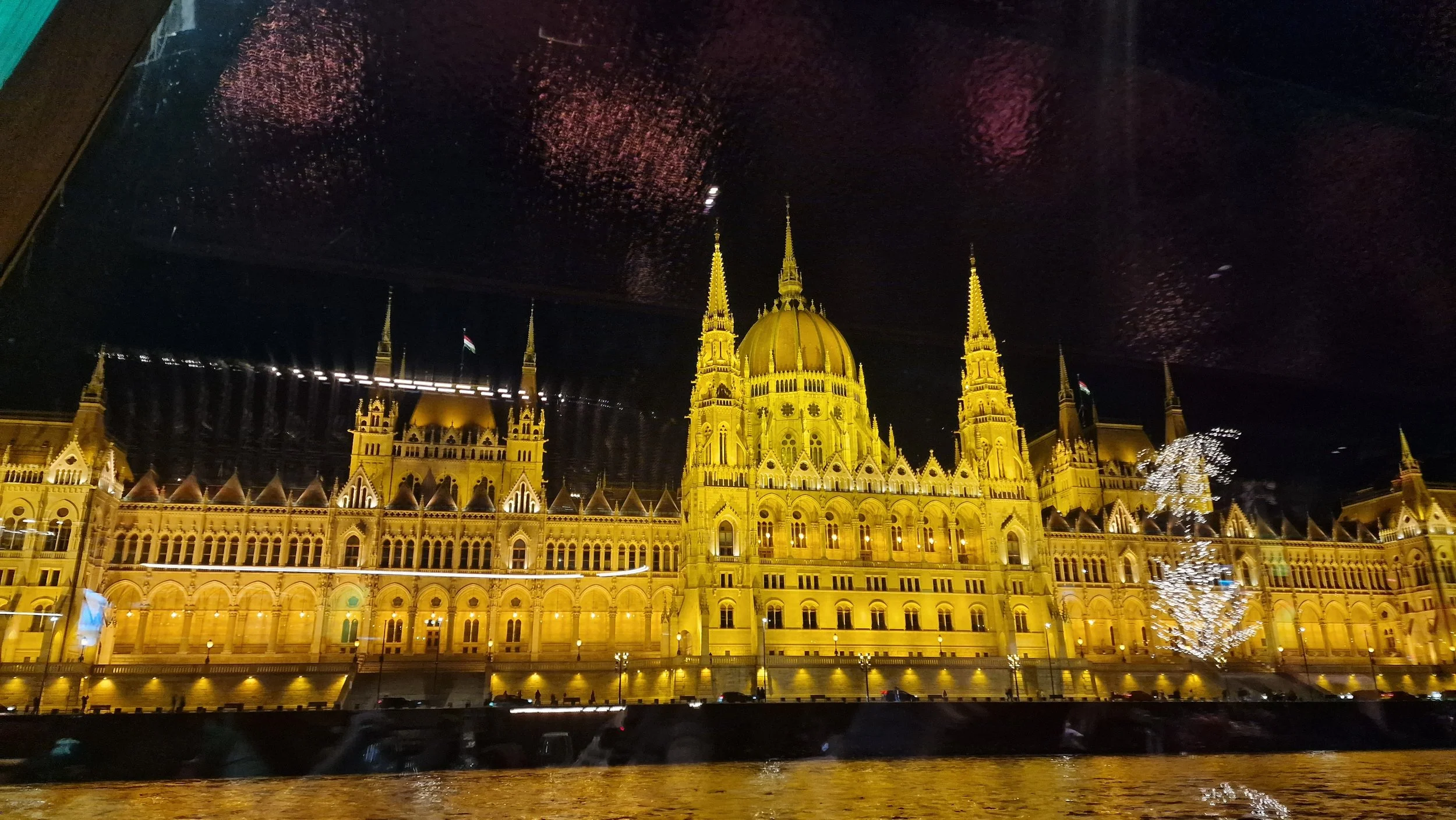
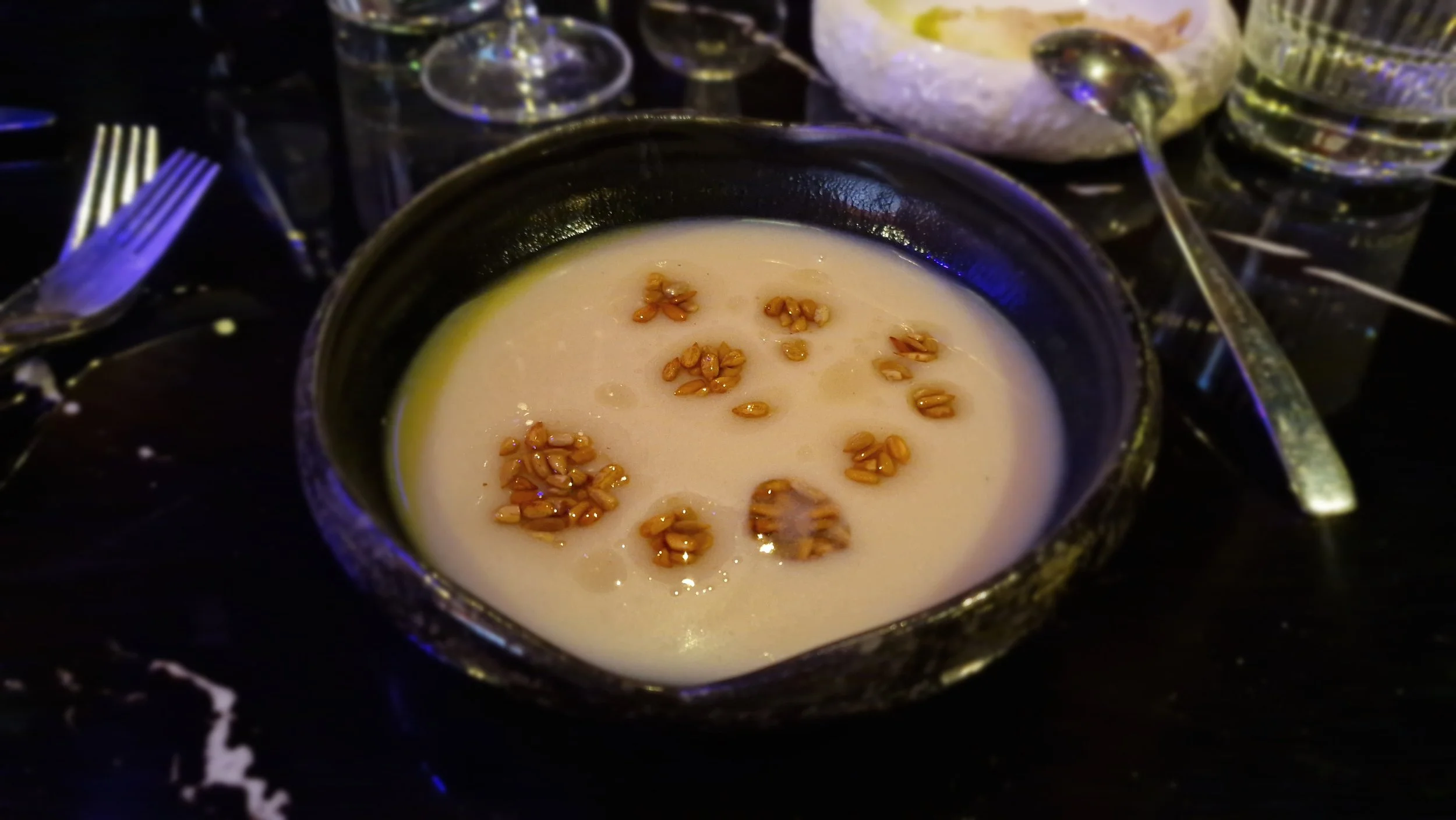
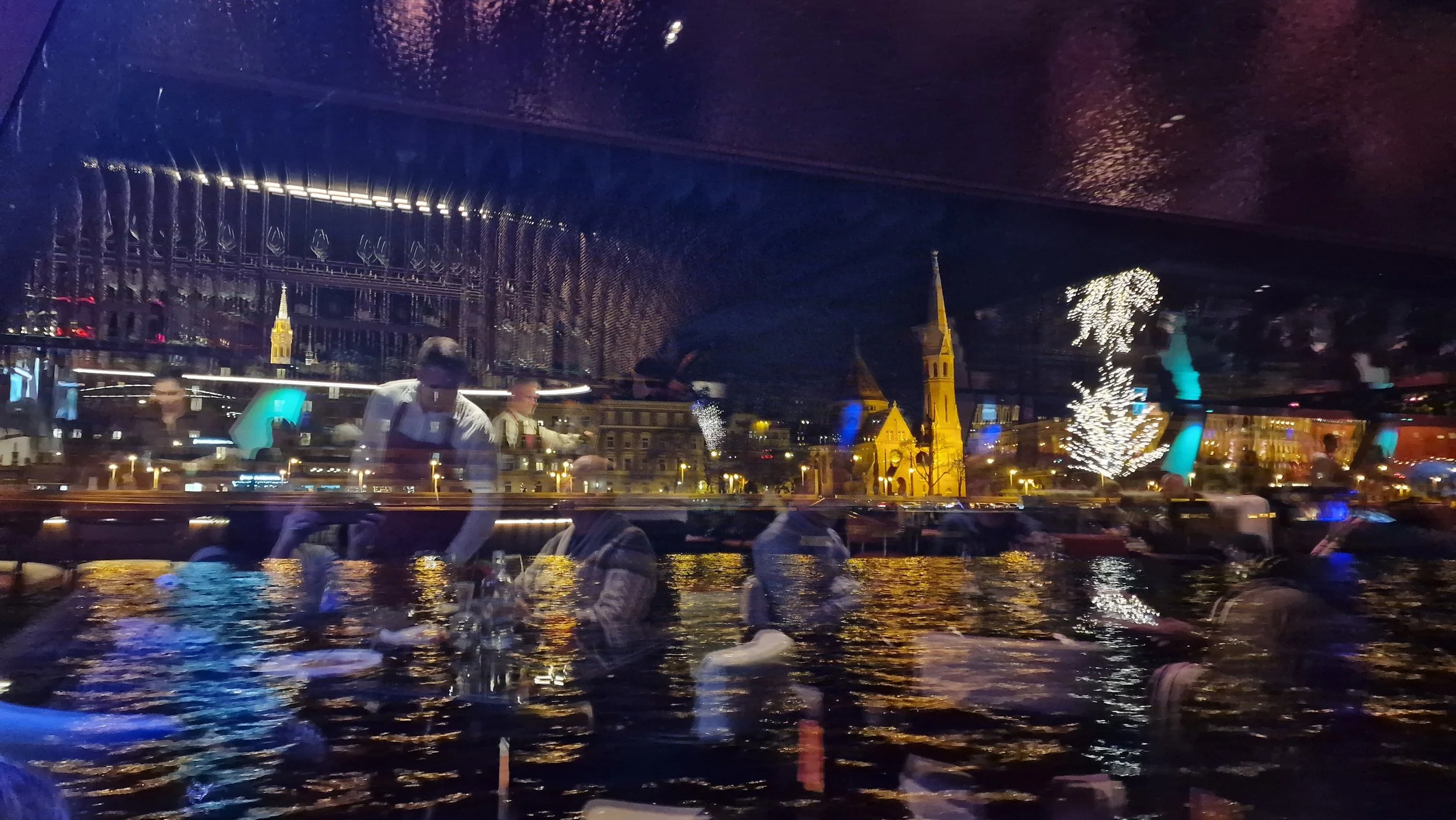
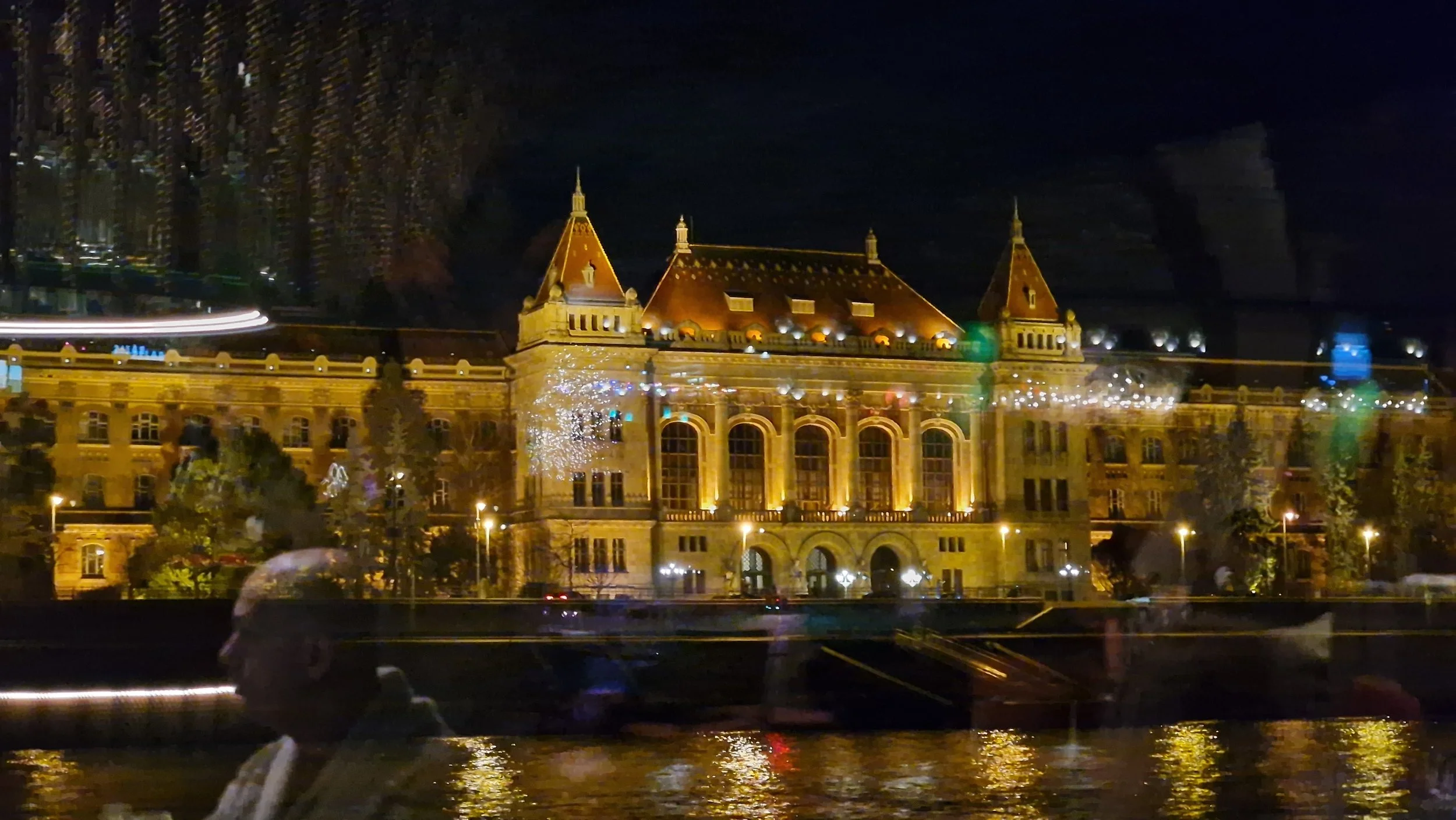
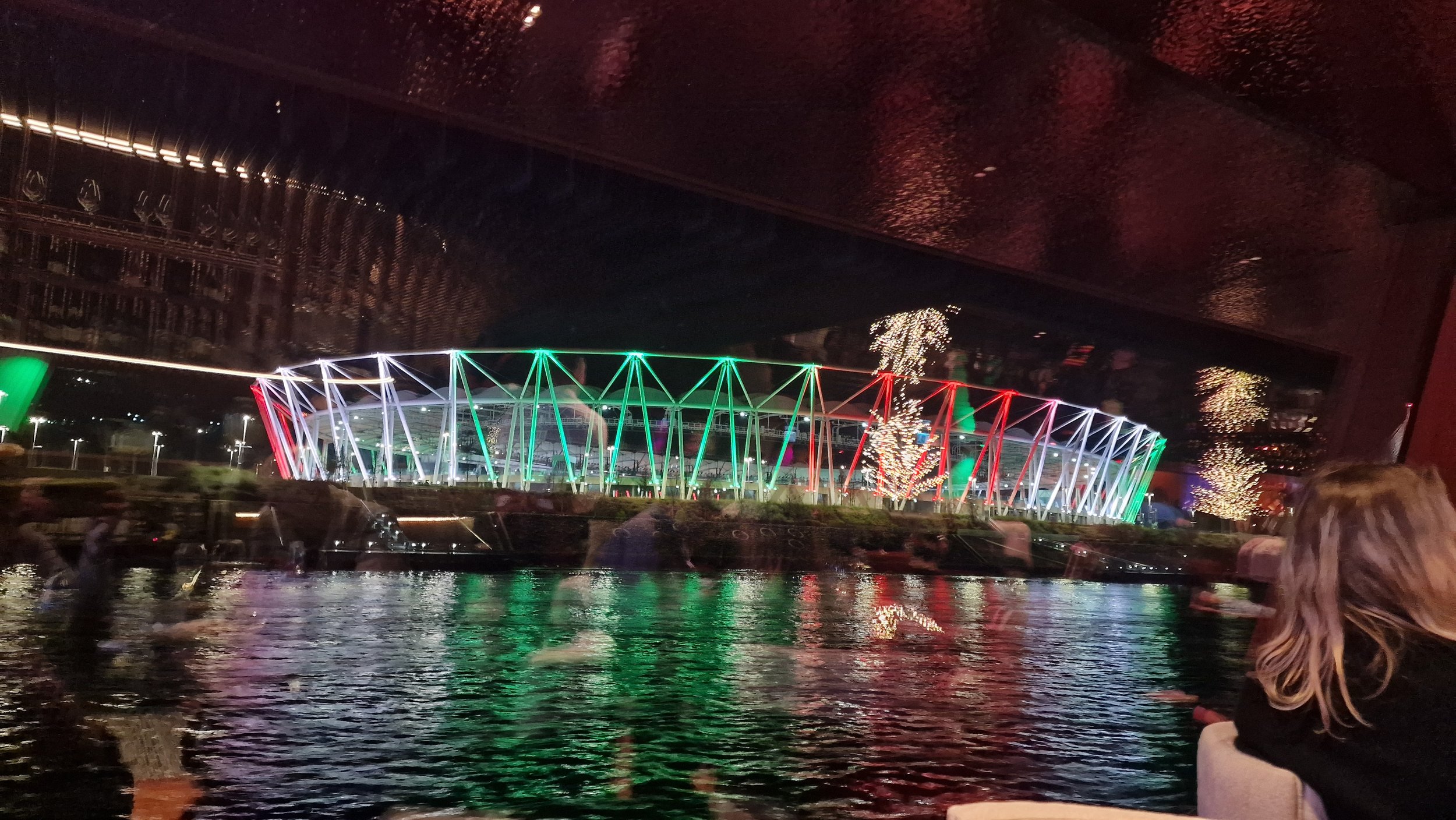
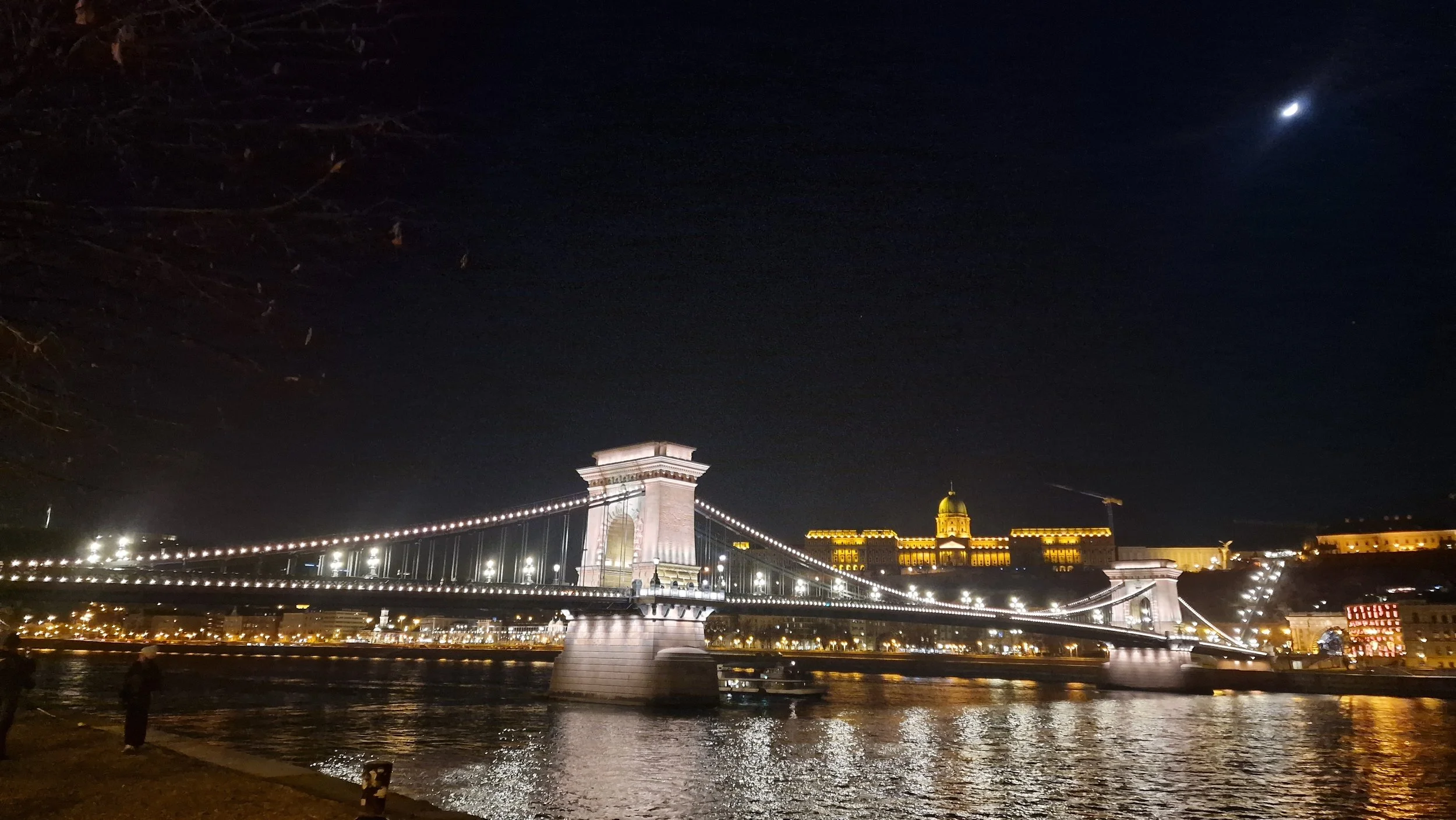
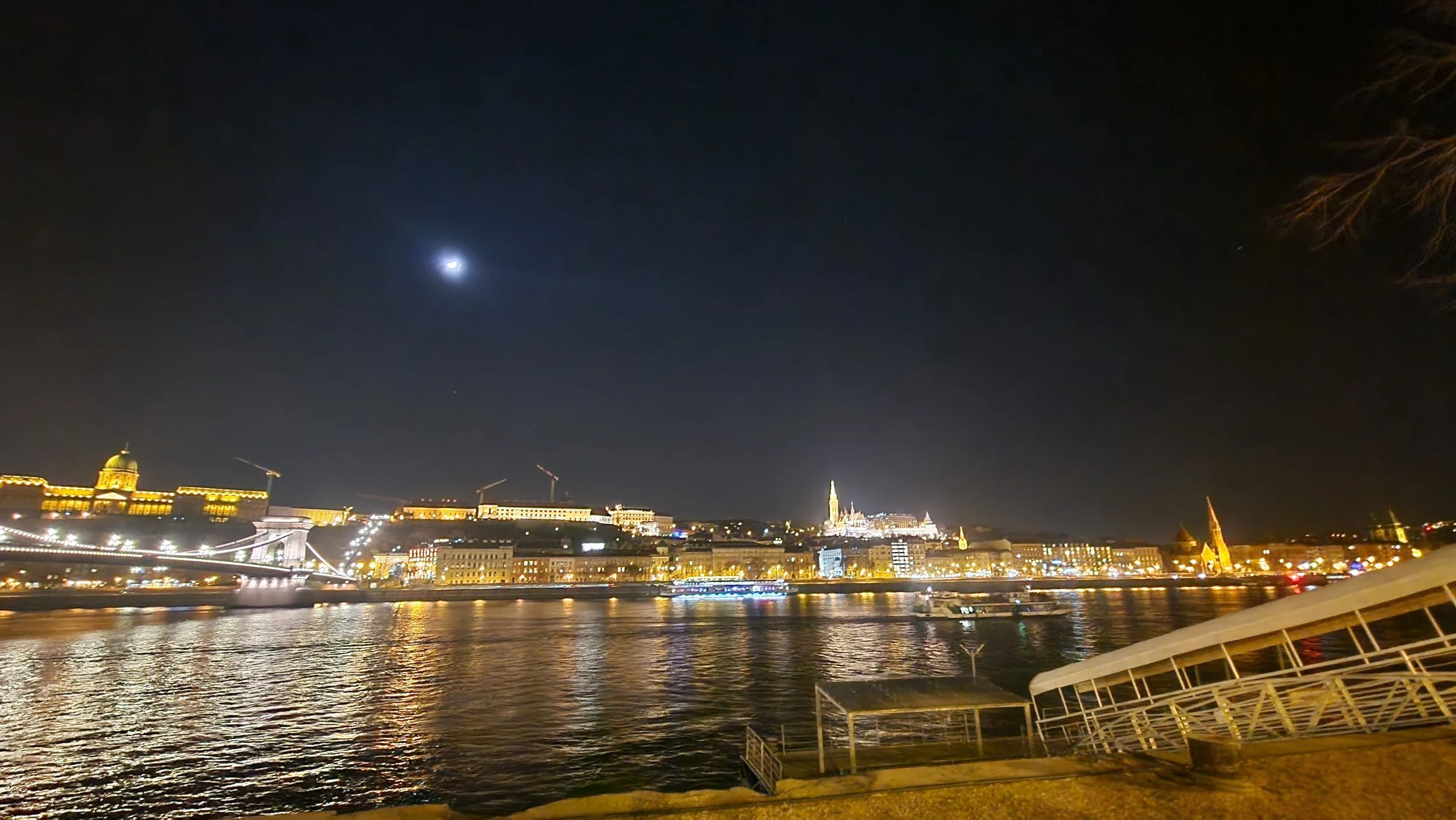
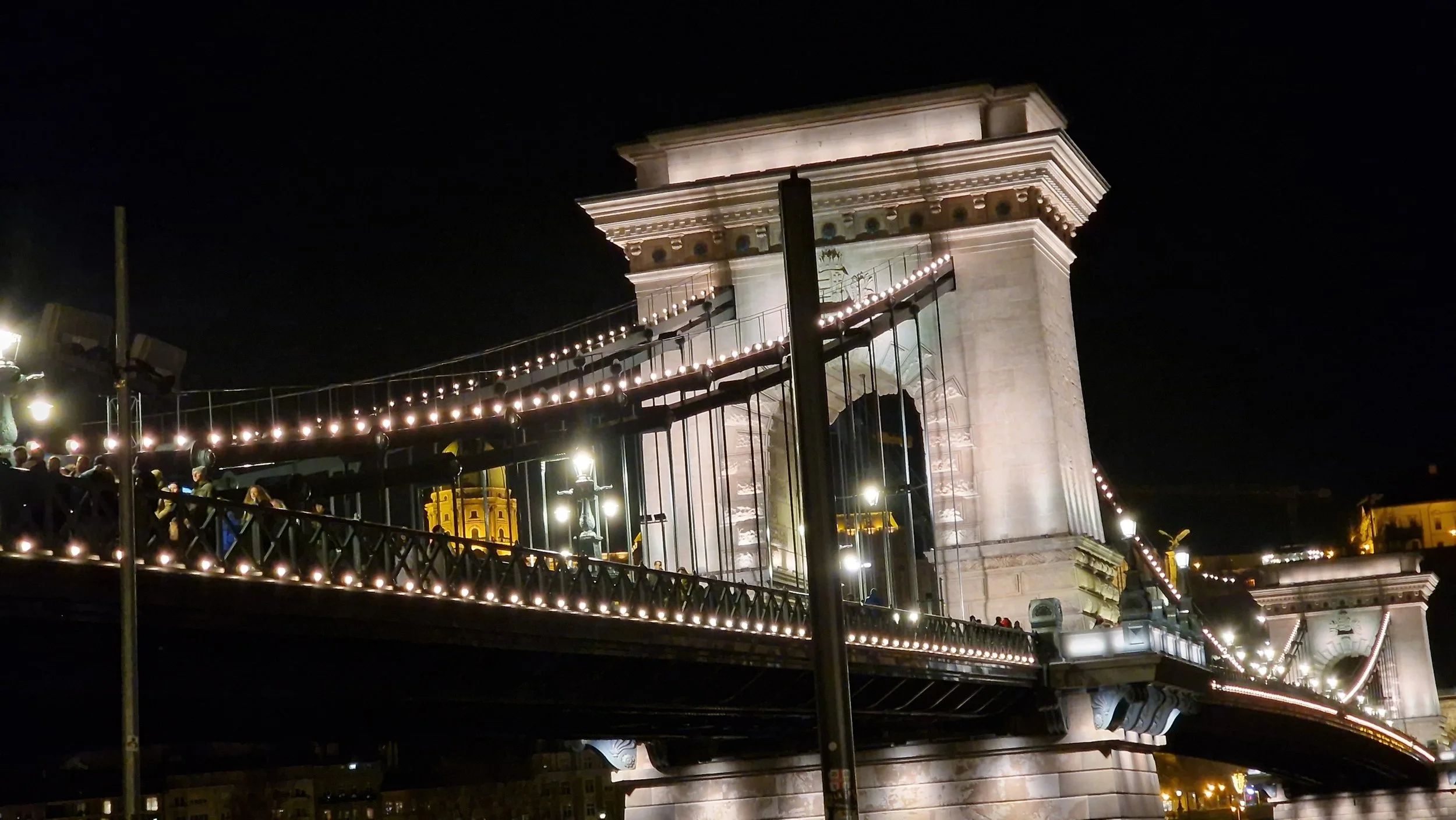
While Alex wasn’t entirely charmed by Budapest’s streets, his mood shifted the moment we stepped onto the luxurious, modern boat for our evening cruise on the Danube. With its sleek interiors, all-inclusive buffet and bar, and large LED screens showcasing the city’s landmarks, it was the perfect blend of comfort and spectacle. But it was the views outside that truly captivated him. As the castle glowed like a palace of light and the Chain Bridge sparkled against the night sky, I could see him relax, a quiet contentment settling in. For Alex, being near the water always feels like home, and in that moment, the Danube became his favorite part of Budapest.
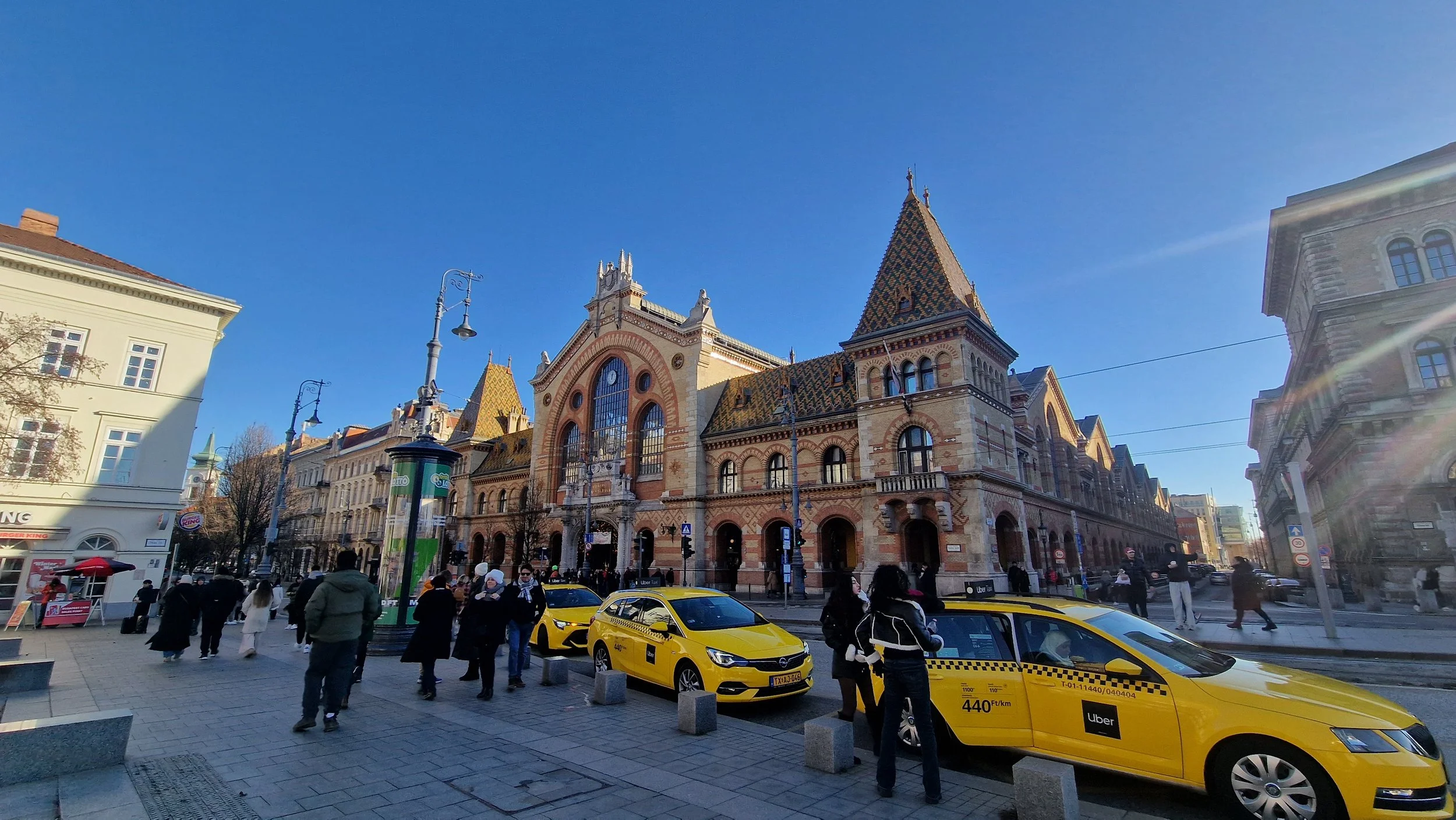
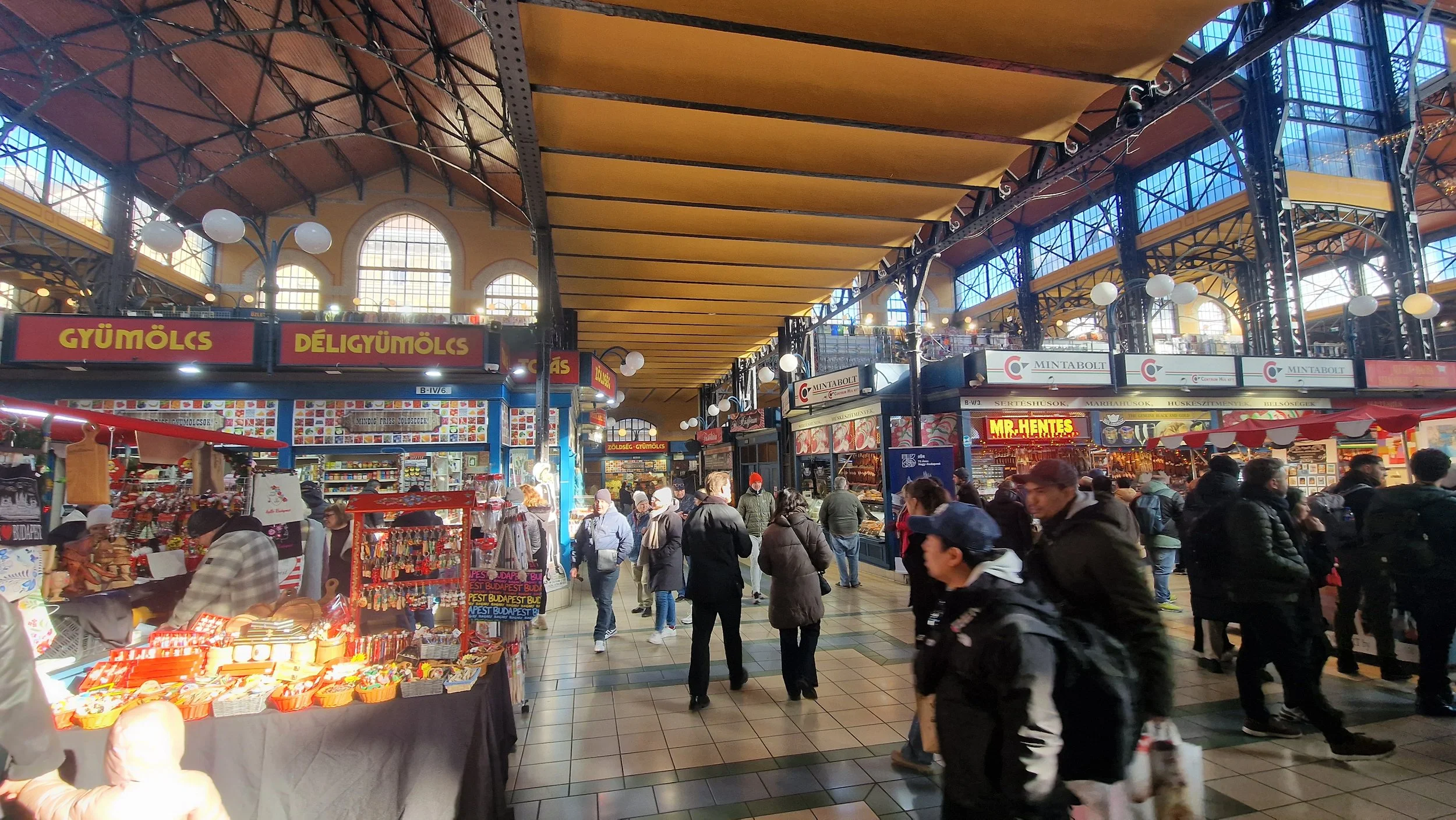
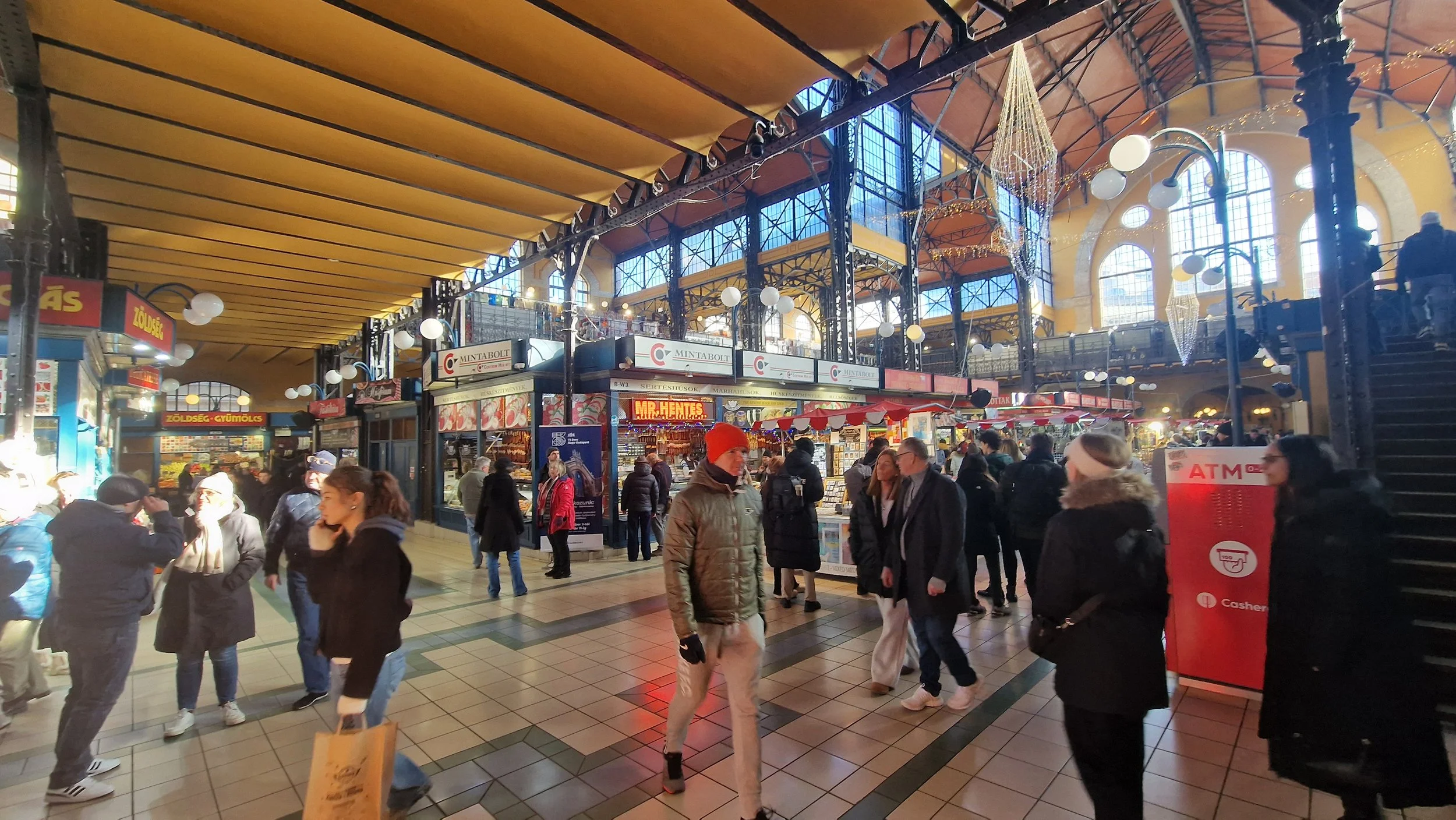
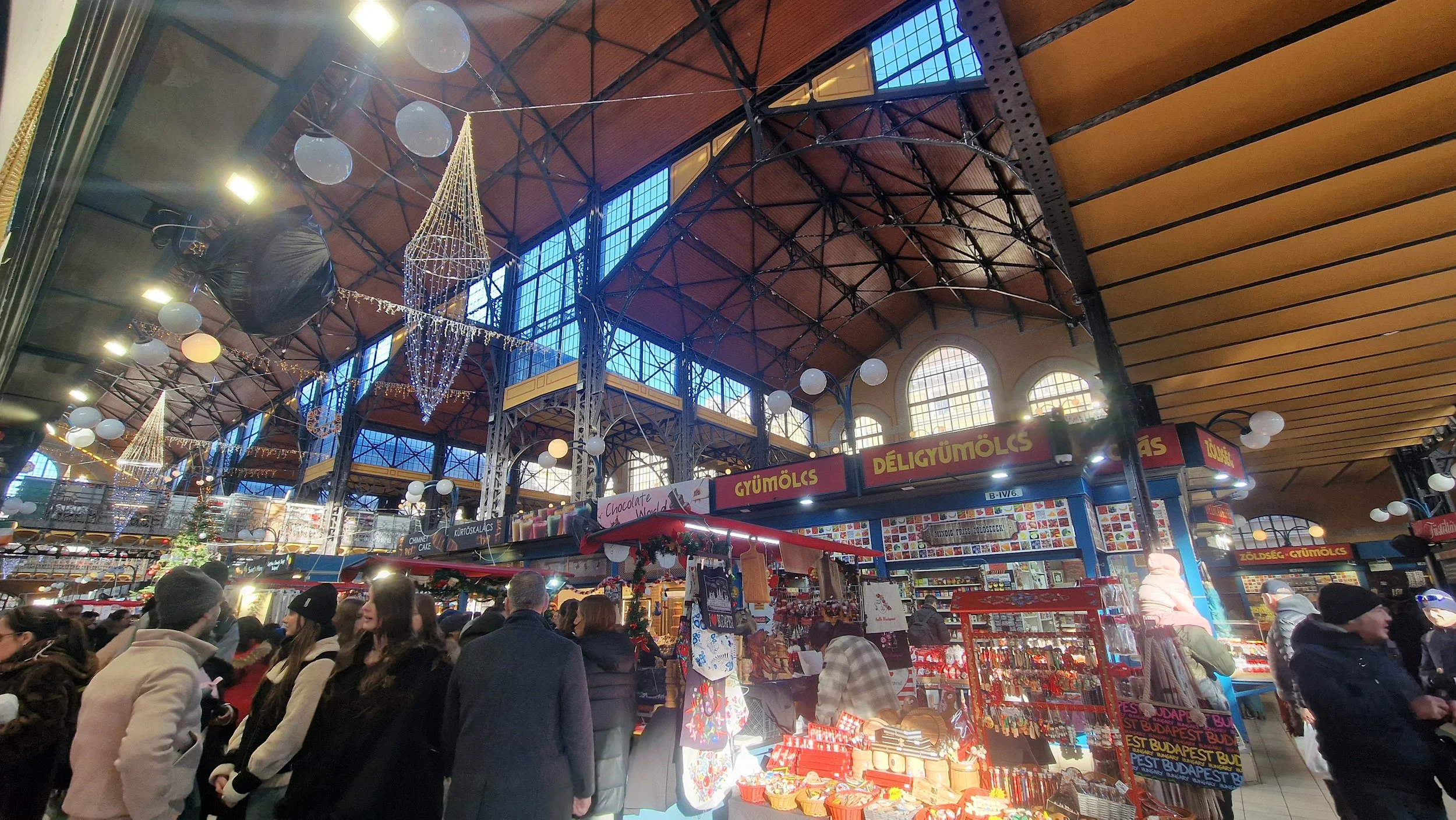
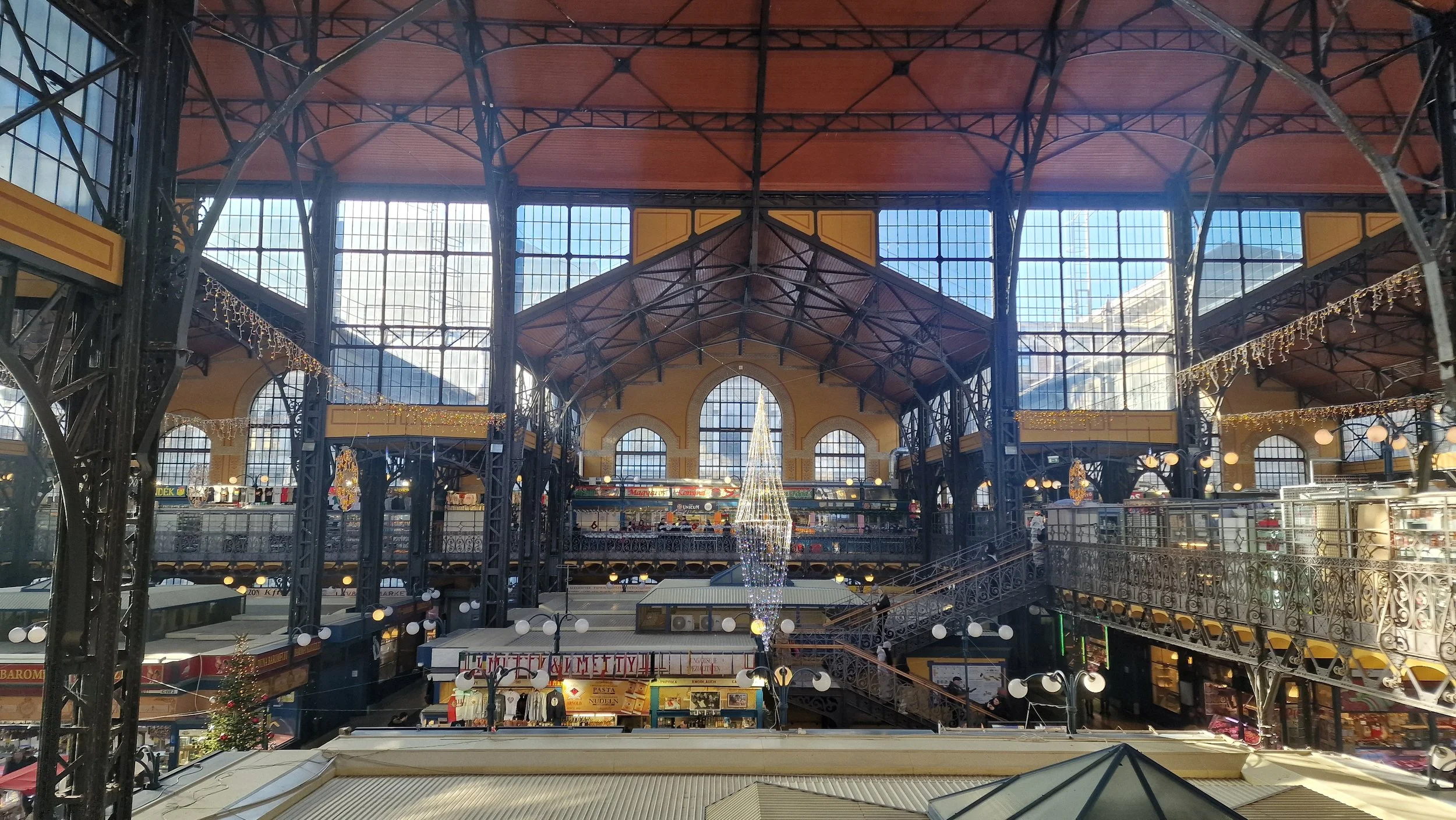
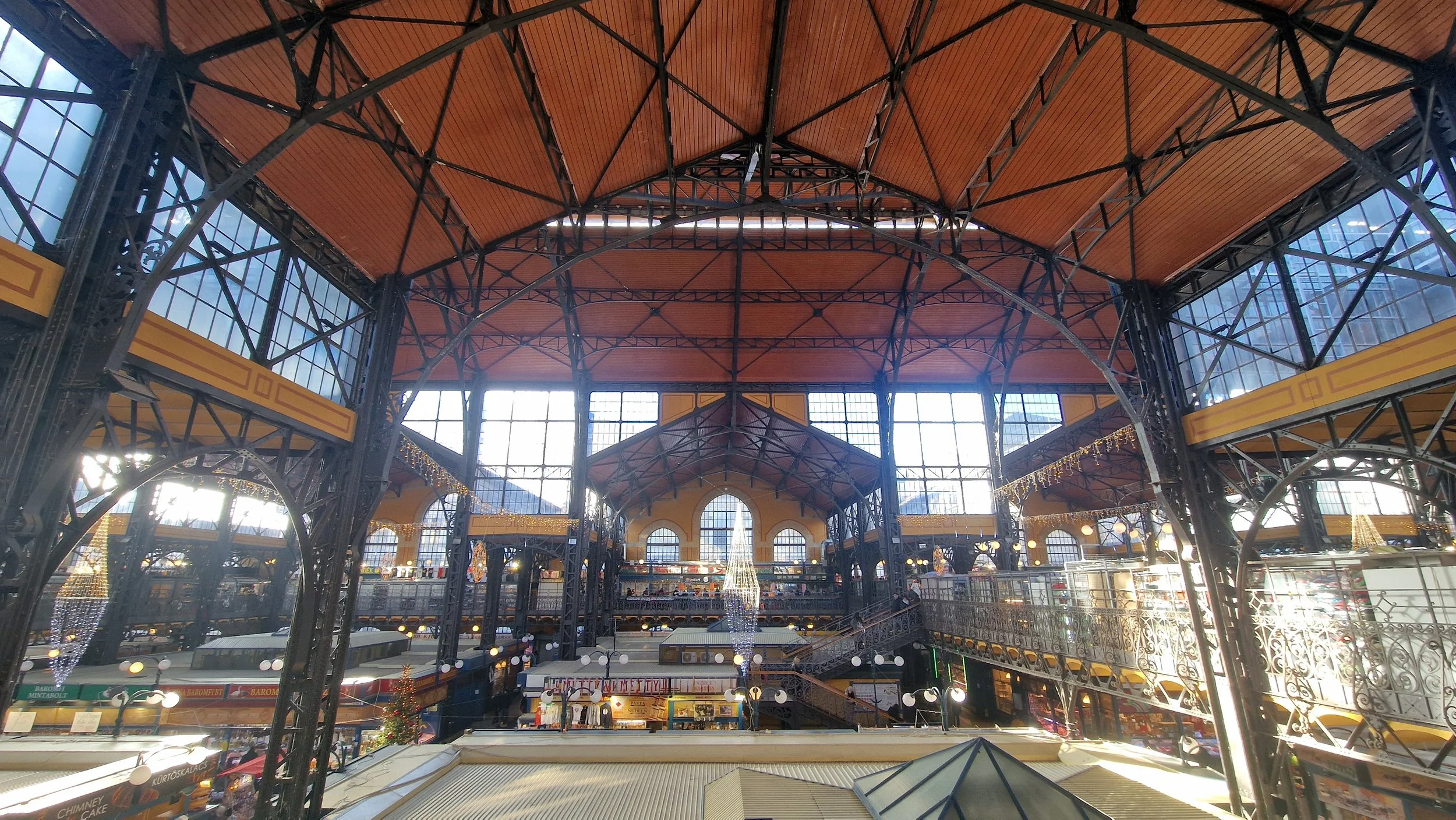
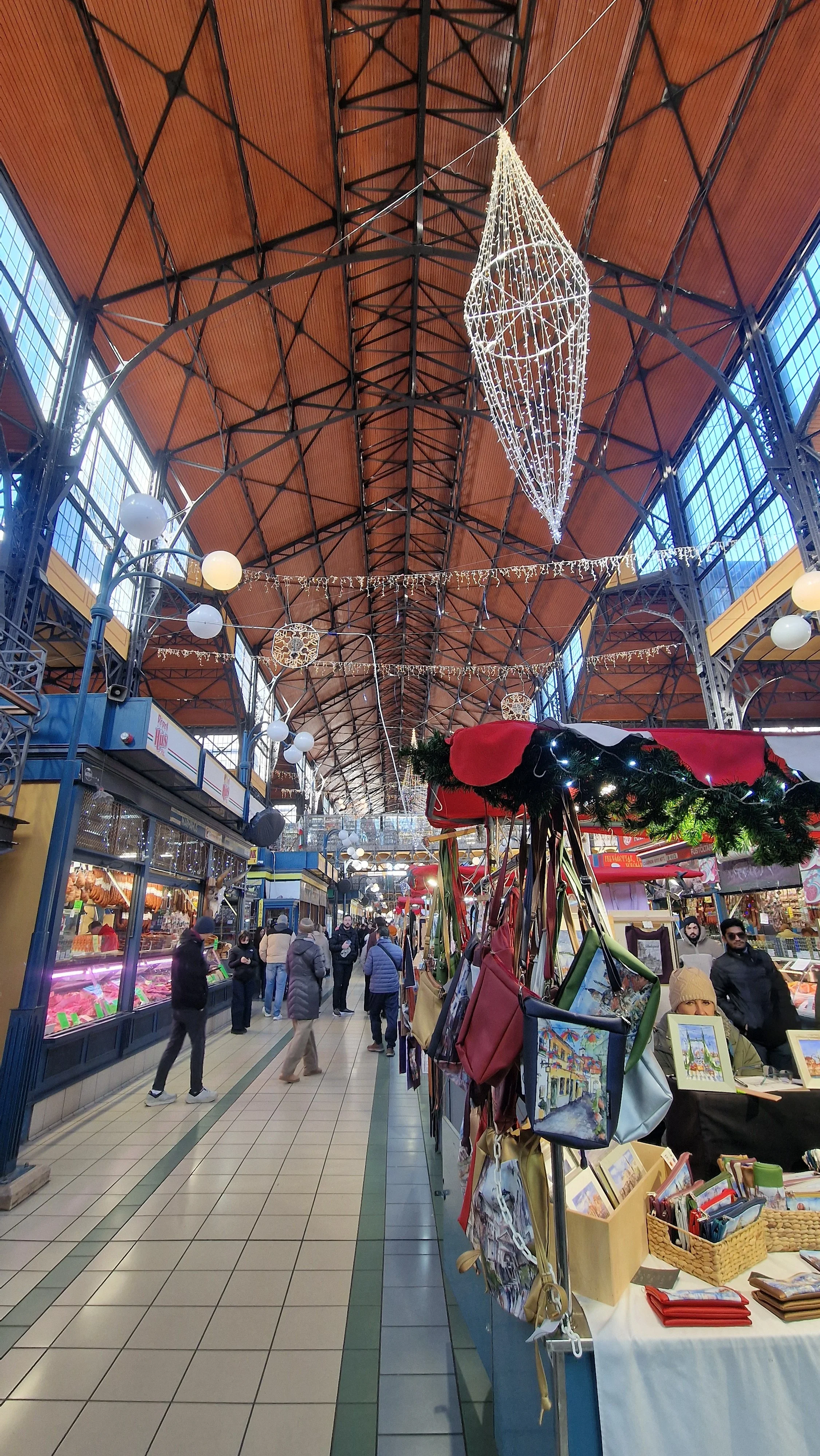
The next day, after wandering the main market in Pest, we found ourselves traipsing through the hilly streets of Buda in the evening, its cobblestones glinting faintly in the glow of old streetlamps.
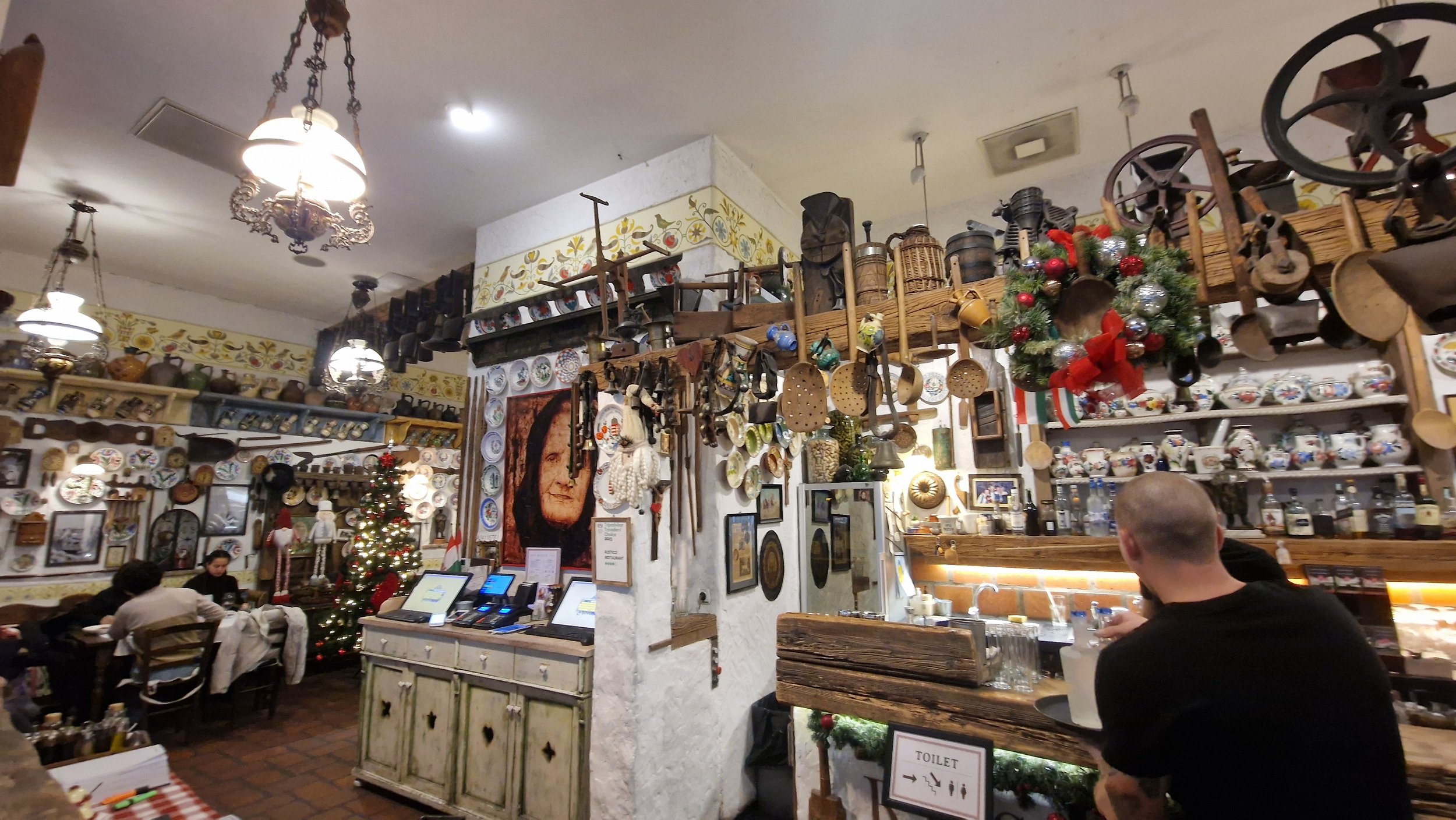
In between the frenetic market filled with Hungarian foods, gifts, and clothing, and exploring Buda, we had to make a stop for lunch. Now, the term gypsy can be seen as derogatory in other countries, but it's everywhere in Budapest.
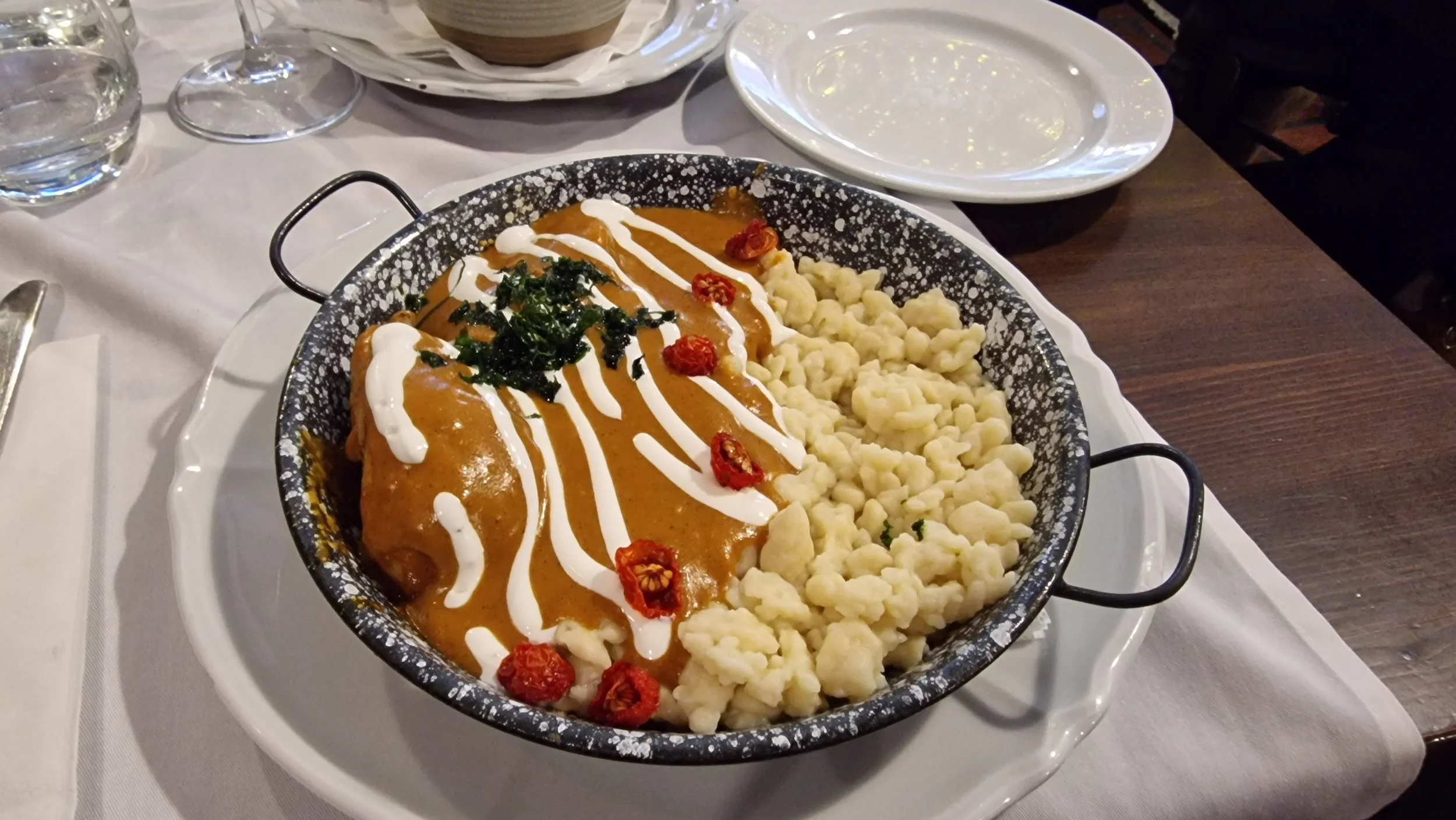
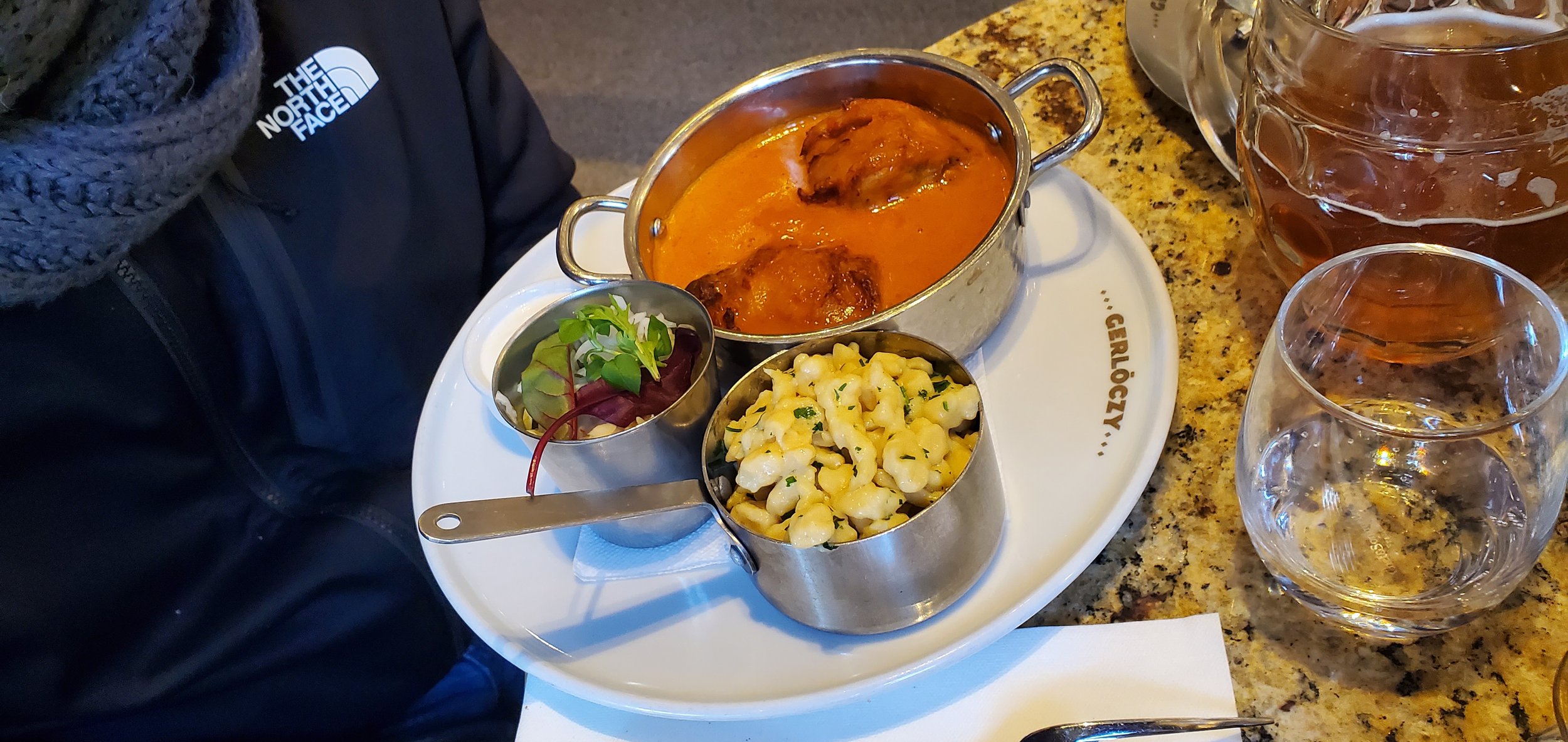
Paprikas Csirke + galuskaval (Paprika chicken stew with gnocchi) @ Rustico
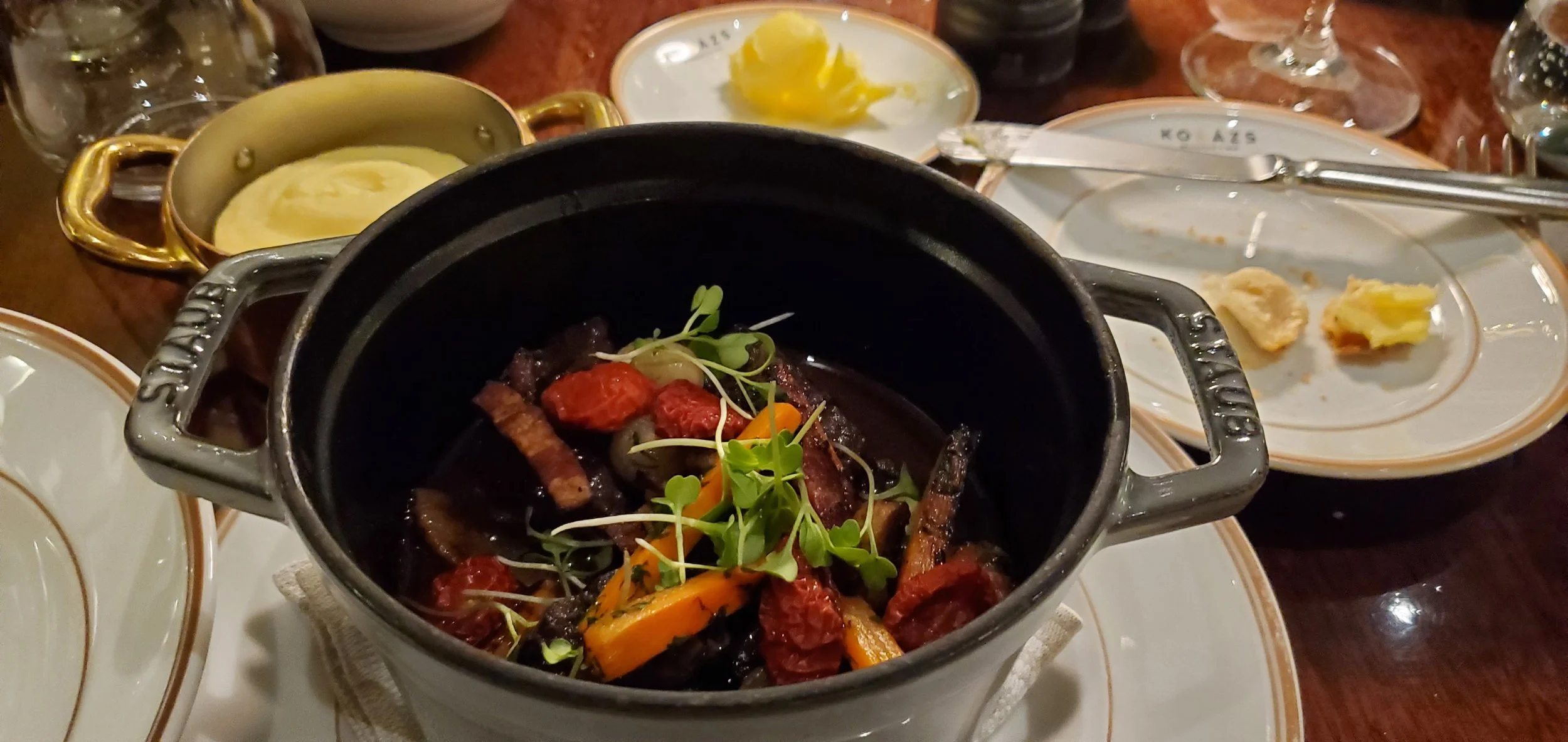
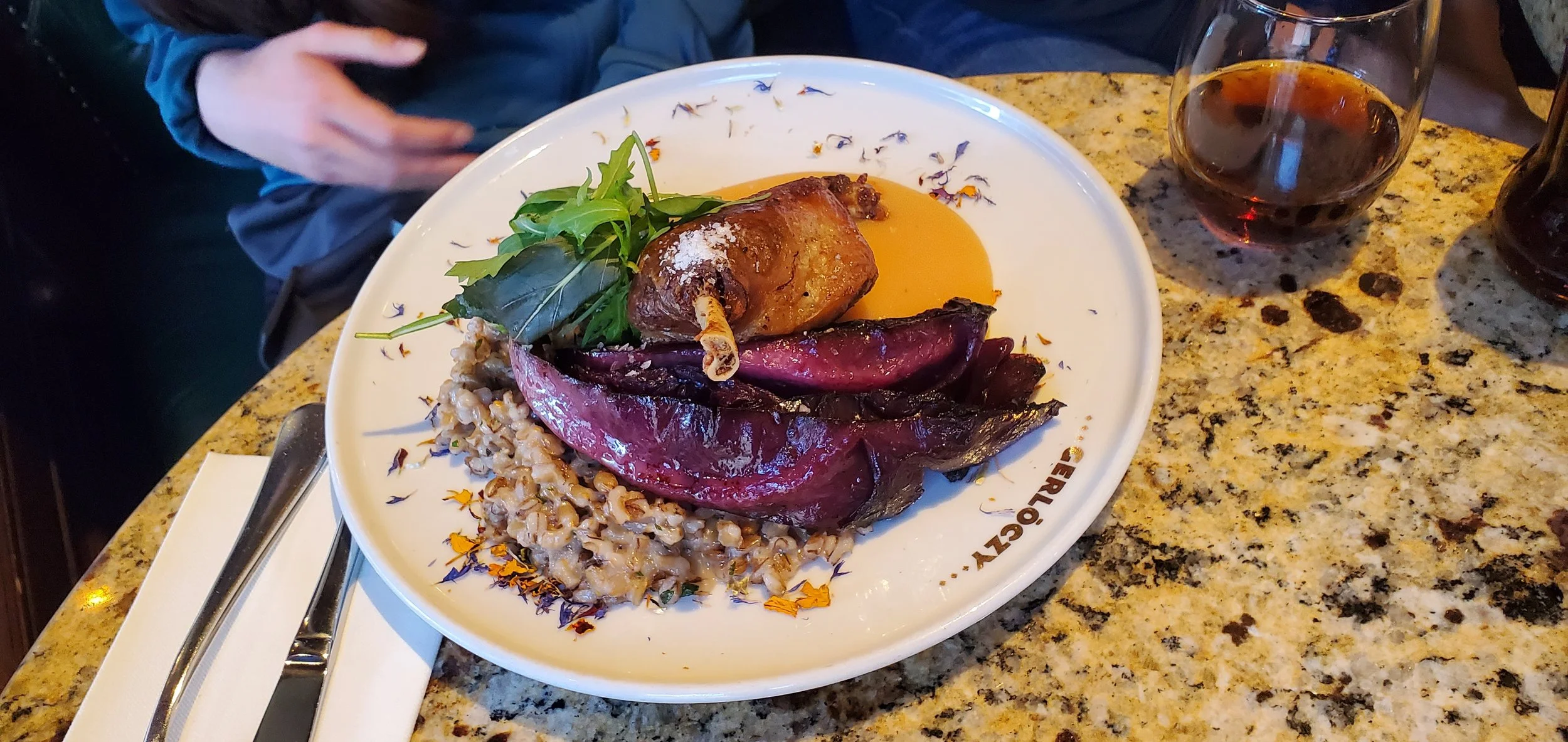
We found ourselves drawn to a cozy, tucked-away restaurant called Rustico, its atmosphere etched vividly in our minds. It was there, nestled between the bustle of the market and the quiet charm of Pest, that we were enveloped by the haunting strains of a violin. The player, with a practiced grace, conjured a melody that seemed to carry the weight of centuries, weaving passion and melancholy into every note. The aroma of paprika and roasted meats curled through the air, inviting us deeper into this sensory reverie. Each dish, from the rich goulash to delicate pastries dusted with sugar, was served with an intimacy that made us feel like guests in someone's cherished home. It was not just a meal—it was a story, told in the language of taste and sound.
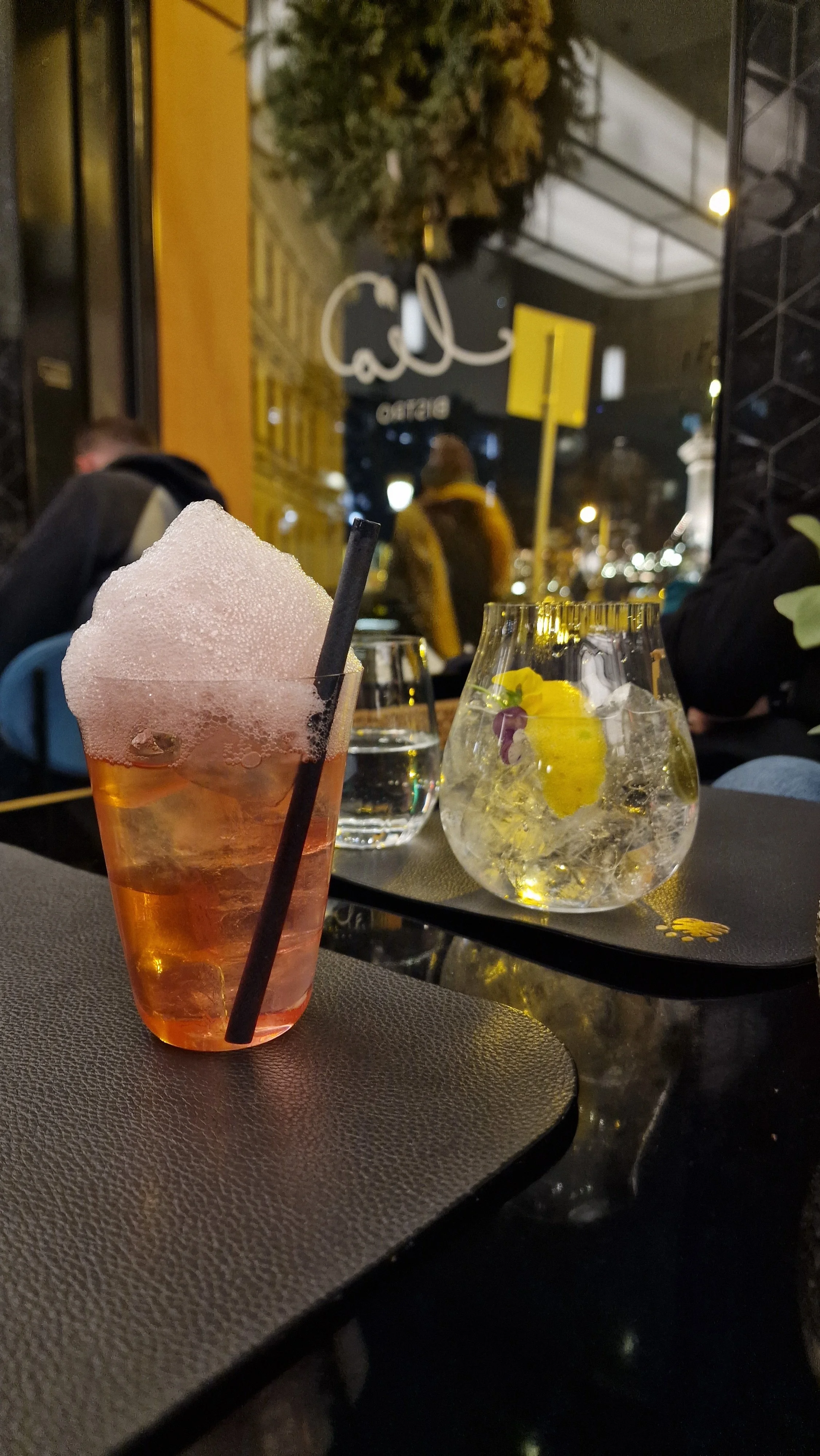
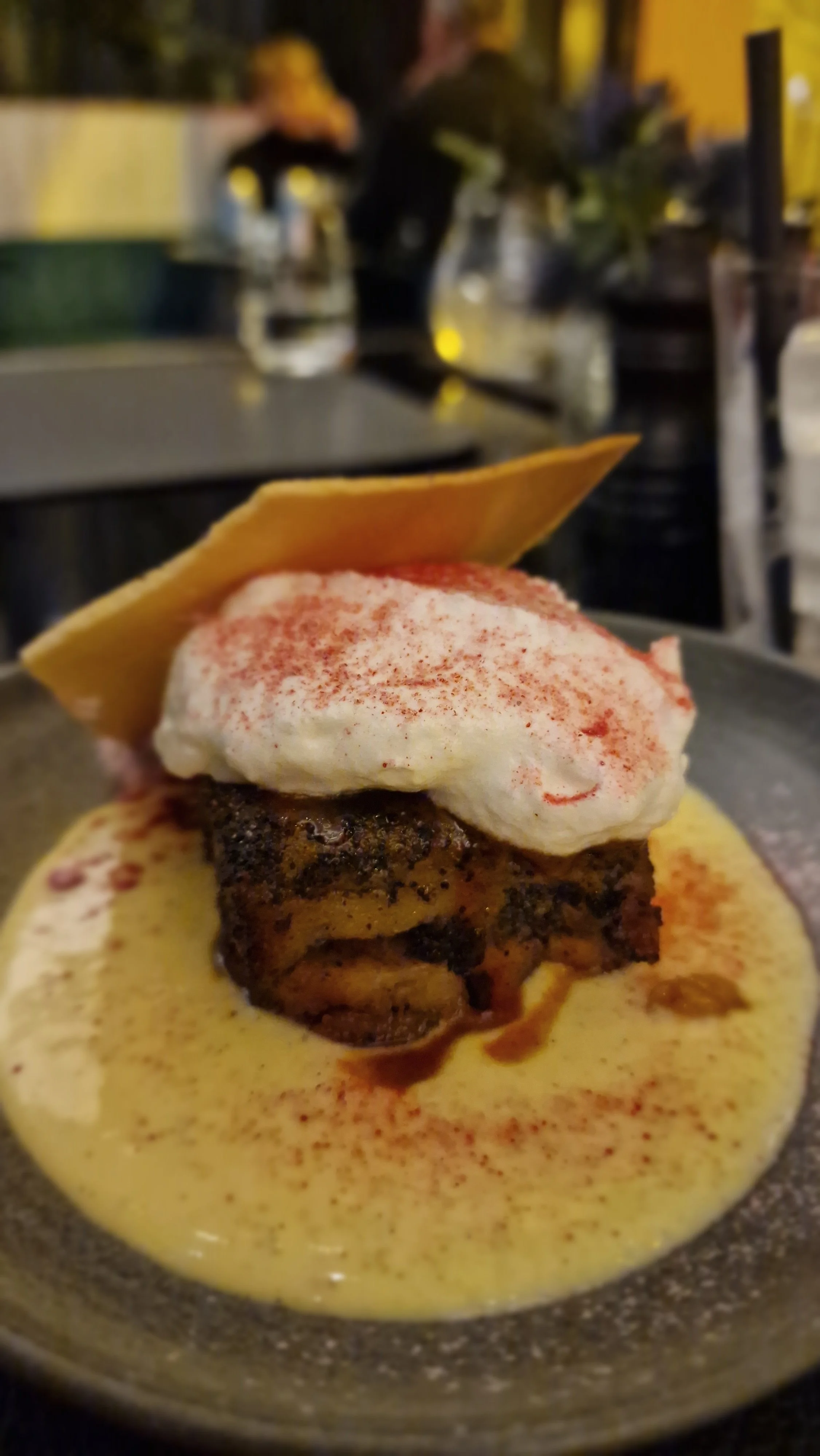
As the final chords of the melody faded into the warm hum of the early evening, we found ourselves lingering at the table, reluctant to break the spell this place had cast upon us. Yet, with hearts lightened and spirits lifted, we stepped into the frosty wind, smiles tracing our lips. The city embraced us once more, its charm whispering promises of more to come before taking a break at the hotel. We exchanged eager glances and began to plan our next adventure—dinner in Buda at Leo Bistro, where the majestic hills and historic streets would set the scene for another tapestry of flavors and stories. From there, a moonlit tour awaited, a chance to walk the paths of history and trace the city's heartbeat in the rhythm of its streets.
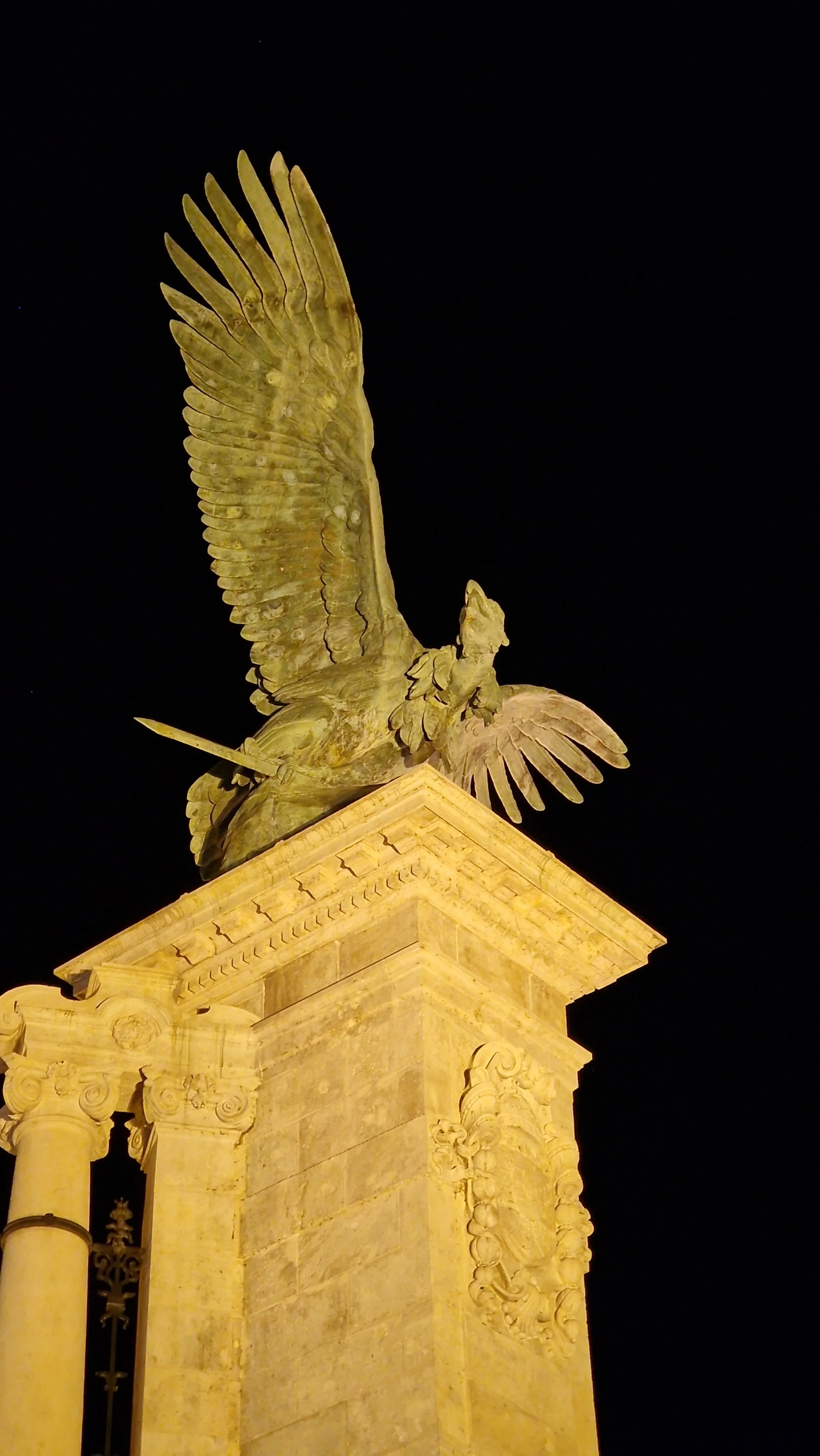
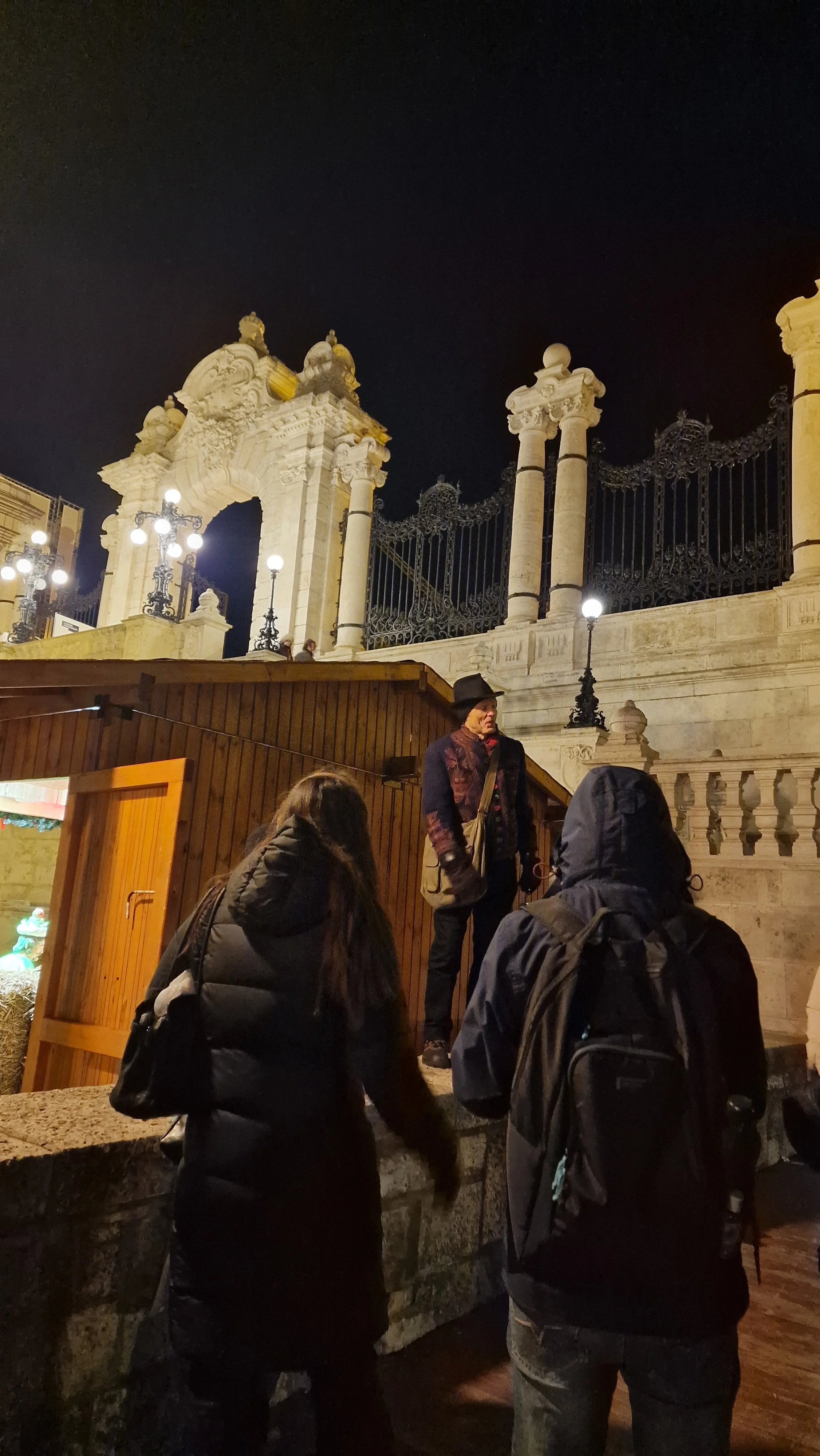
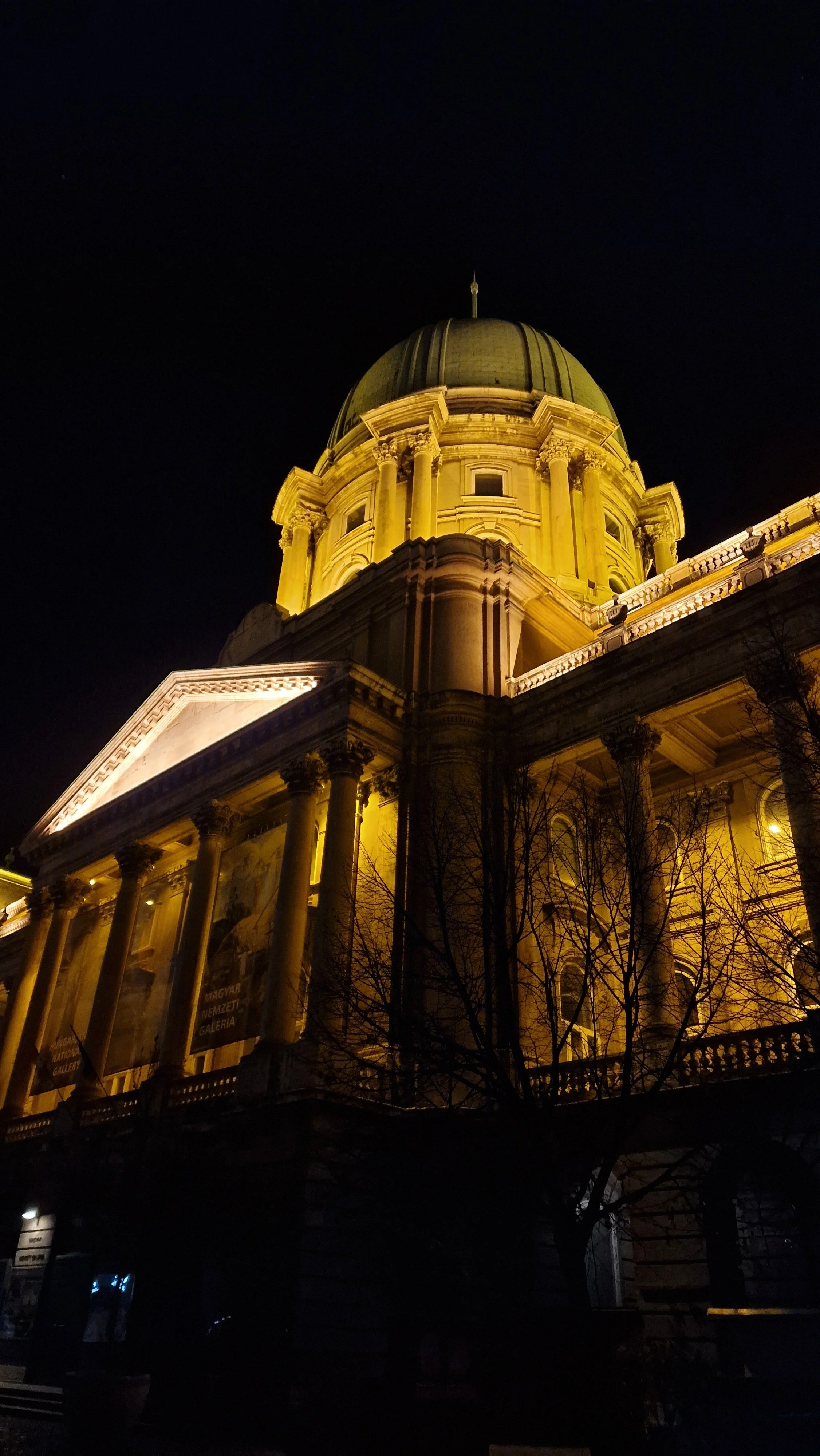
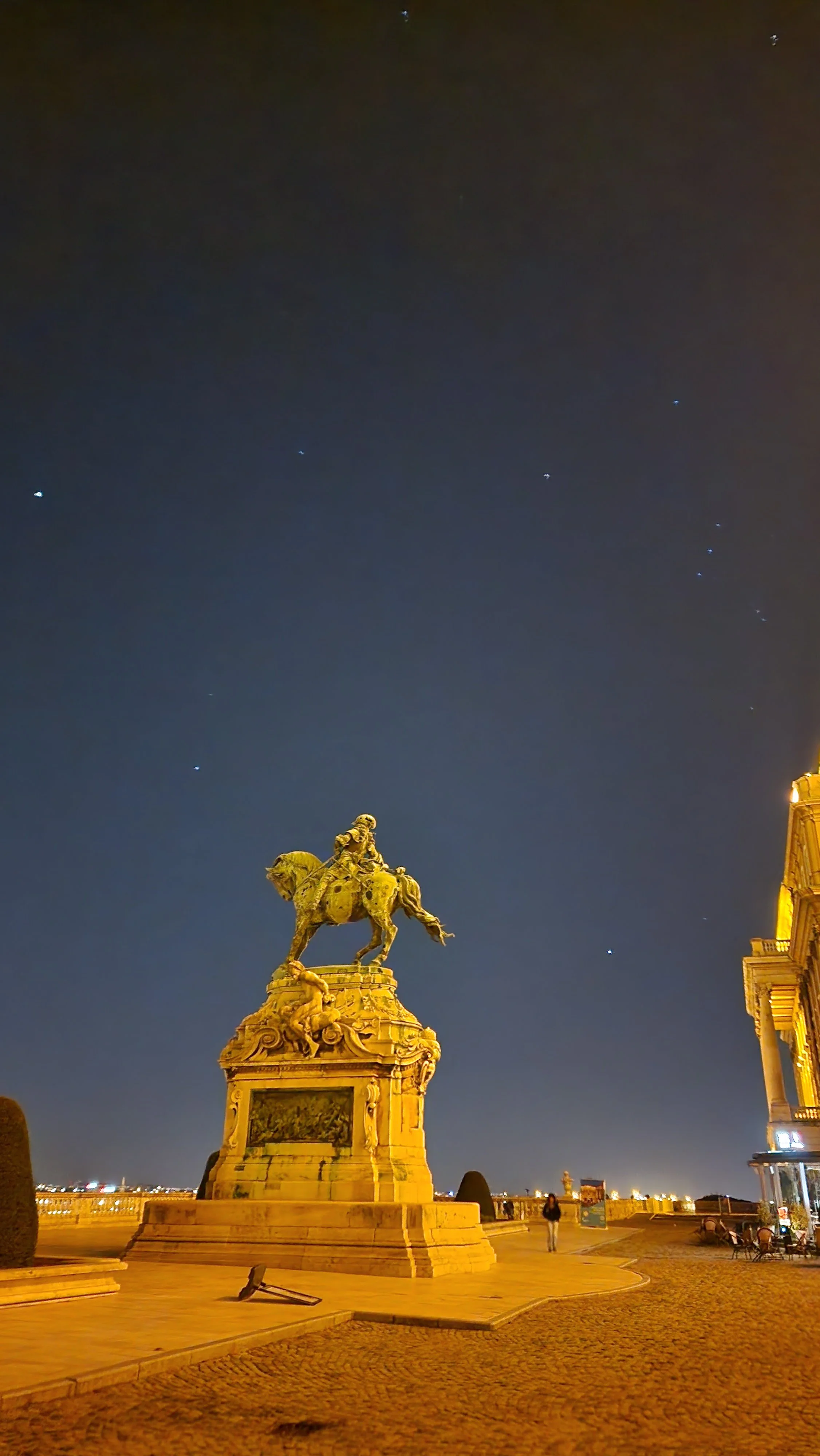
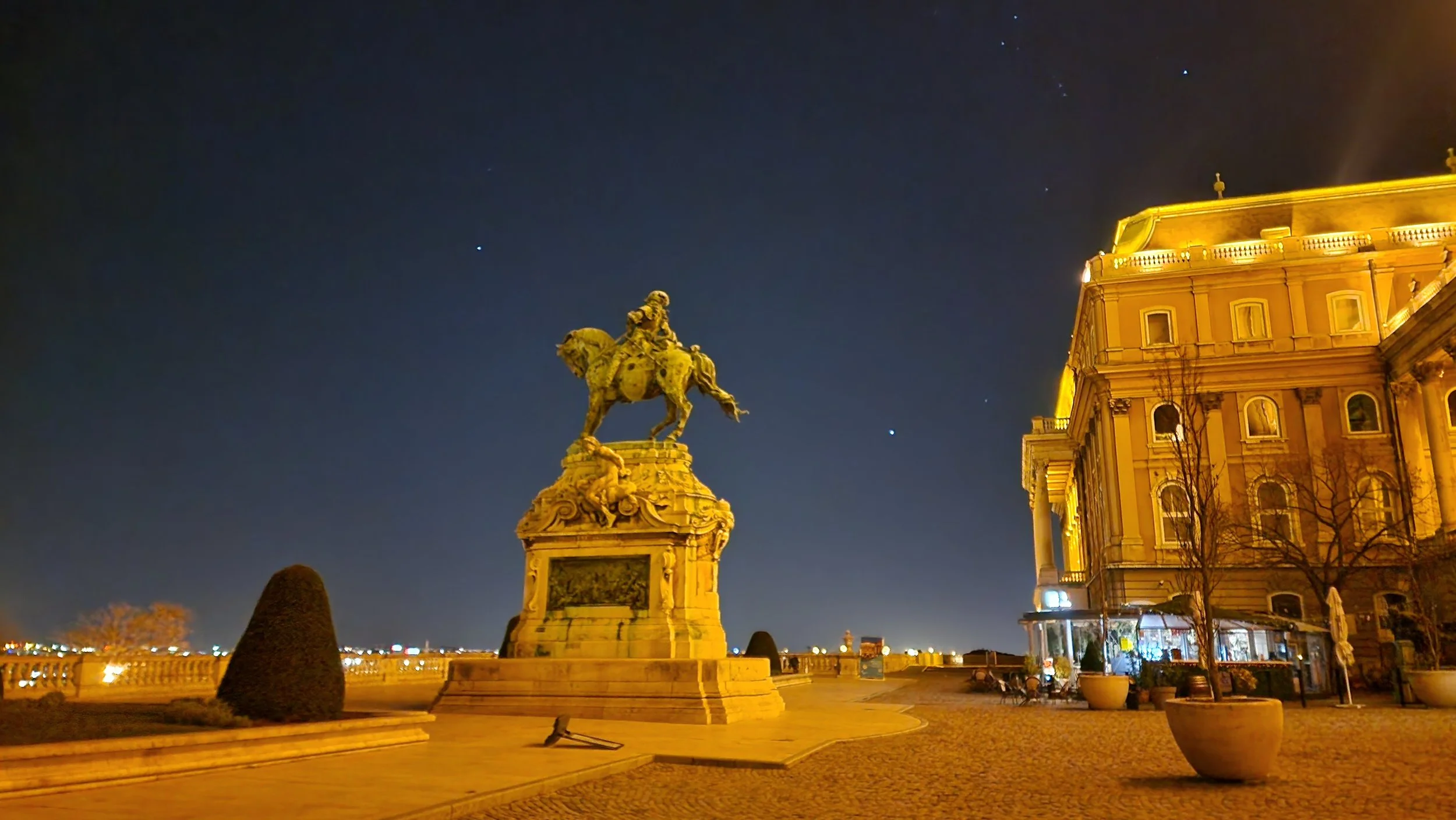
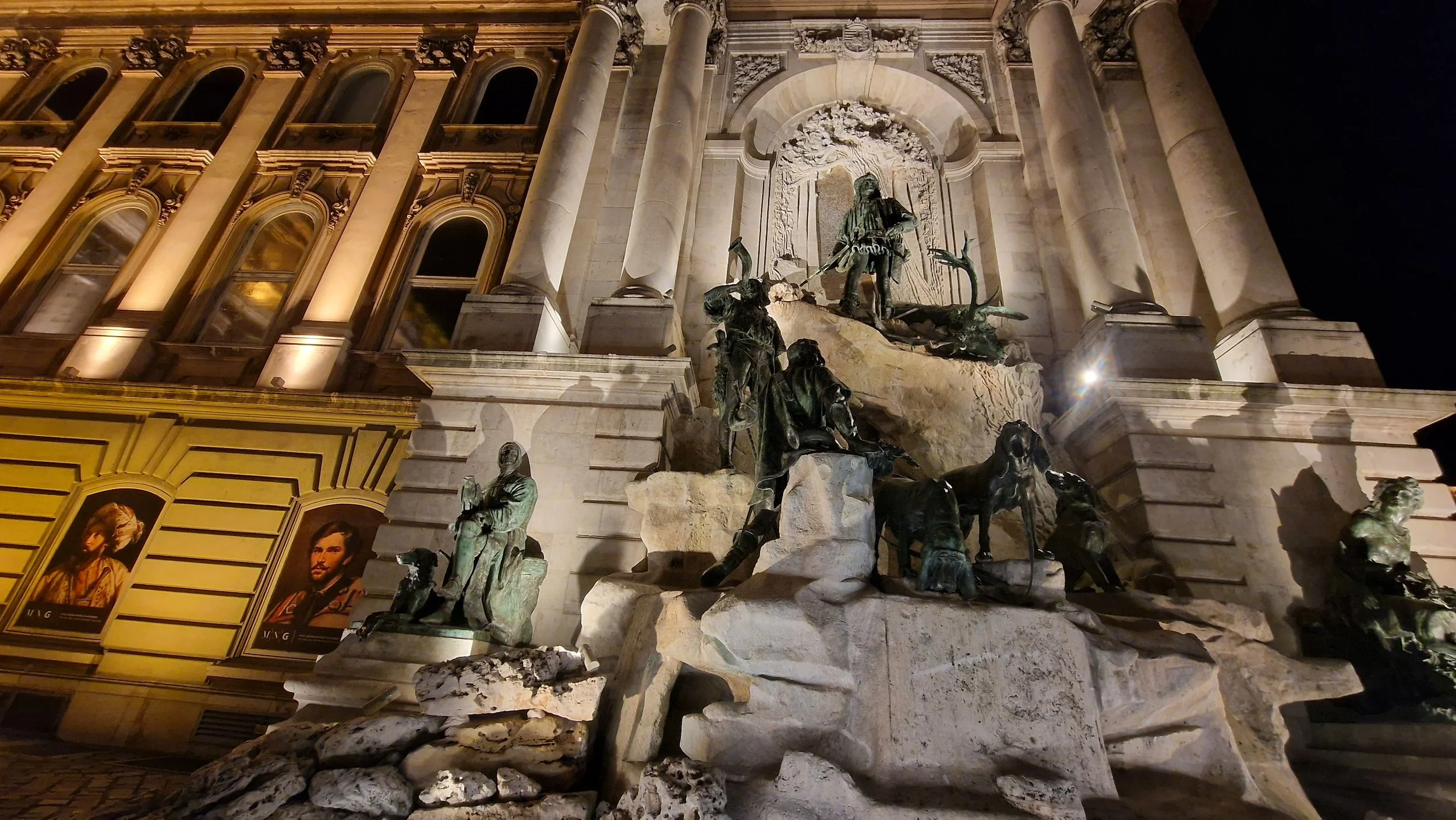
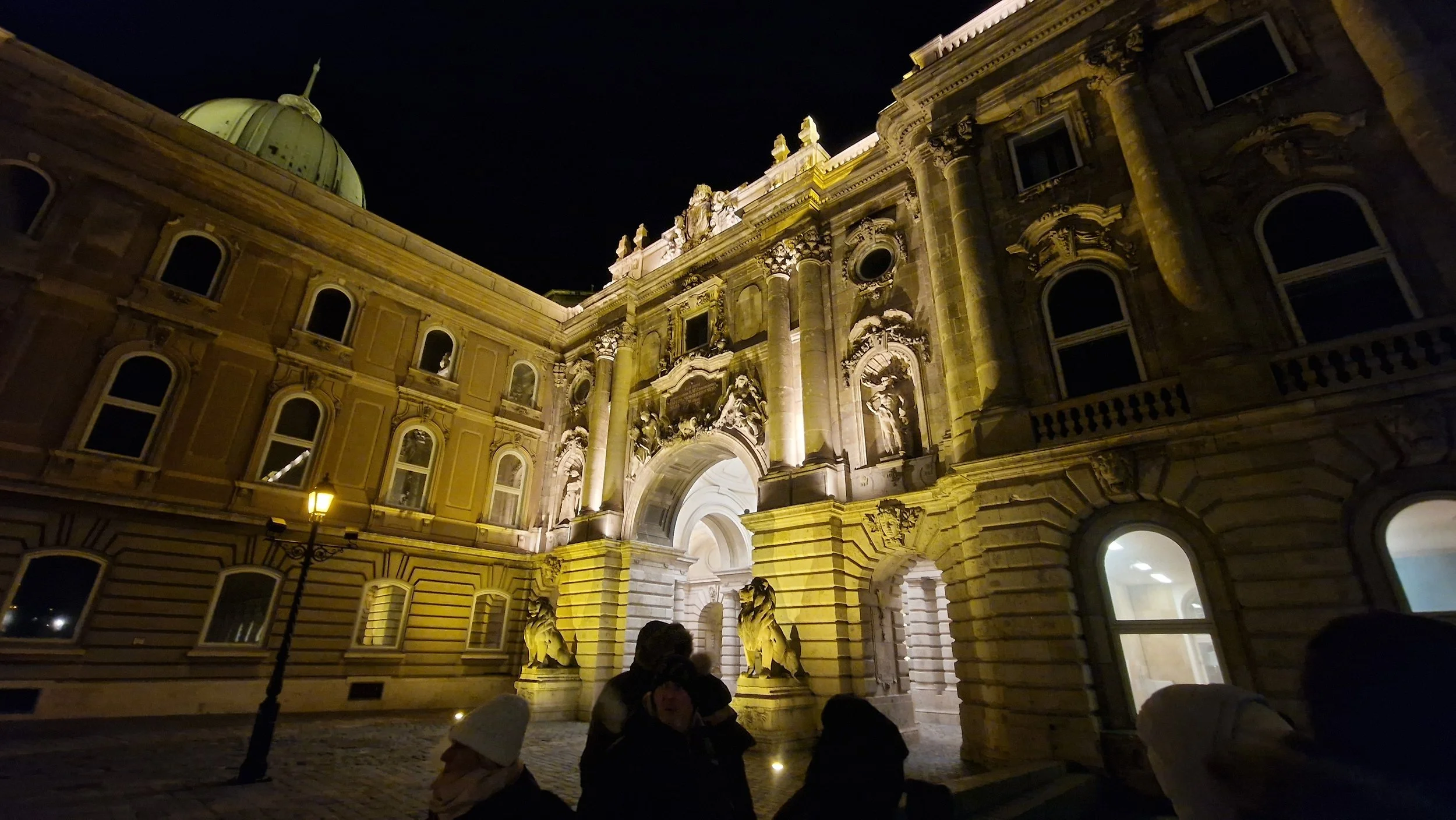
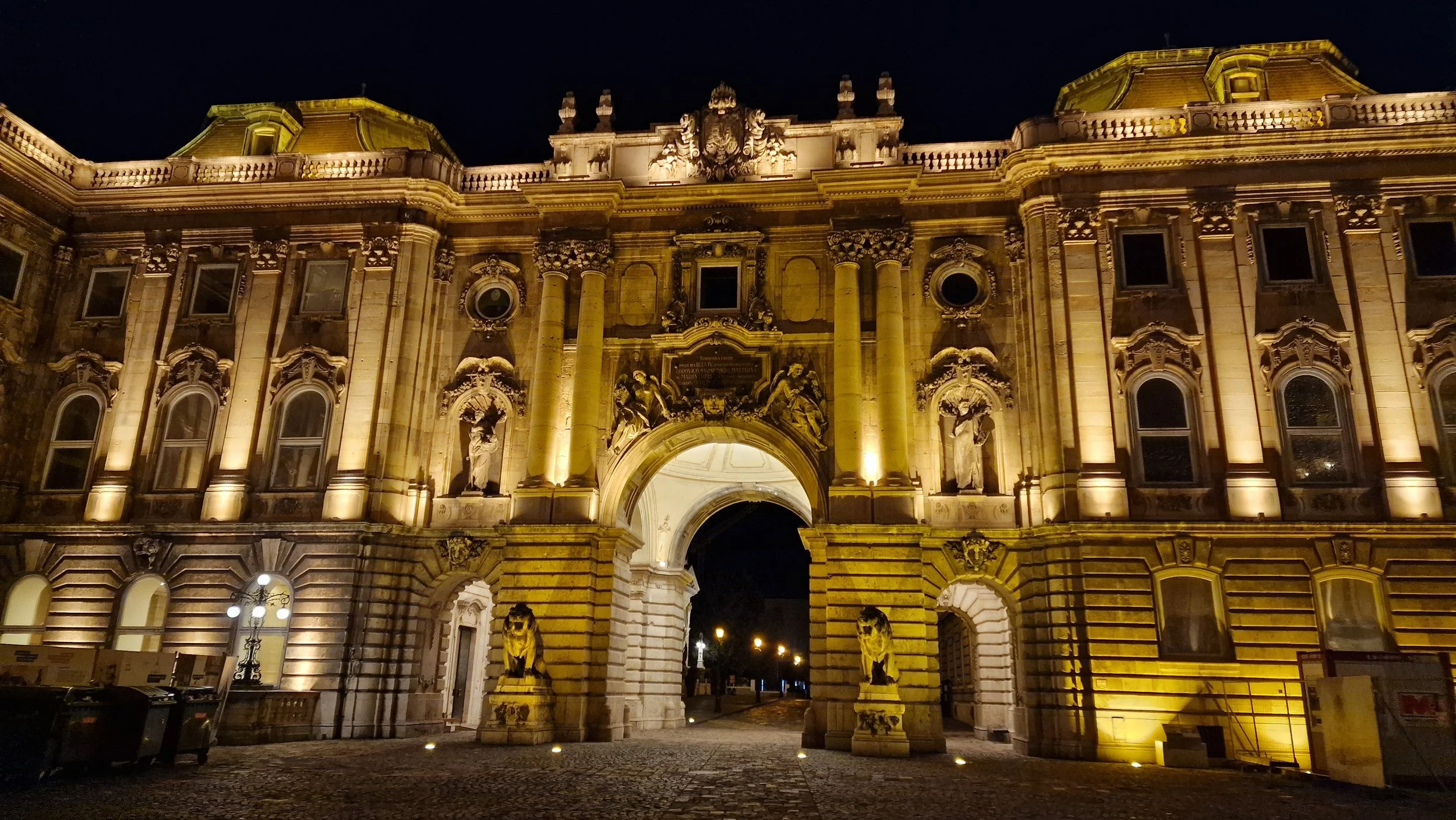
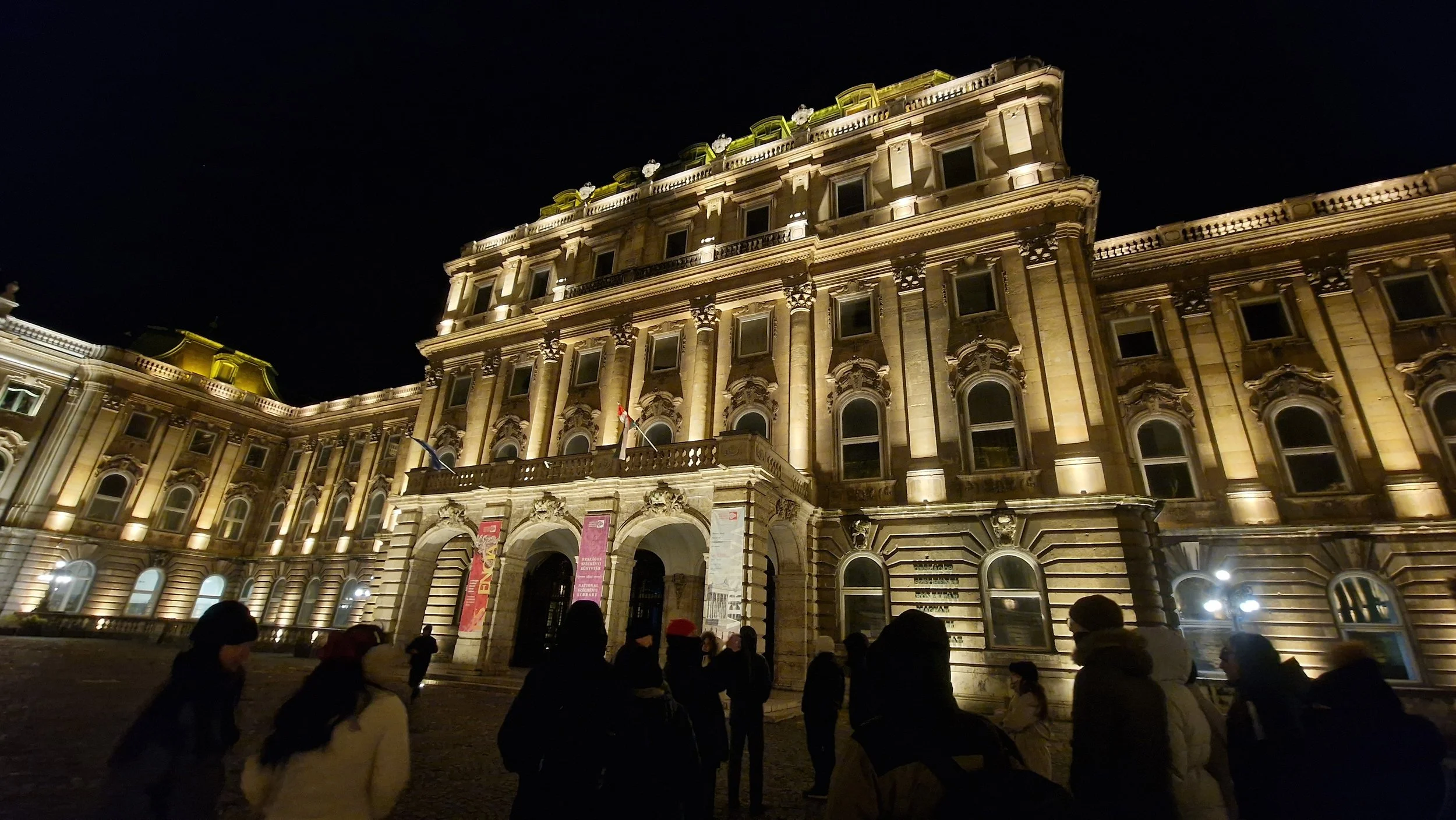
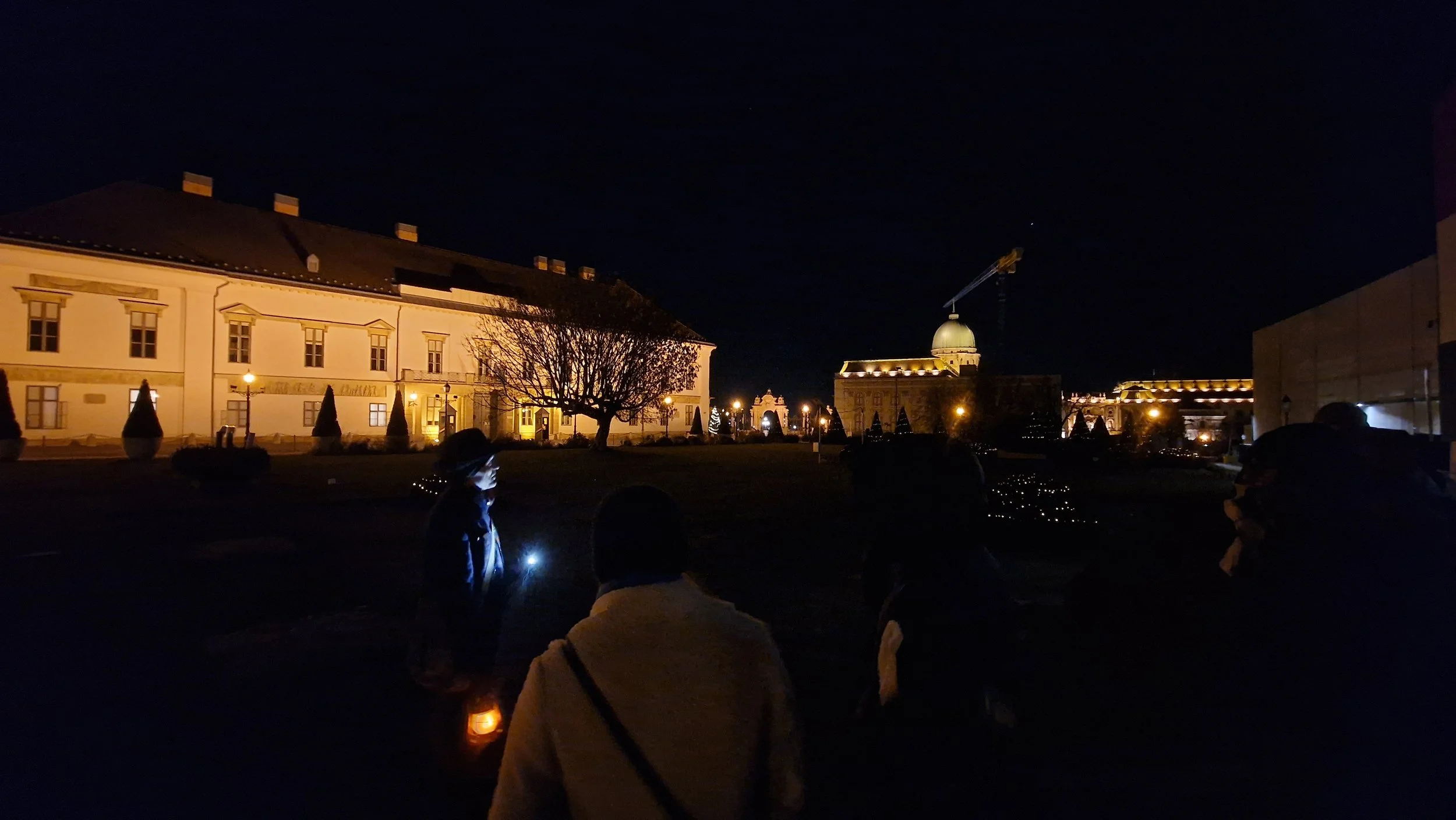
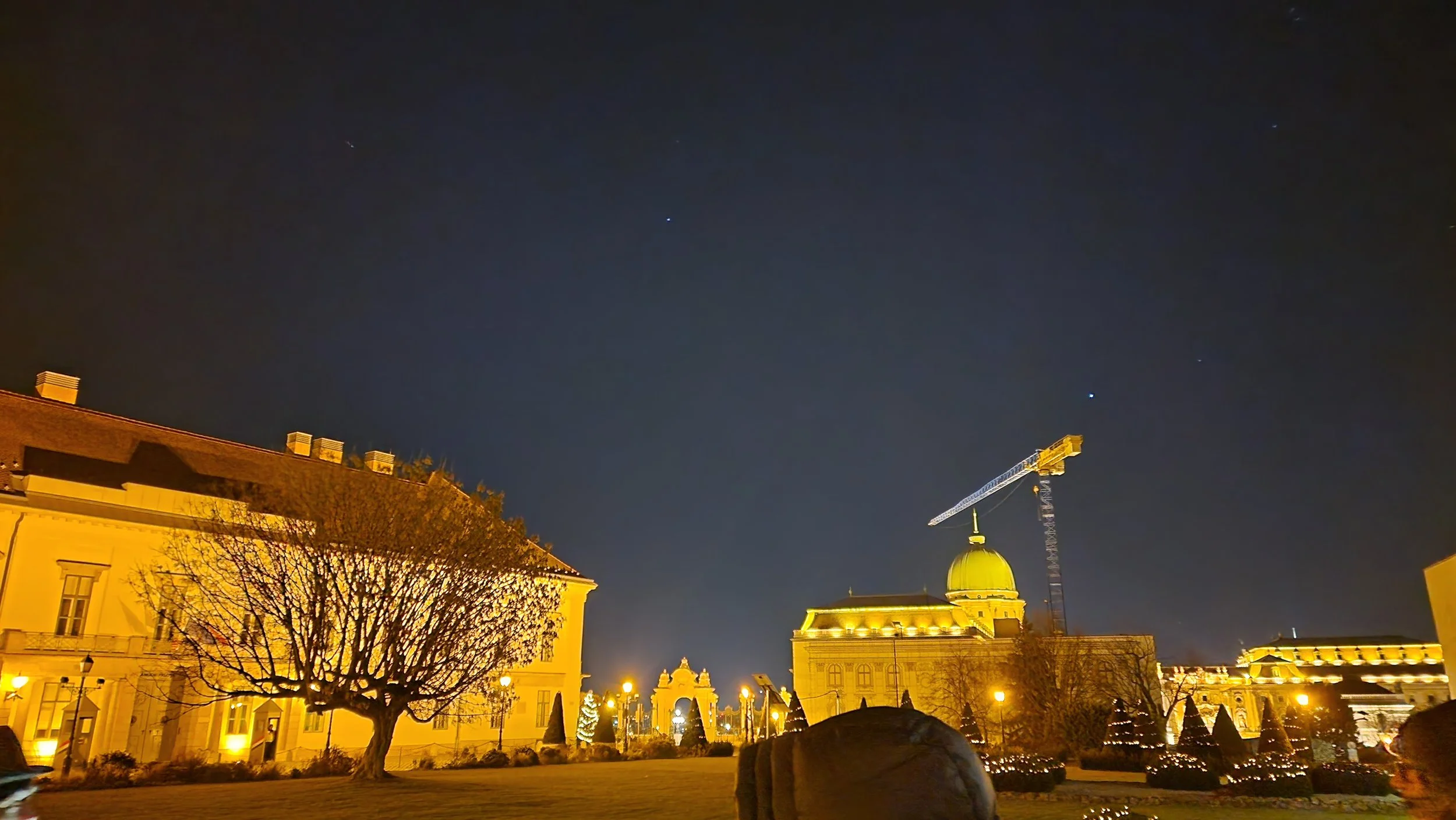
Somehow, Alex, who is perpetually cold and eternally bundled in layers, managed to arrange a walking tour that ventured into the macabre. Led by a local guide with a flair for the theatrical, we ascended toward the castle, unraveling tales of lurking vampires, chilling ghost sightings, and sinister murders. The "dark history walk," as they called it, was as thrilling as it was eerie, each story tethered to the city’s ancient stones.
Despite our careful layers, the biting wind clawed through jackets and scarves. The cold was unrelenting, and one by one, people in our group began to quietly disappear from the tour, retreating to warmth that seemed more elusive with each passing minute. When even we could no longer bear it, we slipped away before the finale, leaving behind whispers of mysteries untold. Buda, with its proud hills and haunting beauty, deserves to be met again under kinder skies.
On our last evening, after days of savoring the rich complexity of Hungarian cuisine, Iselda surprised us with a request for something more familiar—something fried and undeniably American. She is, after all, a patient traveler, rarely one to complain, so we gladly obliged. Not far from the hotel, we found an American-style diner, a pocket of neon-lit nostalgia amidst the grandeur of Budapest. The place was nearly alive with a constant shuffle of guests coming and going, their voices blending with the soft hum of a jukebox in the corner.
We settled into our booth, comforted by the simple menu and unpretentious atmosphere, when a young couple seated a table away caught my attention. They were steeped in what could only be described as a heated lovers’ quarrel. The young woman, animated and stern, was clearly mid-lecture, while the young man—Kafka reimagined in Gen Z form—sat slumped, his long legs stretched out awkwardly under the table. His face disappeared into his crossed arms, a portrait of tragicomic resignation. I couldn’t help but notice it—Kafka’s ghost, reincarnated once again.
The humor of it struck me, absurd and perfect, much like the writer’s lingering spirit in this city. I laughed softly to myself, careful to keep my amusement hidden, aware of how strange it must seem to keep conjuring visions of Franz Kafka over plates of American appetizers. And yet, this was the last time I saw him here—in this awkward, all-too-human moment, where he felt more present than in any textbook. His ghostly counterparts faded as we left, but I imagined him smiling somewhere, his peculiar laughter echoing faintly in the Budapest night.

The ghostly presence of Kafka certainly comes with historical ties to Budapest during a pivotal moment in history. While the earlier reflections play with Kafka as a spectral figure in modern-day musings, the documented reality grounds him in an intimate yet fleeting connection to Budapest during the spring in 1915, just before the upheaval of World War I. Kafka's train stopped in Budapest on his way to accompany his sister Elli to meet her husband near the war's edges in Sátoralja-Ujhely. They had no idea that they were actually traipsing into the beginning of a global disaster.
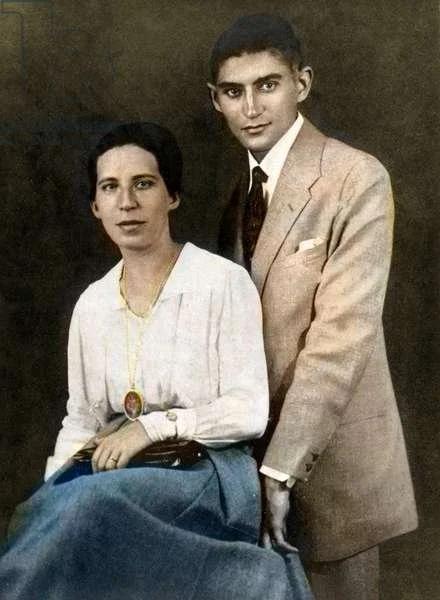
The famous photograph of Franz Kafka and his fiancée Felice Bauer was taken in Budapest in July 1917 during their second engagement.
Franz Kafka’s wartime travels crystallized a tapestry of fleeting encounters, veiled tensions, and moments of introspection. On one such train ride in 1915, a host of strangers—from officers to nurses, from families to solitary wanderers—shared the dimly lit cars, bringing stories, languages, and personal artifacts to the moving, claustrophobic stage. Kafka, largely an observer, absorbed the essence of their lives. His notes reflect a striking ability to perceive intimacy within sorrow, as in his reflection on an elderly couple bidding a tender farewell amidst the war's chaos. Every stop, every delay, every unexpected encounter played into the charged atmosphere, from the imposing figures of German officers to restless Gypsy music in Budapest cafés. Yet, even surrounded by these fragments of humanity, Kafka remained distant, retreating into his thoughts, his writing, and the heavy weight of an unfolding world he could not control. It was a journey stitched together by chance, emotion, and the persistent specter of a war that reshaped everything, yet left him yearning for some quiet corner of meaning.
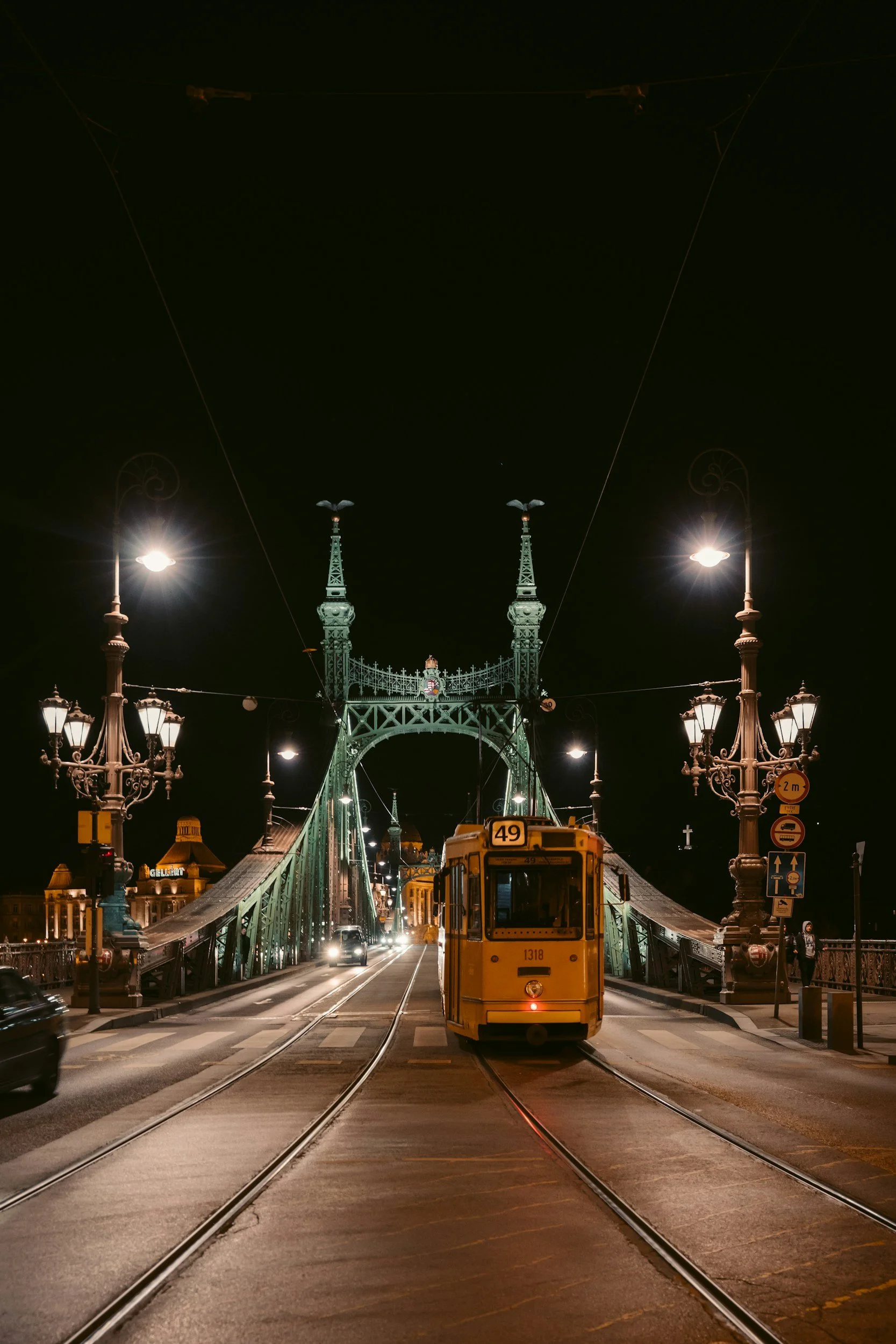
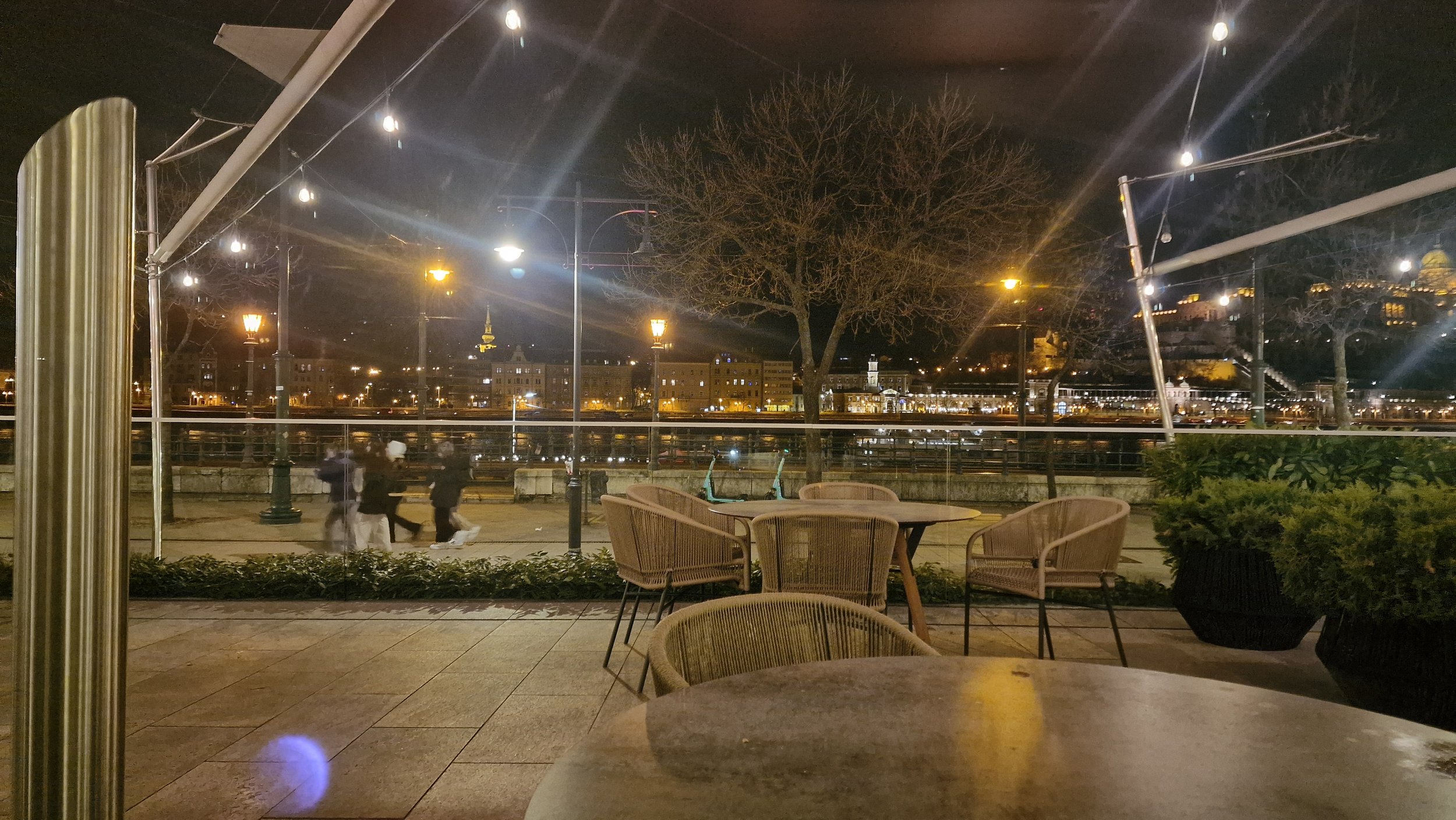
That strange liminal vibe of Budapest at night
His impressions of the city, fleeting as they were—filled with bustling cafés, strangers, and disquieting observations—are imbued with a quiet tension. The geopolitical atmosphere loomed heavy, with evidence of the Austro-Hungarian Empire's impending fracturing palpable even to a quiet observer like Kafka. This historical account of Kafka’s stopover not only juxtaposes his introspective tendencies against the backdrop of a world on the brink of irrevocable change but also invites a portrait of him as a man navigating the logistical and emotional landscapes of wartime Europe—a setting as surreal as one of his novels.
As I wander through this fragmented tapestry of history, I cannot help but see Kafka everywhere—his shadow etched into the cracks of the old stones, his reflection caught fleetingly in fogged glass, his very presence mirrored in the figures of passersby who seem to unknowingly carry a piece of him. Here, in this liminal space between an irretrievable past and my own searching present, Kafka becomes not just a writer but an enduring metaphor. His doppelgängers haunt these winding streets and the city's interiors, their aimless strides an echo of the existential uncertainty that drives so much of his work. He is not merely a figure I admire; he is a ghostly companion, whispering truths and questions that shape my art like seams sewn delicately into fabric. His worlds, so labyrinthine and intricate, are not unlike the paths I take, both as a creator and a being, eternally fascinated by the silence between the words and the invisible forces that tether them.
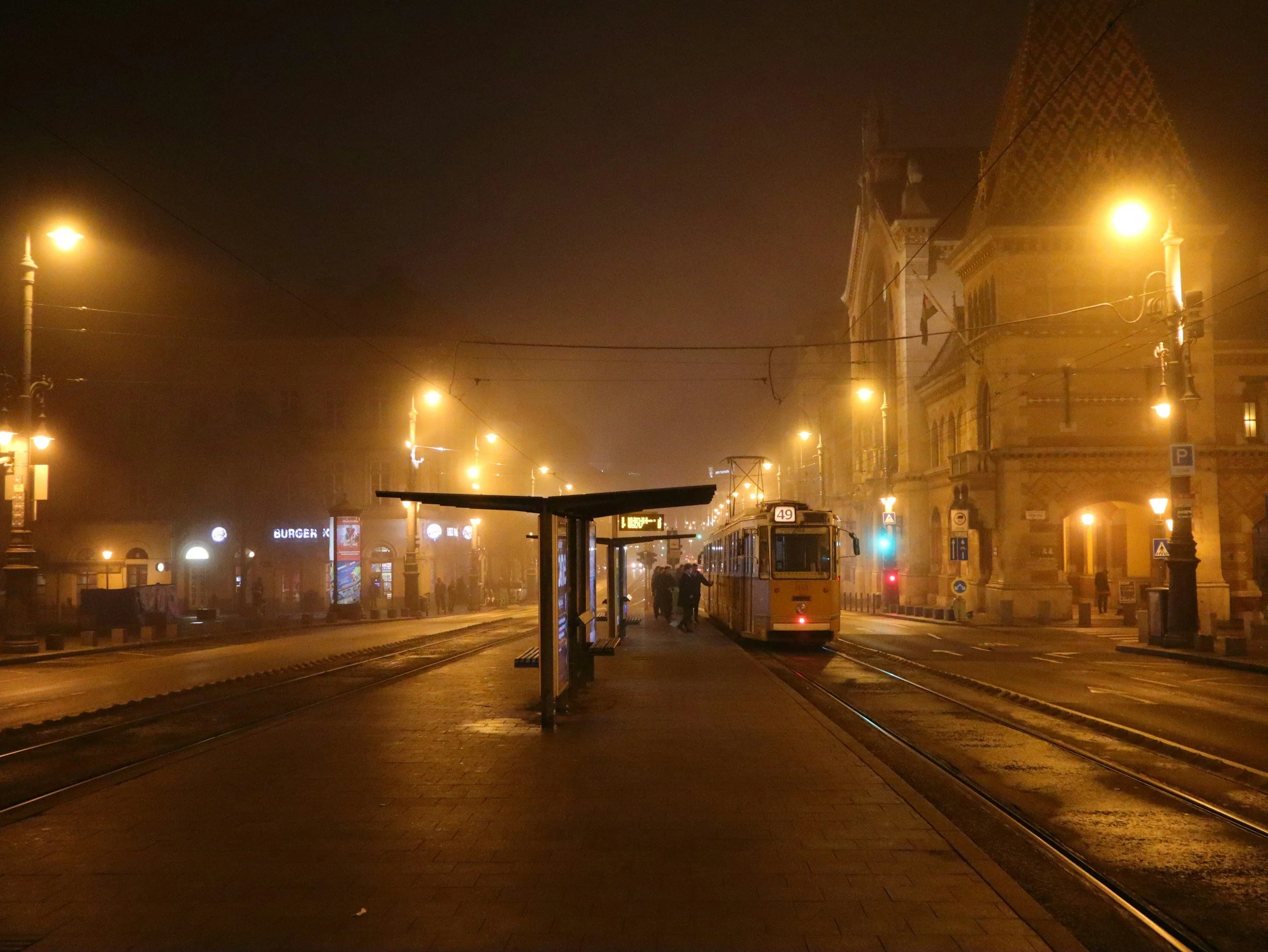
Next stop: More manuscript editing
This city, with its dim-lit alleys and silent whispers, seemed to call forth Kafka’s specter, his presence weaving itself into my being like a shadow that knew my every thought. It was here, amidst the architecture of doubt and the solitude of whispered rain, that another chapter of Koffee With Kafka emerged—an unforeseen bridge to the elusive final chapter I had been grappling with. His invisible hand appeared to guide mine, steadying my pen with a clarity I hadn’t known, as if the city itself willed the words into existence and eased some of my anxiety about the manuscript itself.
Words are but trembling shadows of truth, and yet it is through their frailty that we construct eternity. Write, not to capture certainty, but to explore the infinite contours of doubt.
Budapest offered us a magnificent pause. It gave us sweet pastries, historic weight, solved puzzles, and introduced me to a few moments of literary and artistic inspiration. As we packed our bags to return to Milan, leaving 2025 behind, I looked over my shoulder one last time. I half-expected to see a shadowy figure in a long coat, offering a faint, mysterious smile. He wasn't there, but the magic of the city remained, indelible and bright, lighting our way home.