Dreamweaving in Berlin
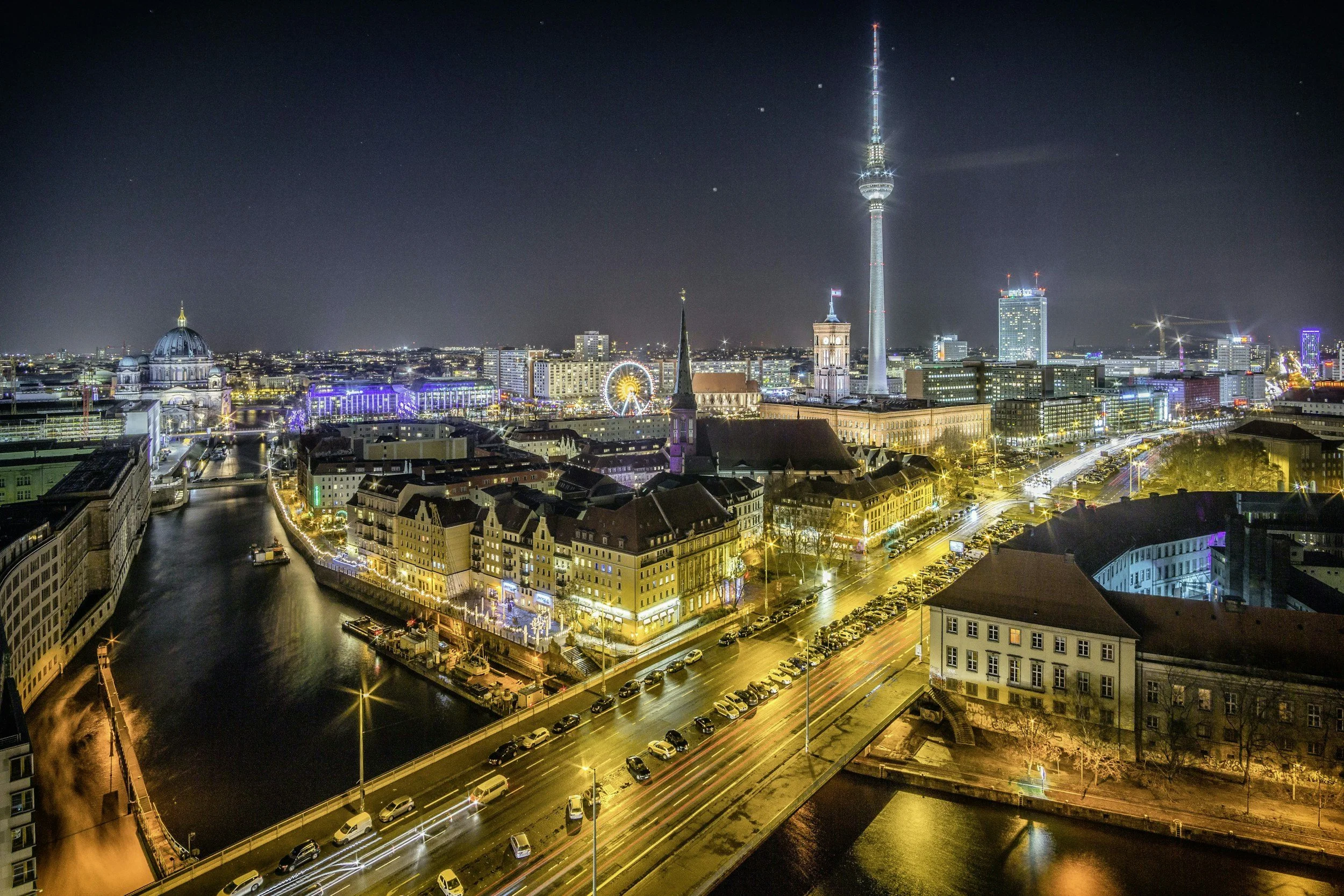
Bella Berlin…
Berlin in December carries a specific, heavy chill. The sky hangs low, gray and unyielding, inviting you to seek refuge in the warmth of old legends. You arrive expecting the storied embrace of the Hotel Adlon Kempinski, seeking a quiet space to rest and work. Instead, you step into a labyrinth of strange absurdities.
Wandering the world as an exotic "other" means you never completely belong to any one place. It is a liberating kind of exile. You float through borders and cultures, untethered. Yet, it also means you often become a blank canvas for the unfair judgments of strangers. You are seen not as a person with dreams and goals, but as a threat, a novelty, or something to be contained before you even have the chance to speak for yourself.
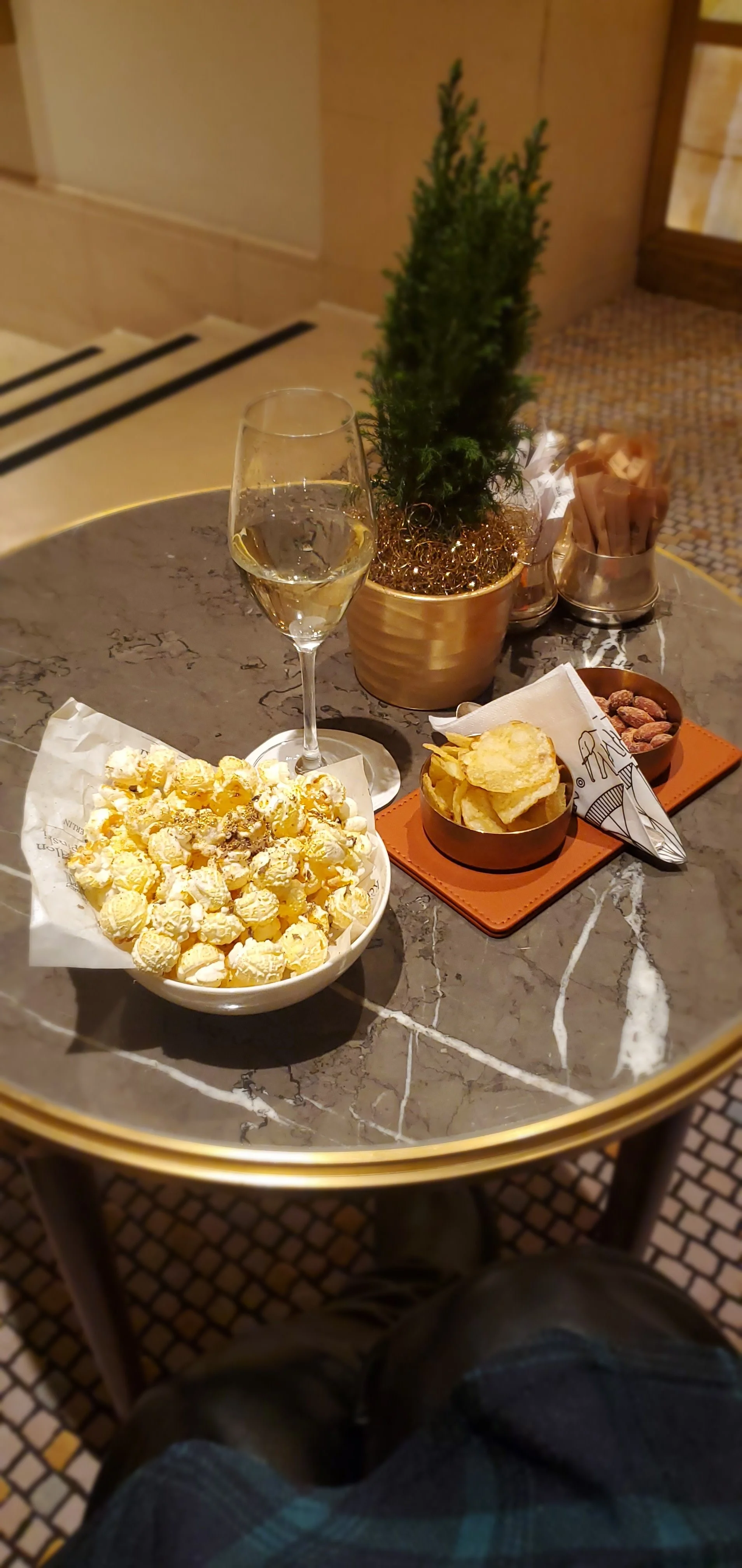
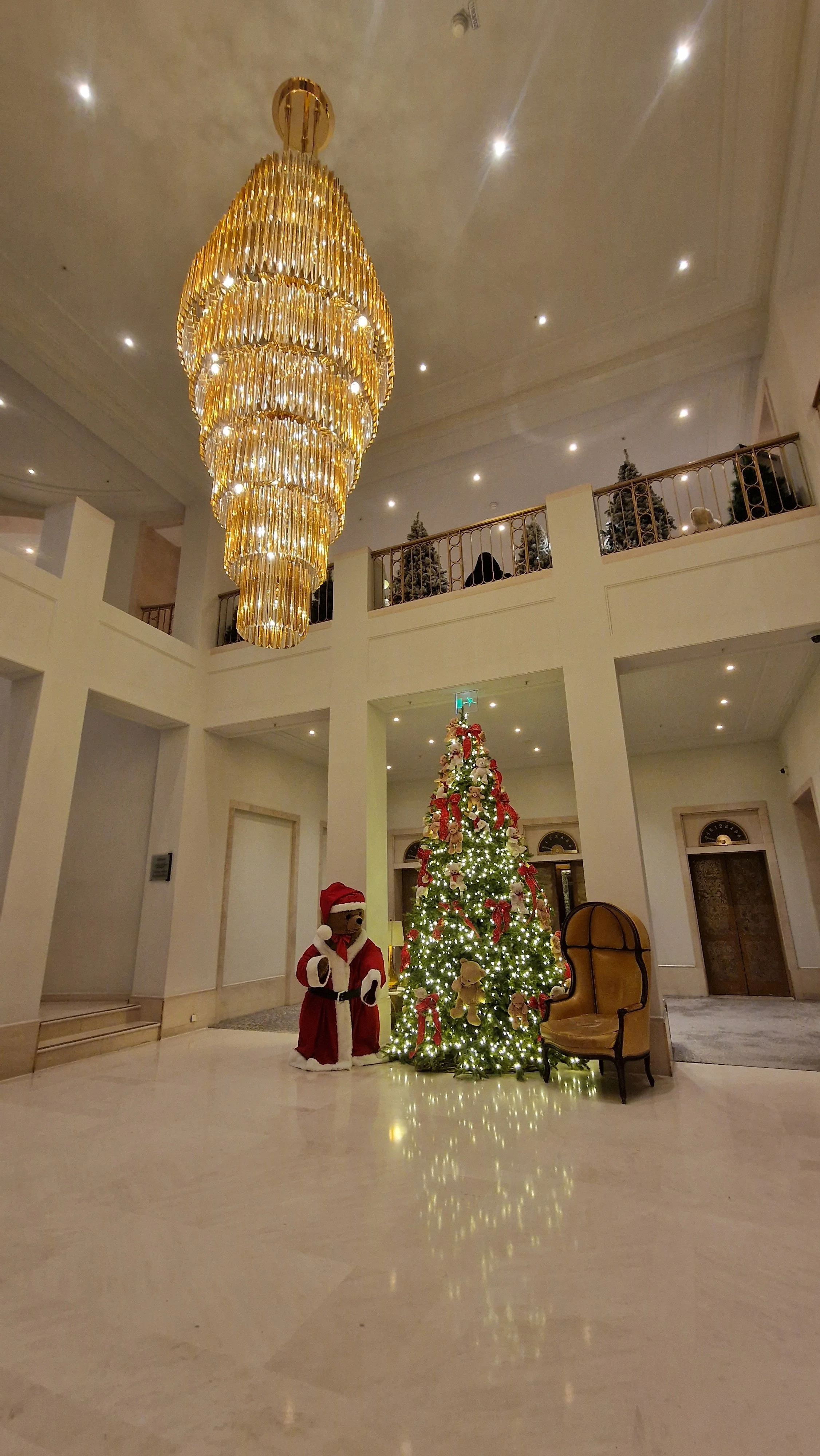

Living in Italy became a masterclass in this bizarre reality, but staying at the Kempinski didn't let me escape micro-dosing microaggressions hell. Not for one second.
Arriving early, I was promised a prioritized room, only to wait hours while my schedule dissolved while wearing airport clothes that consisted of a mini kilt, thigh-high boots, leggings, and a long-tail gray hoodie. This was not how I wanted to show up to two meetings as the porters vanished my luggage into the ether, returning just moments before I had to leave.

Pacific Highlander chic…
As I rushed out of the hotel for the second meeting, one Uber after the next cancelled, so I elicited the help of a valet who ended up carelessly slamming the car door on my right foot, leaving a deep, throbbing ache that tracked my every step for days.
By the time I arrived at Paris Bar in Charlottenburg, my heart was heavy with both embarrassment and determination. Punctuality has always been my sacred promise to others, a commitment etched into my soul, so being late to meet A, a talent agent whose attention I had somehow captured through a film review, felt like a lapse in my character I wouldn’t soon forgive. With my hand pressed to my chest in a gesture of earnest apology, I made my way across the restaurant’s storied interior to find A waiting patiently at a table tucked inside.
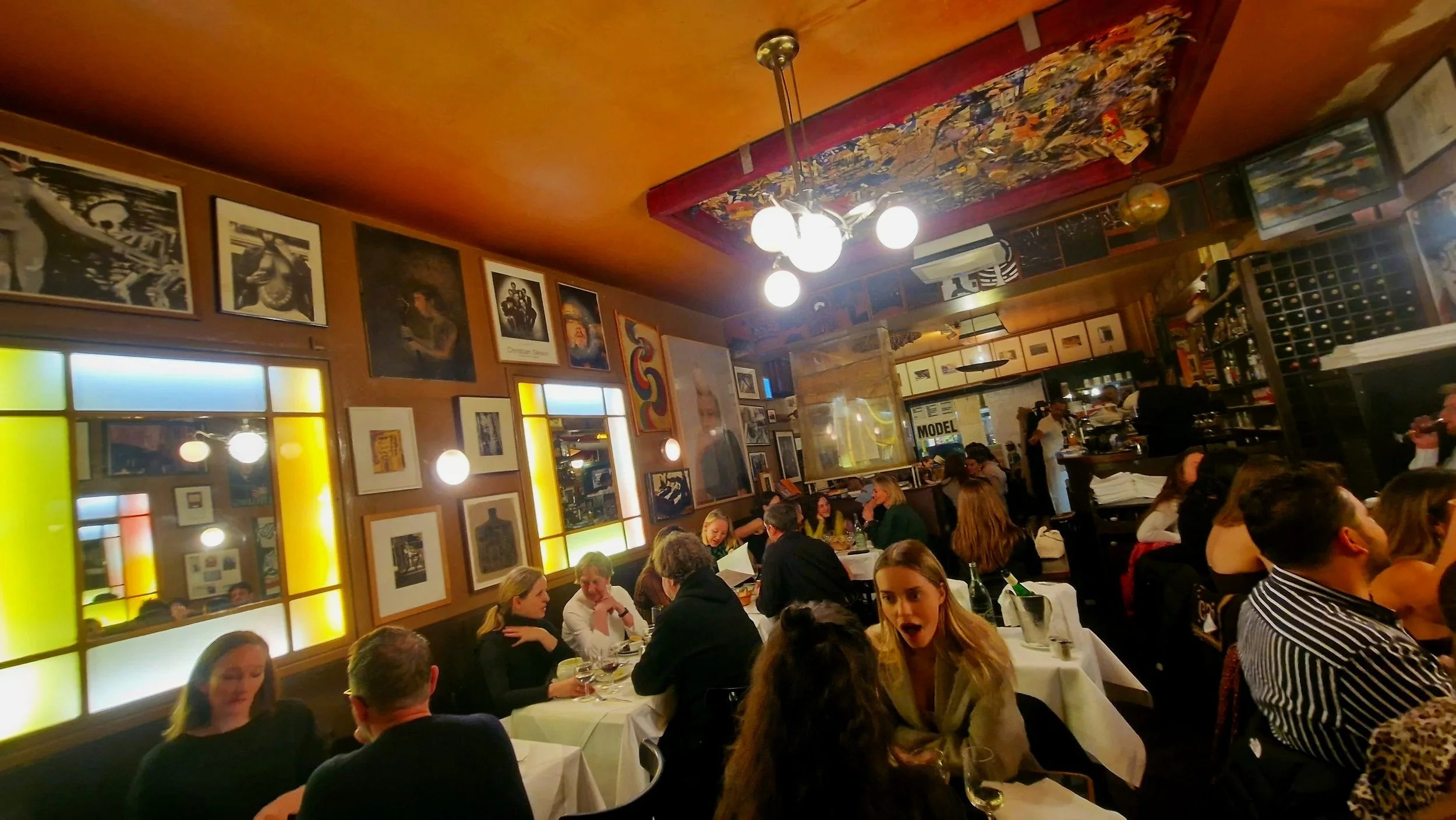

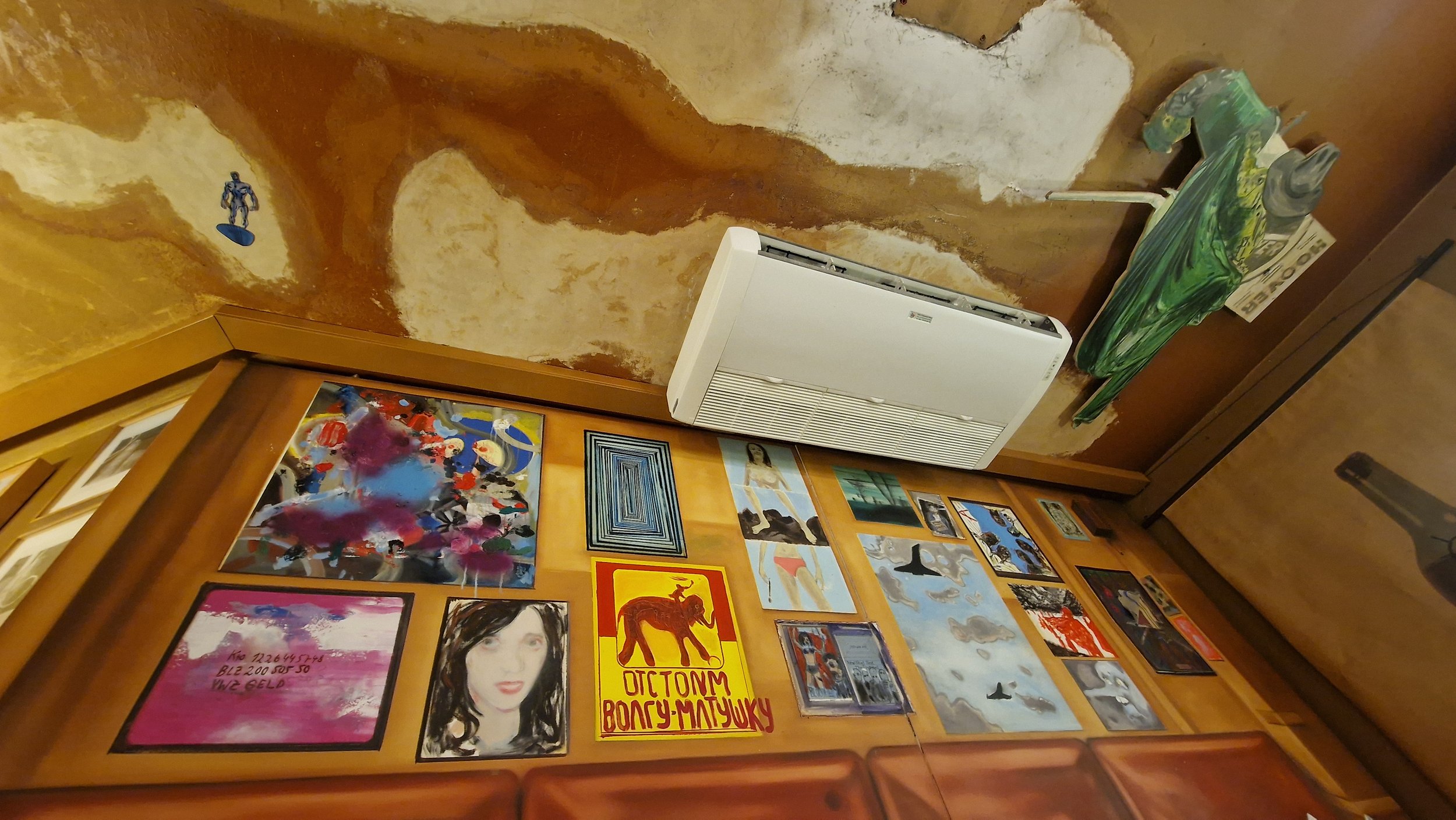
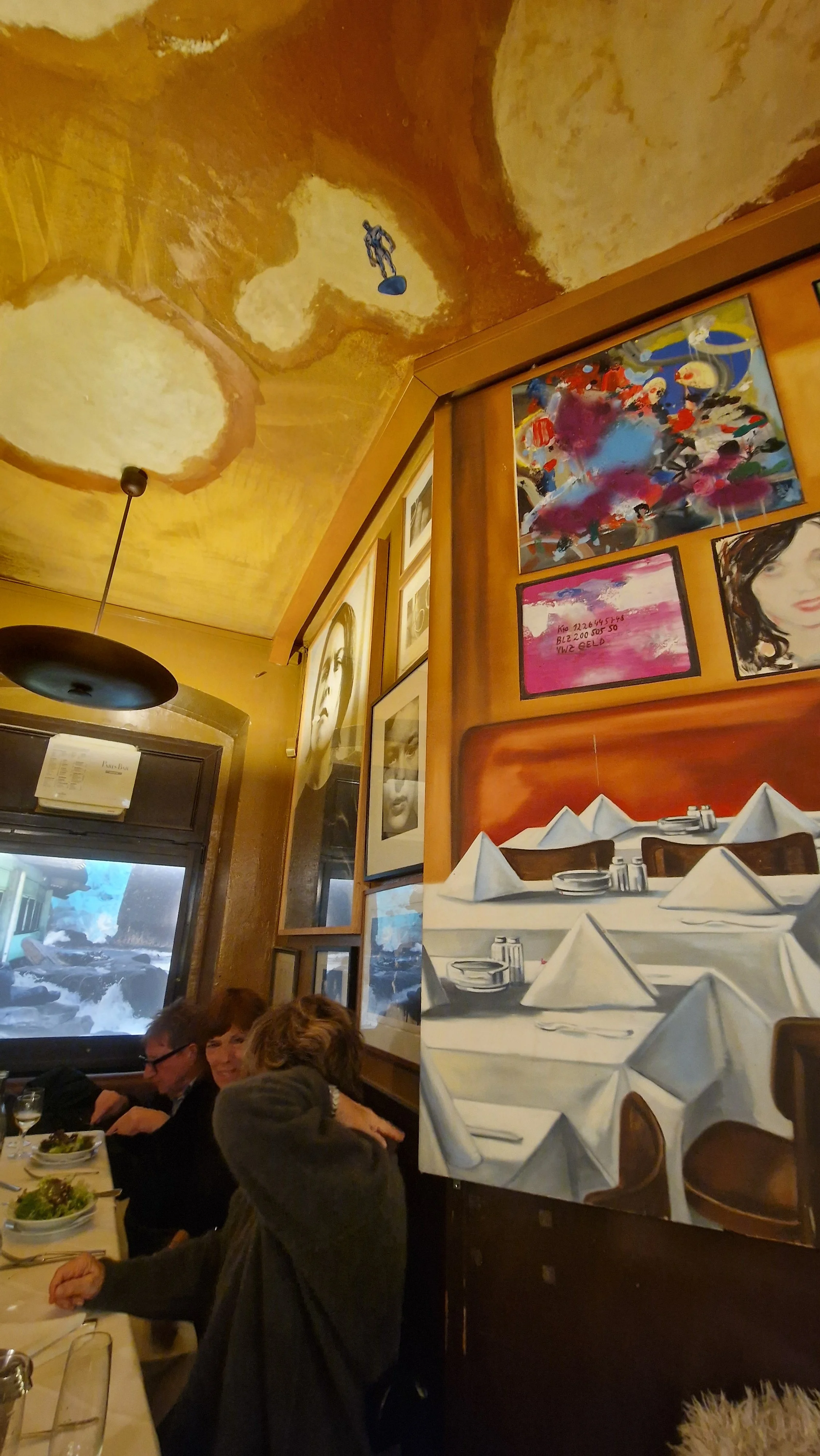
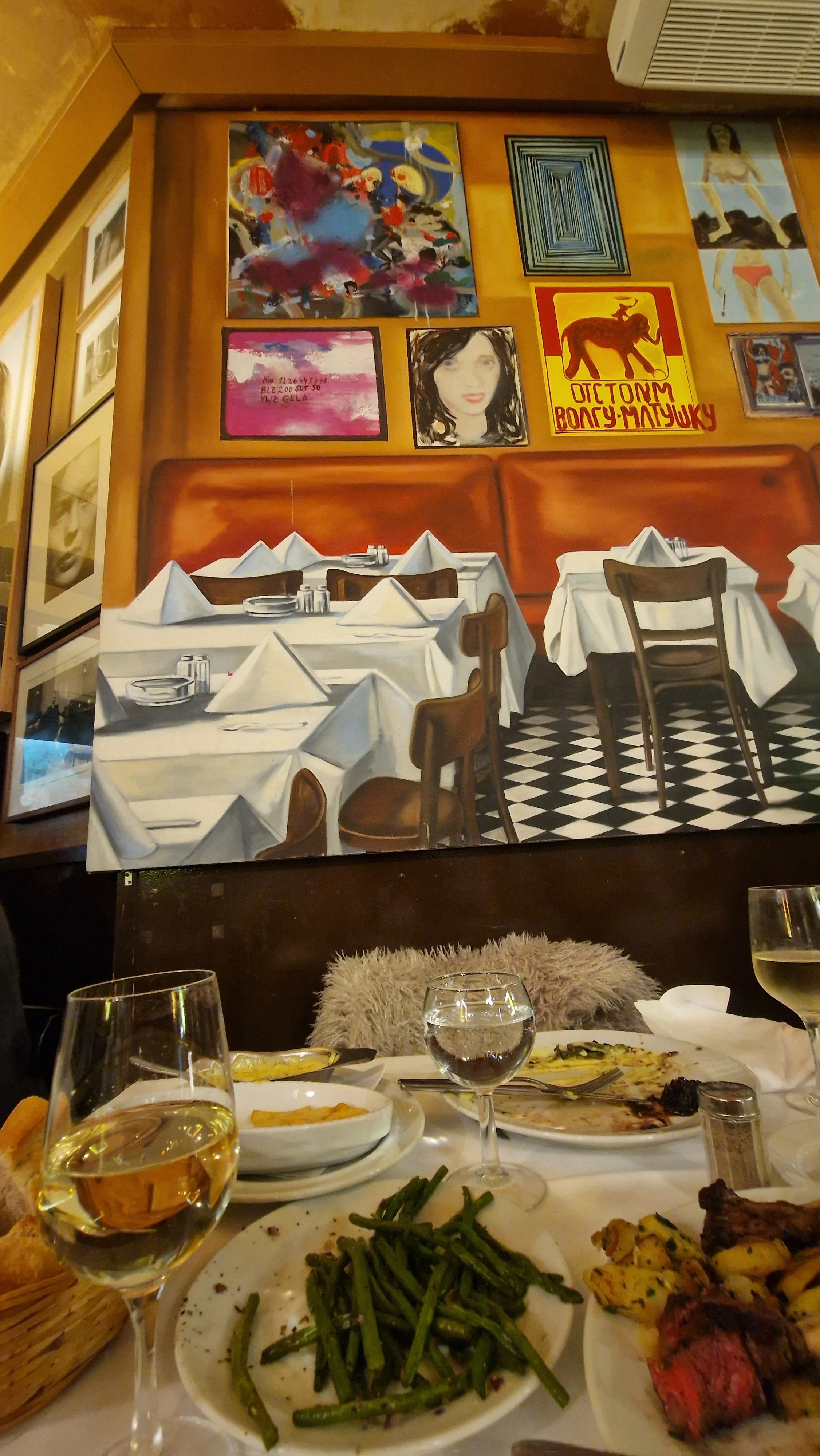
Paris Bar, with its pulsating ambiance of effortless charm and artistic resonance, seemed almost too perfect, as though the universe had written this moment to take place here, among its walls adorned with decades of eclectic art. Established as a haven for artists, philosophers, and creators, the location has long been a Berlin institution, both sacred and alive with its colorful history. It was impossible to sit within its hallowed space and not feel the ripple of existential echoes, which perhaps explains why this dinner slowly stretched into something more expansive—a four-hour sojourn into the depths of life’s fragile beauty.
I thought of Kafka, whose labyrinthine prose had always been my north star through the endless twists of self-discovery. His words—precise yet dreamlike—echoed in this moment. There was something hauntingly Kafkaesque about this dinner at Paris Bar, not in the bureaucratic nightmare sense that most people apply to bleak or illogical circumstances, but in the luminous strangeness of it: the light catching in A's earrings as she leaned forward, the waiter's shadow stretching impossibly long against art-laden walls, the sensation of being both observer and observed in a scene that felt scripted by some cosmic hand. Time seemed to fold in on itself as our disparate lives converged into something extraordinary and inevitable.
Over the course of those golden hours, A and I floated through conversations that spiraled in every direction. We unearthed pieces of ourselves through tales of love, losses that left scars, cities that became homes, and the silent griefs that shape us along the way. The air was dense with connection, the kind that forms between two souls briefly brought together under the same celestial canopy, sharing secrets in the safety of anonymity. It was the kind of exchange you know will linger in your mind long after its words have faded.
Later that night, we found ourselves enveloped by yet another world inside the Elephant Bar at the Kempinski, its elegance wrapped in darkness and mystery. Where Paris Bar had been a flight into introspection and connection, the Elephant Bar became an unraveling—a dance of shadows, indulgence, and the unspoken layers of human nature. It was a night that lived somewhere between reality and reverie, one that would follow me much further than I expected.
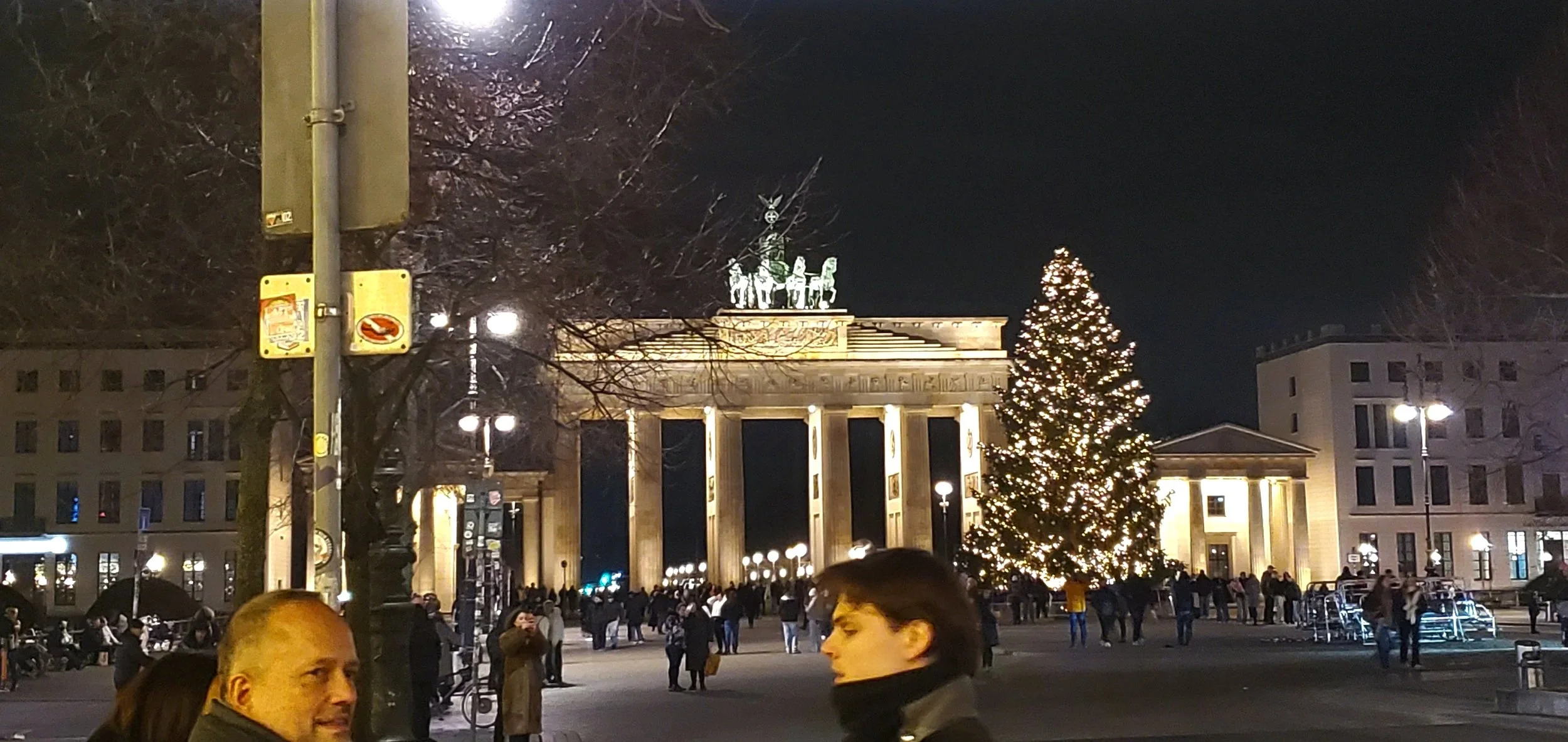
Brandenburg Gate
But the true peak of this surreal theater—the moment that seared itself into my memory like a brand—erupted just as our night was nearing its end. Mid-sentence with A, I extracted my card and handed it to the bartender, Anatoly, whose eyes locked onto mine with such immediate hostility that the air between us seemed to crackle with voltage.
He looked at me, sneered, and said, "I hope you can pay."
I raised an eyebrow, a mixture of curiosity and mild irritation flickering across my face. "Yeah, obviously I can pay," I replied, my tone calm but firm, as I slid the card toward him. "And this is my card," I added, unsure of what the fuss was about, yet feeling the weight of an unspoken challenge in Anatoly’s gaze.
The air between us crystallized into something malevolent—a sudden, suffocating pressure that crushed against my chest and throat. Every molecule seemed electrified with unspoken accusation, the space between our bodies shrinking to nothing as his gaze bore through me like an ice pick, demanding justification for my very existence in this space.
He paused, letting the insult hang in the air in front of my guest. "Well, let's see."
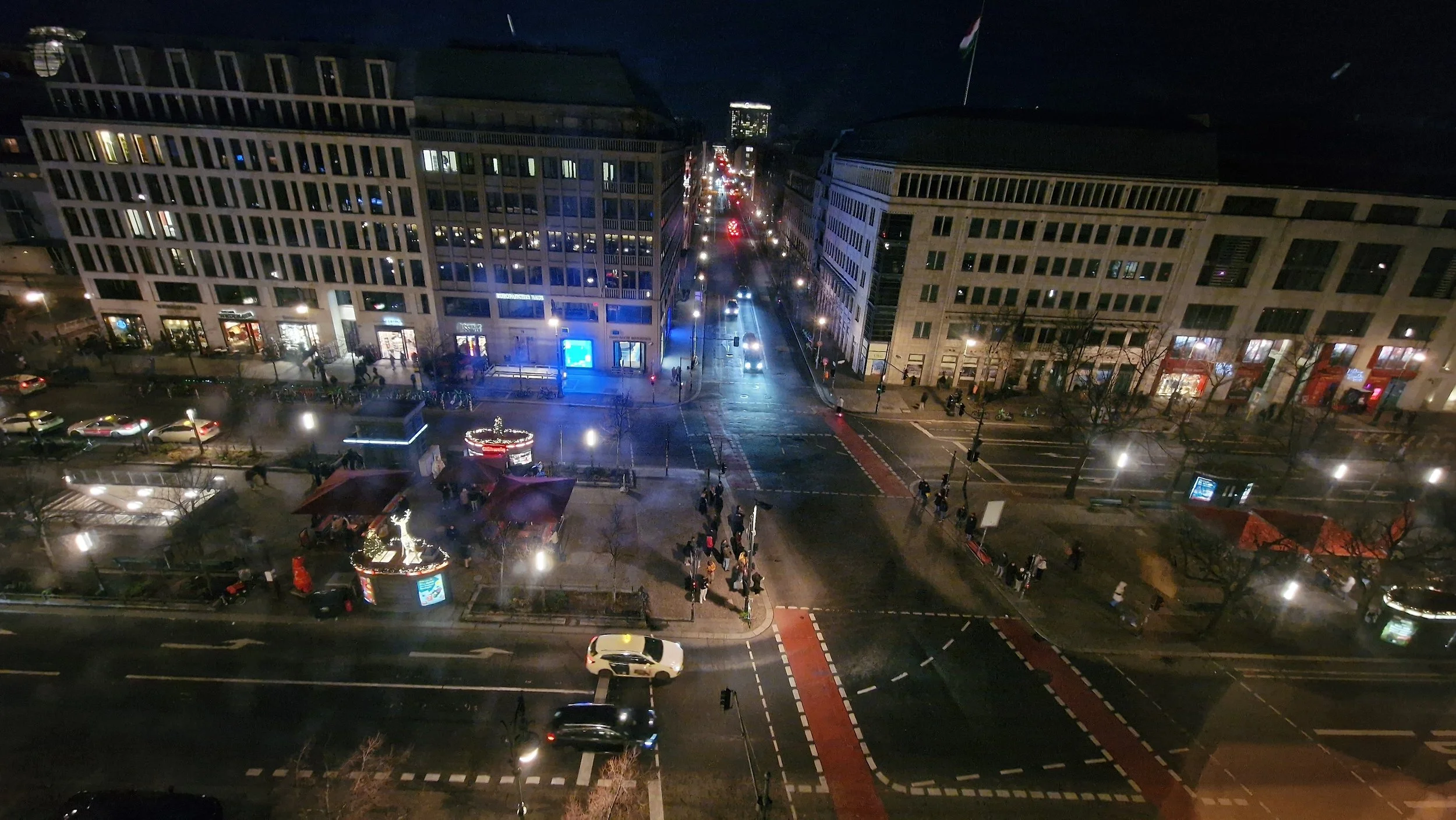
Room with a view…at least.
A flicker of agitation lingered as Anatoly's words echoed in my mind, though I brushed it aside with an inward sigh. The Kempinski staff had their odd sense of propriety, one I couldn't always unravel, but the evening wasn’t theirs to define. What truly stayed with me was the warmth of my conversation with A—her laughter, her effortless way of weaving words into something poetic, thoughtful, and almost melodic. Even teaching me a few new words in German.
“I don’t believe in…zufall? What’s the word in English?” A said, as she tried to explain the term.
“Ah, coincidence!" I smiled, leaning forward until my elbows pressed against the cool tabletop. "I don't believe in coincidences either.” The universe has thrown too many perfectly timed arrivals and departures into my path—strangers becoming saviors in foreign train stations, lost letters finding their way back to me across oceans. Each one like a golden thread stitching together what might otherwise seem like random moments, until the pattern becomes impossible to ignore.
Time had slipped unnoticed as we spoke, the hours fading into gentle moments of connection. When it was time to leave, I walked her to her taxi under a sky spattered with faint city lights, the quiet hum of the streets folding around us. Despite the lingering shadows of the encounter inside, I carried a strange peace with me, one born from shared words, a goodbye hug, and her parting smile.
However, returning to my suite offered no space for true comfort. The bathroom exhaled a persistent, sour scent of drainage pipe fumes that the front desk cheerfully ignored. I suggested a broken air admittance valve (AAV) might be failing to block the odor's return through the pipes, which is a quick fix, but such a simple yet reasonable request continued to echo into the hotel void.
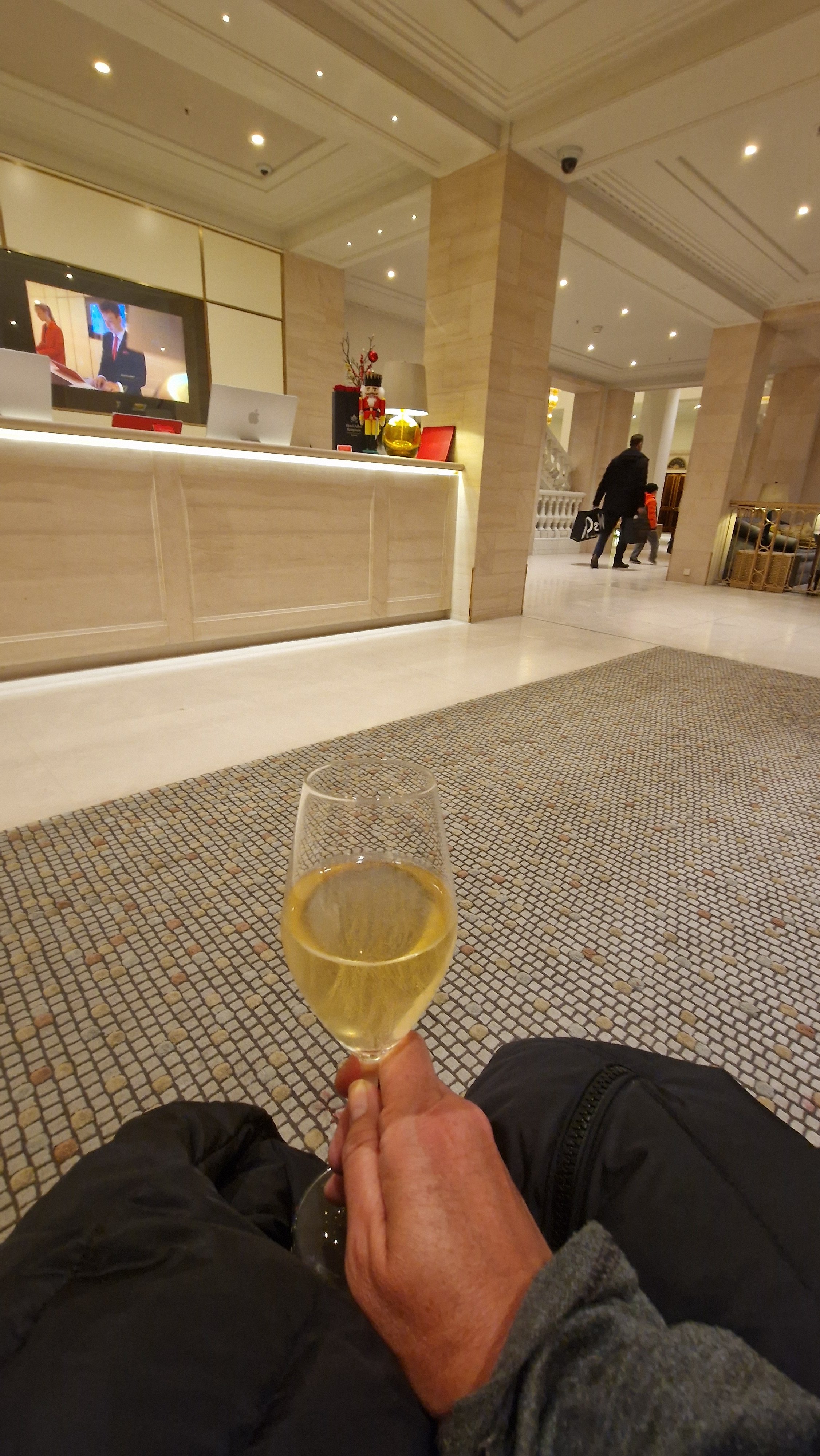
The sting of premature judgment haunted me like a familiar ghost, this time draped in the crisp white linens and polished brass fixtures of alleged luxury hospitality. The next day's €195 Advent brunch—where chilled champagne sat neglected in sweating buckets while guests jostled in serpentine queues for lukewarm hors d'oeuvres—only deepened my disillusionment. The concierge in an impeccably tailored suit glanced over my shoulder as I spoke, his practiced half-smile never quite reaching his glacier-cold eyes.
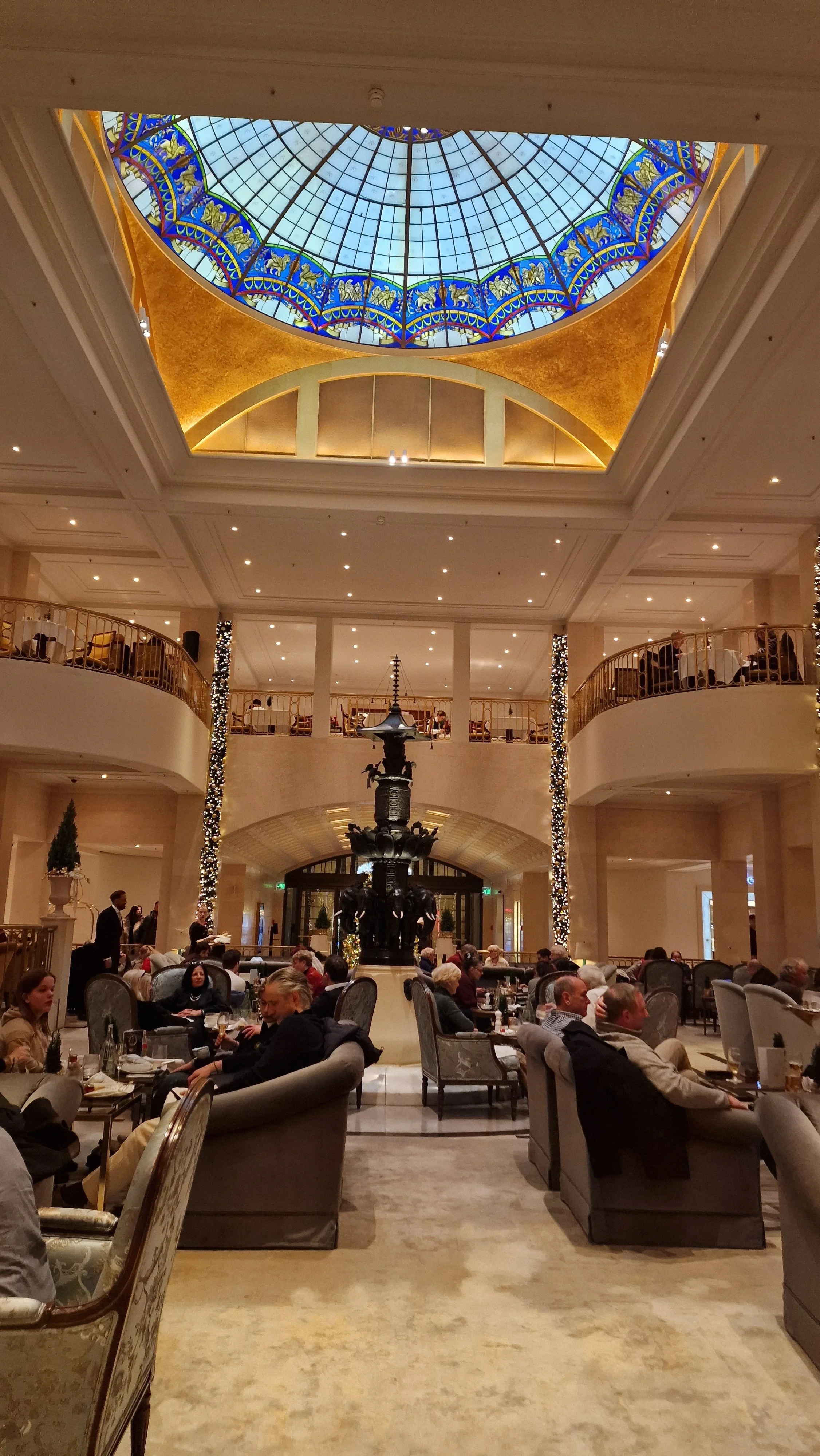
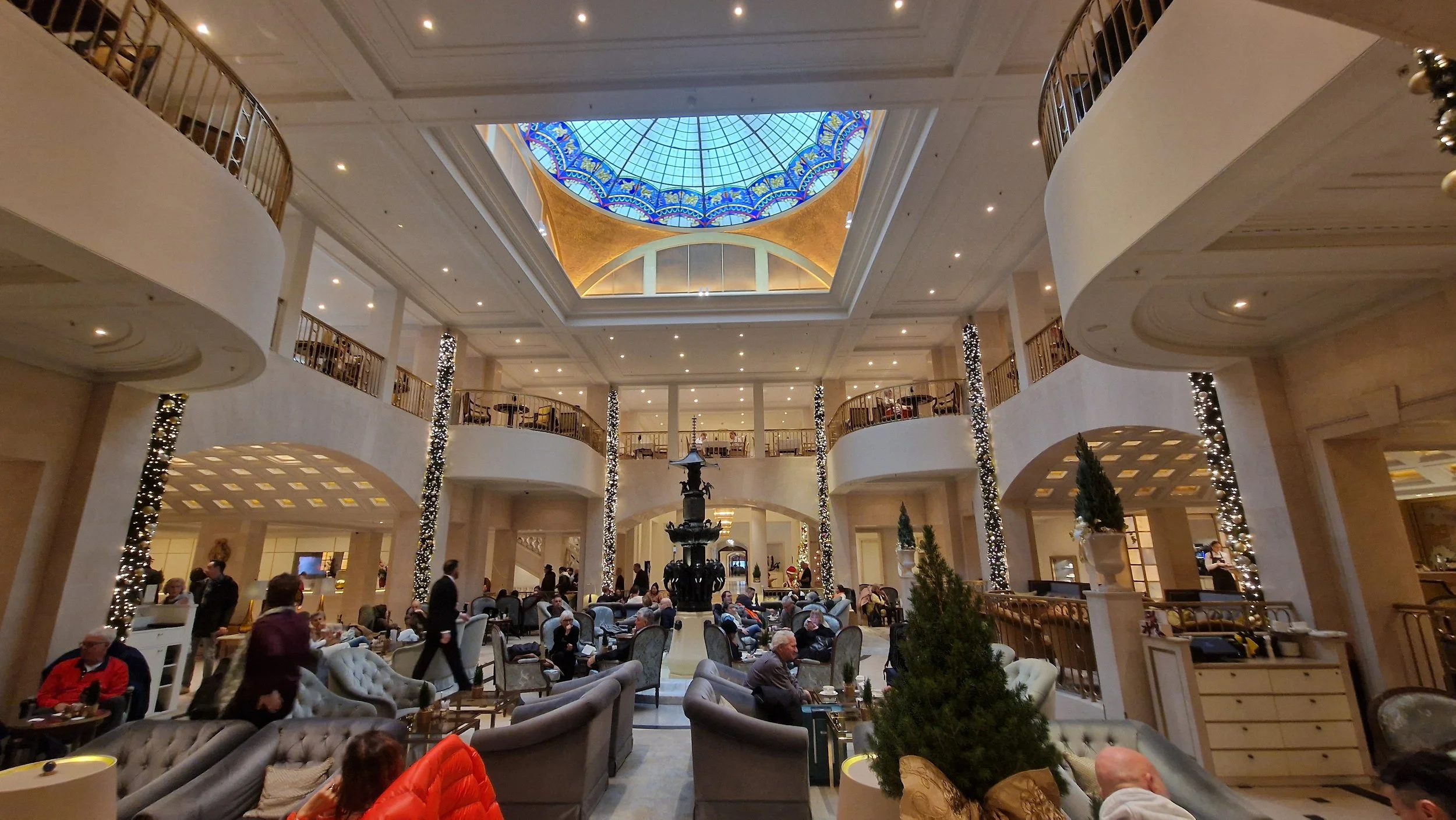
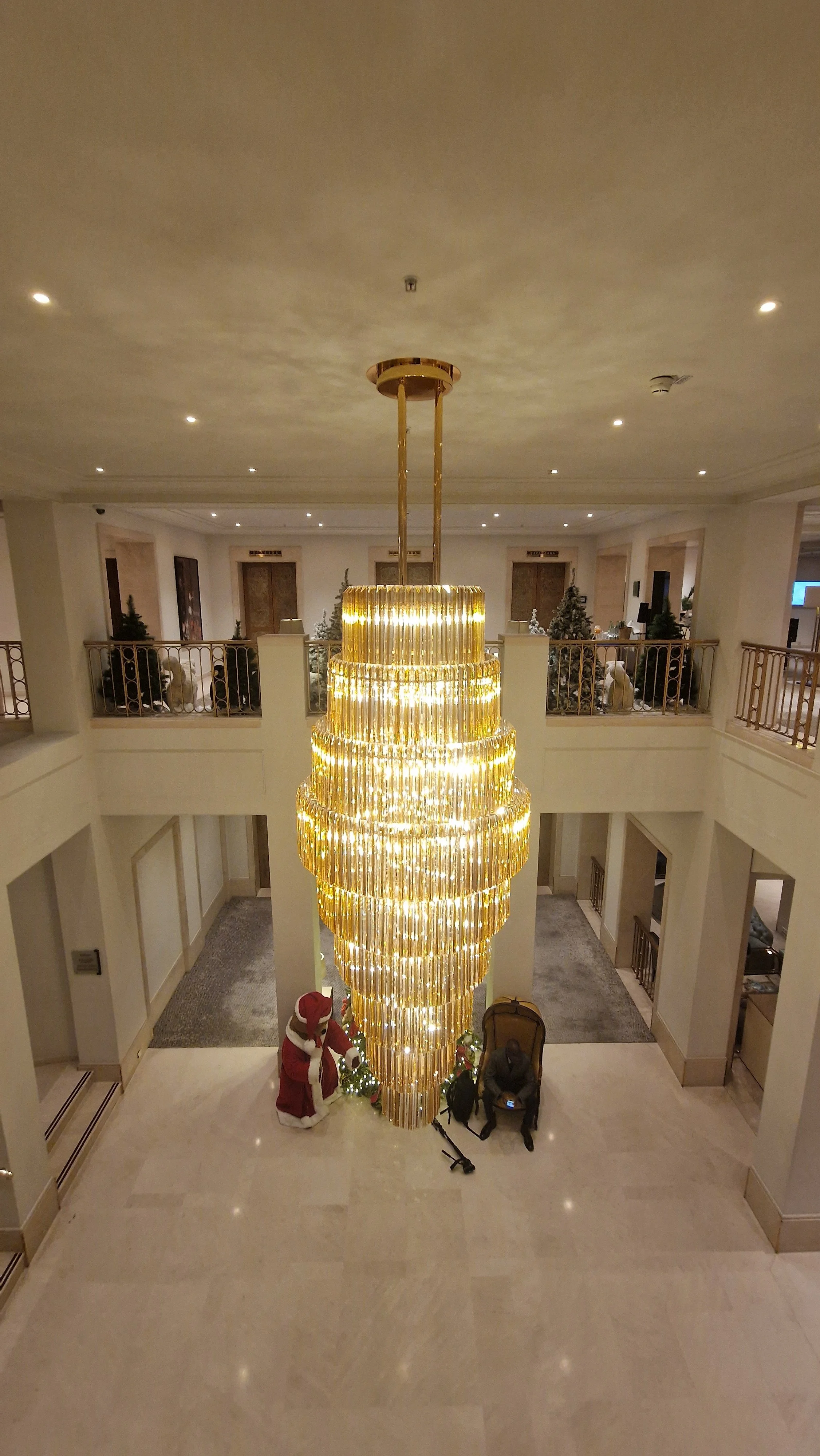
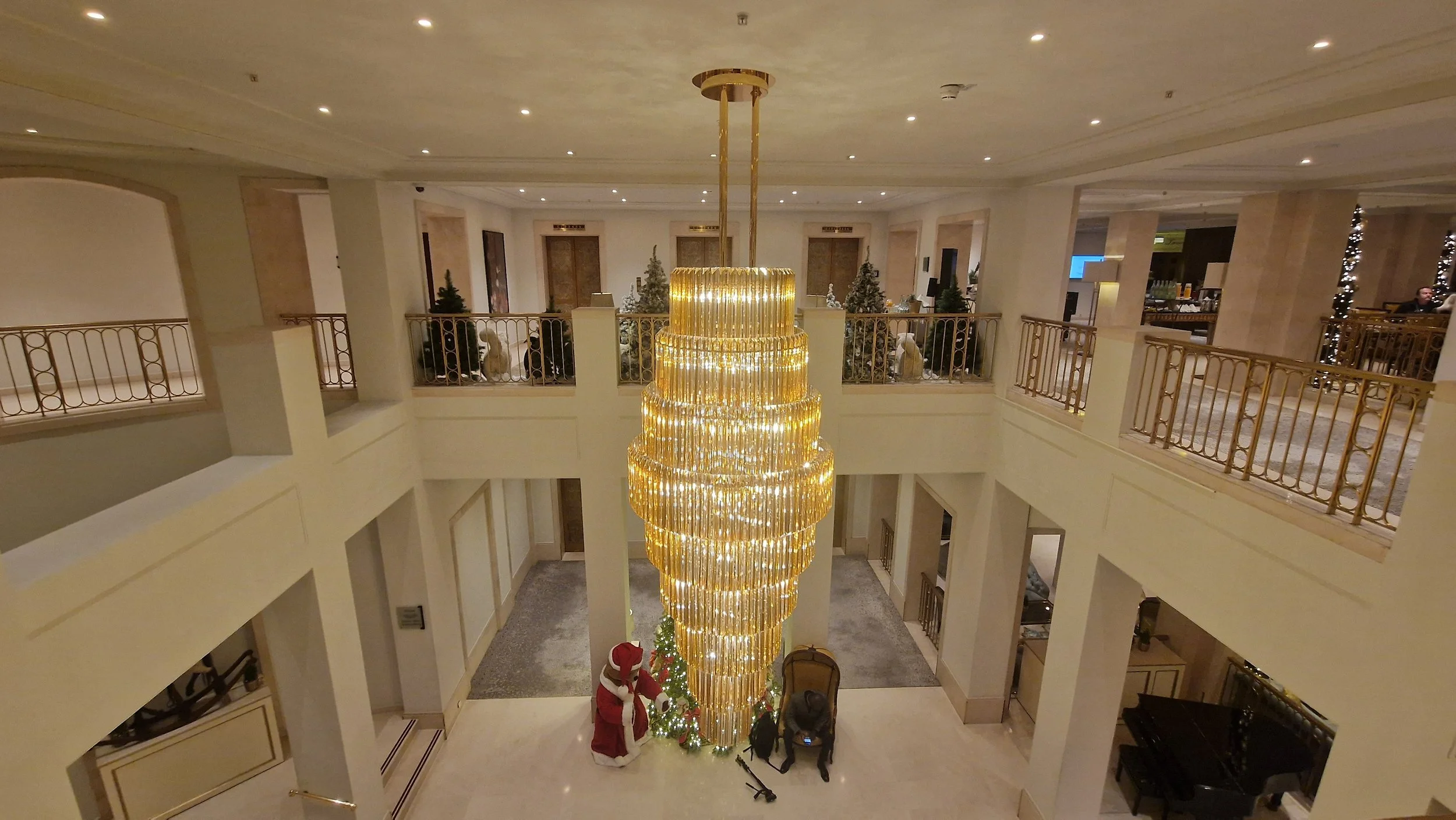
With each interaction, the chasm widened between the Kempinski's storied reputation—whispered about in travel magazines and immortalized in glossy photographs—and the frost-bitten reality I now endured, a hollowness that echoed beneath the marble floors and crystal chandeliers.

Sure this hotel pissed me off, but why was the lighting so good?
While hours before were spent discussing the metamorphosis of meaning and the complex webs of human connection, the irony of the Kempinksi sang in my ears. I was living inside a Kafka-based story—trapped in an opulent building where the rules made no sense, the authorities were indifferent, and guilt was assigned without a crime.
Yet, the most profound shift happened in the quiet dark of that hospitality catfish of a suite. Sleep finally claimed me, and it brought a vivid, sweeping dream of my older brother whose birthday had just passed days prior.
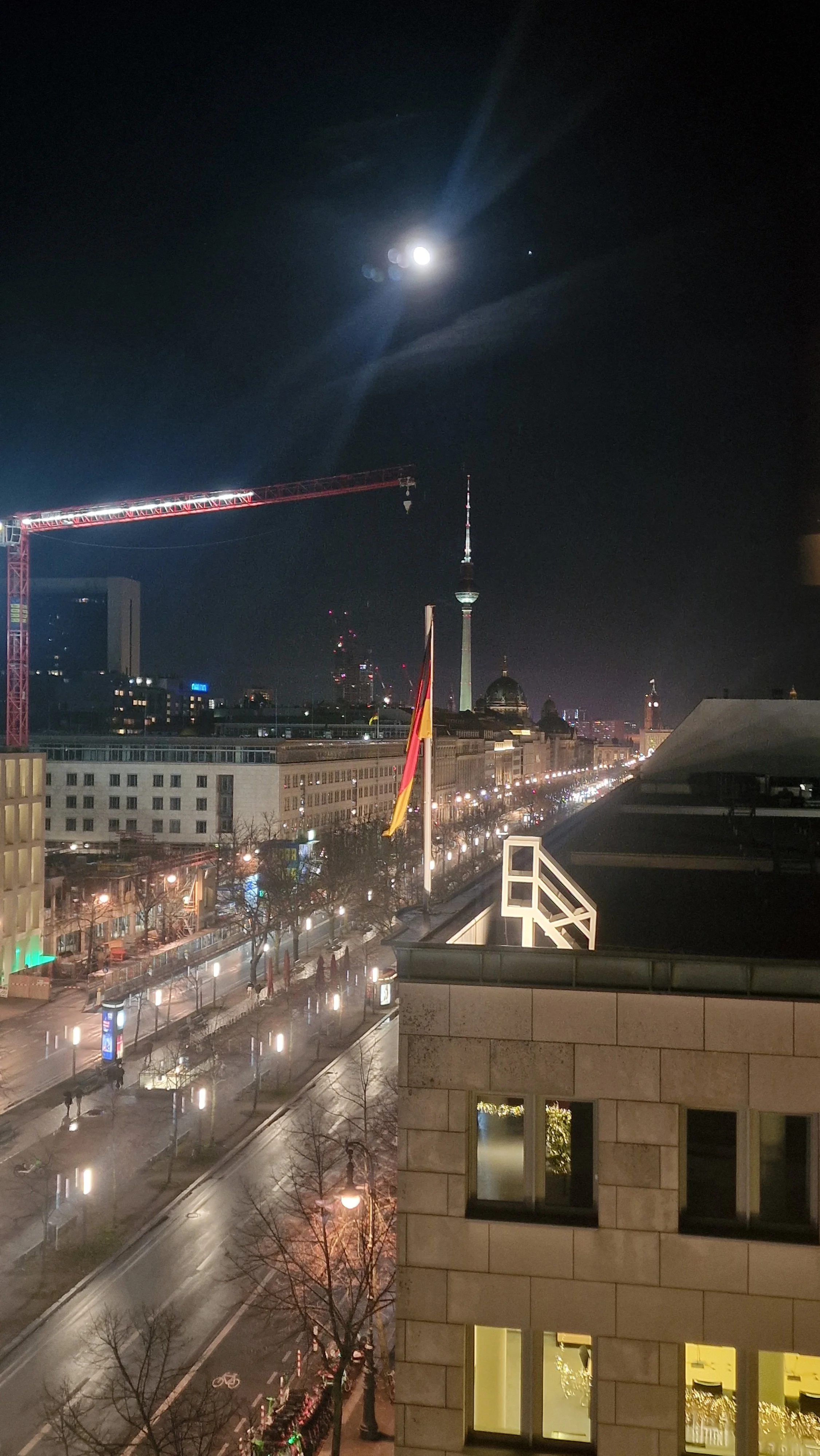
Berlin is like a raccoon: Friend-shaped but filled with rascality.
We have not spoken in almost twenty years. Two decades of silence carved out by his wife's malice, a strange wedding curse that I discussed in "The Desert Warrior," and the echoes of a doomed marriage. While it is easy to point fingers, true betrayal requires complicity. Still, the dream did not focus on anger. In the shadow-world of sleep, we made peace. I spoke the words I never got to say, expressing how terribly the entire rupture was handled. For a brief moment, the heavy stones of the past lifted.
In the quiet solitude of thought, shadows of fractured connections danced in my mind, and my brother's face lingered there as if time itself were pleading for reconciliation. His birthday felt like a whisper in the wind a week prior, a soft and fleeting reminder of our shared beginnings amidst the cacophony of life's trials. Anger and disappointment may swell like dark clouds, but they are never strong enough to erase the tacit truth. I remember. Always.
Being the youngest of five children, yet bearing the weight of stewardship, has often left me weathered, a river carved by the currents of expectation. My well of patience, nearly empty, groans under the strain of countless unacknowledged burdens, yet this dream, haunting and tender, spoke to me differently. It lingered, not as a demand but as an invitation to bridge a gulf worn vast by time and silence.
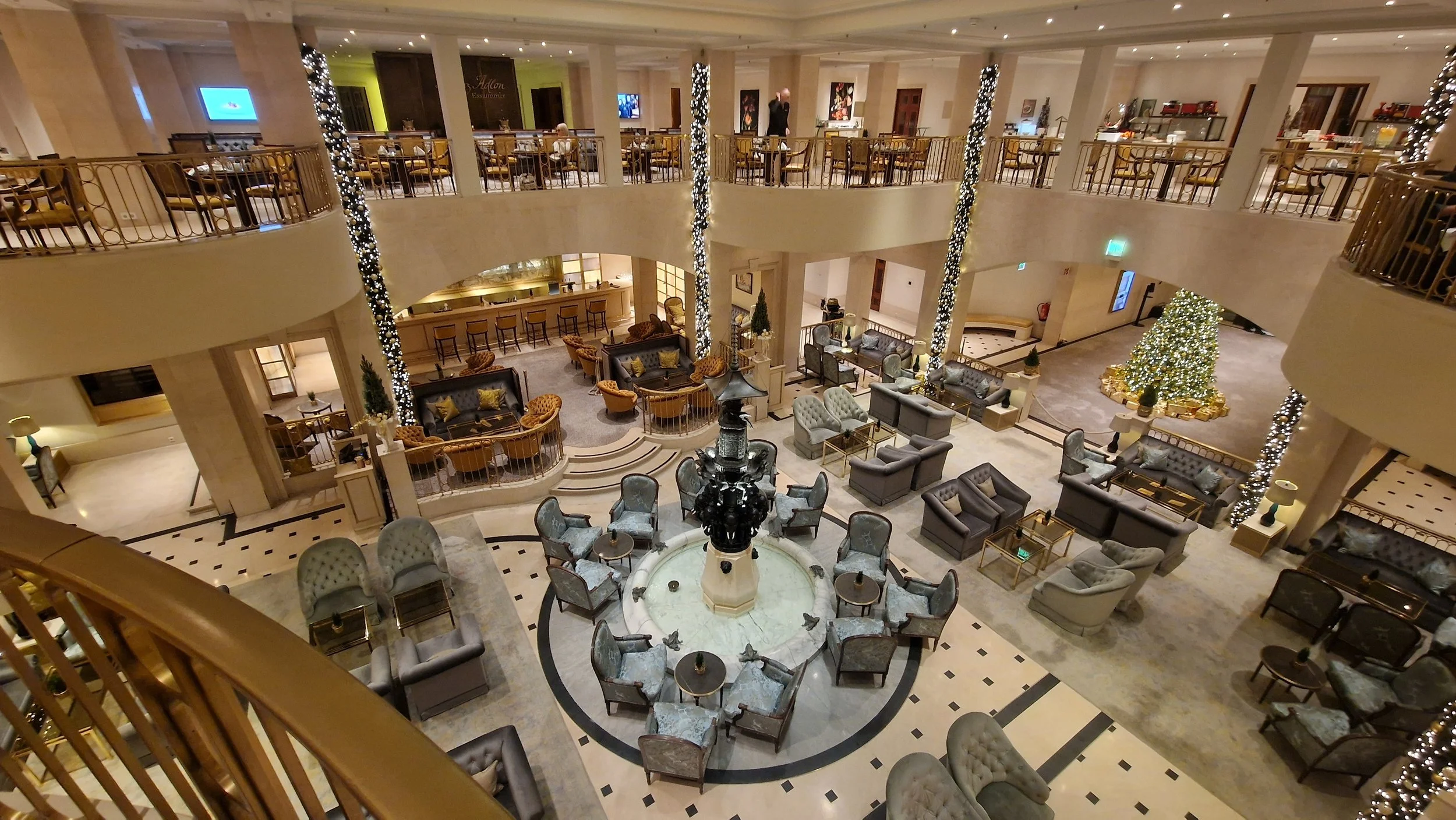
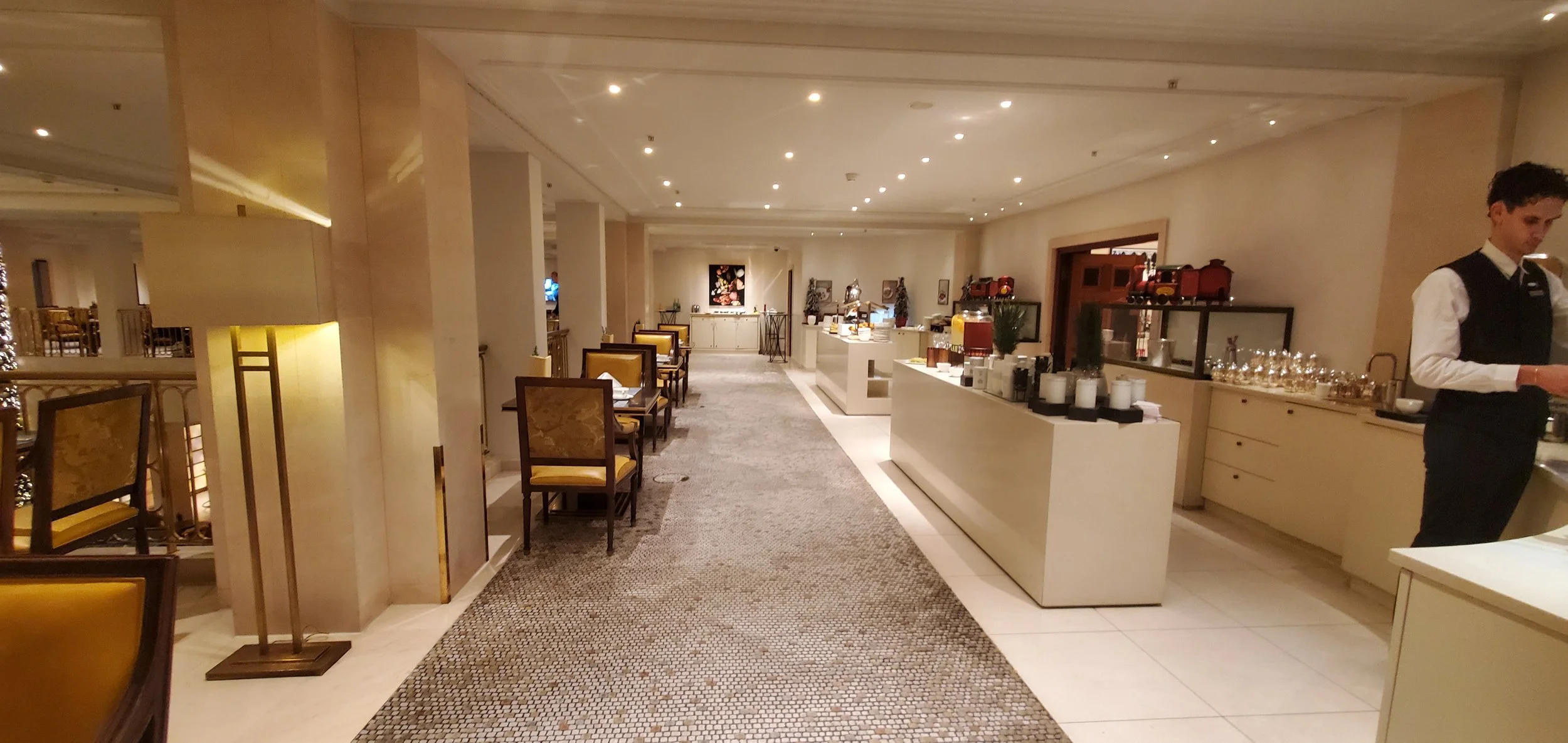
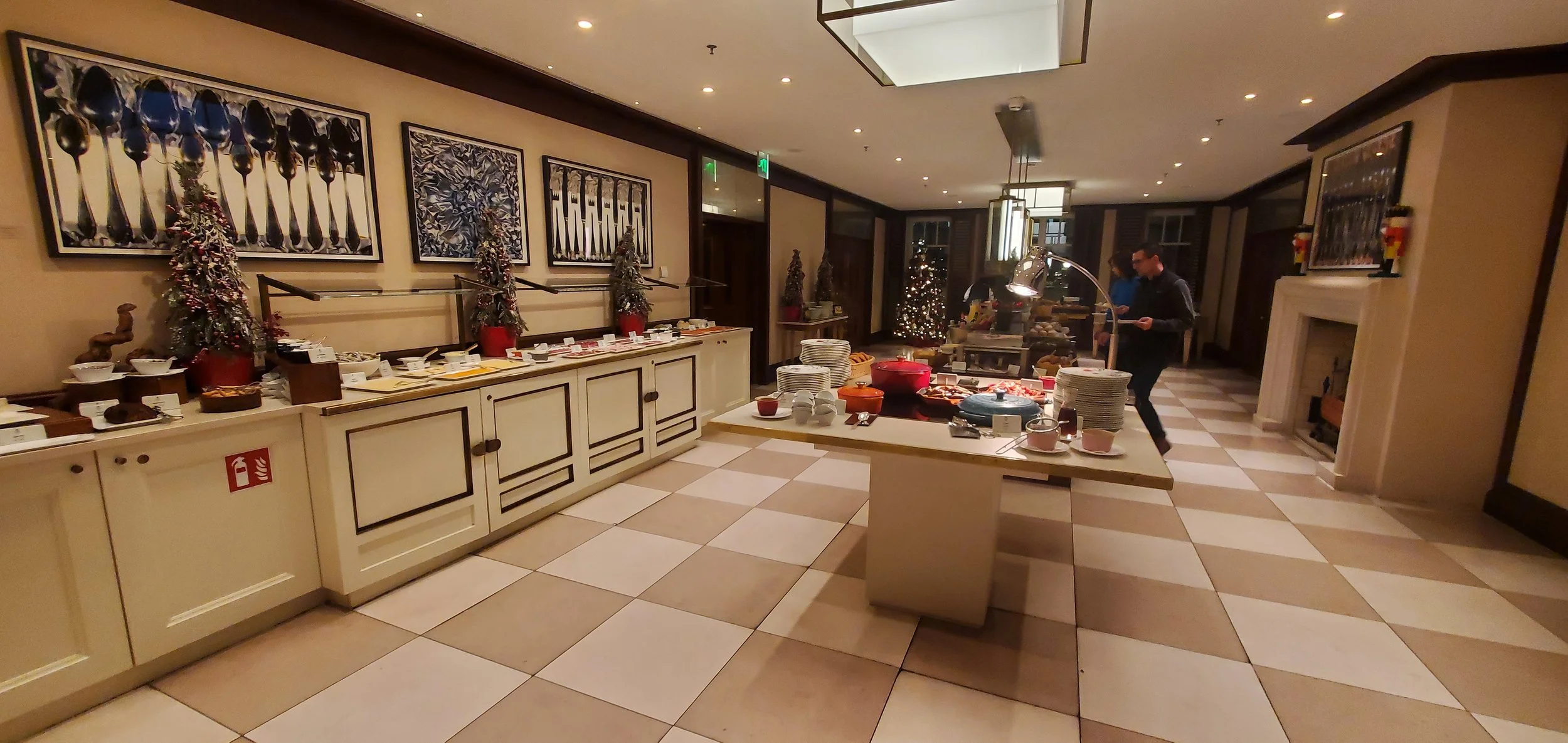
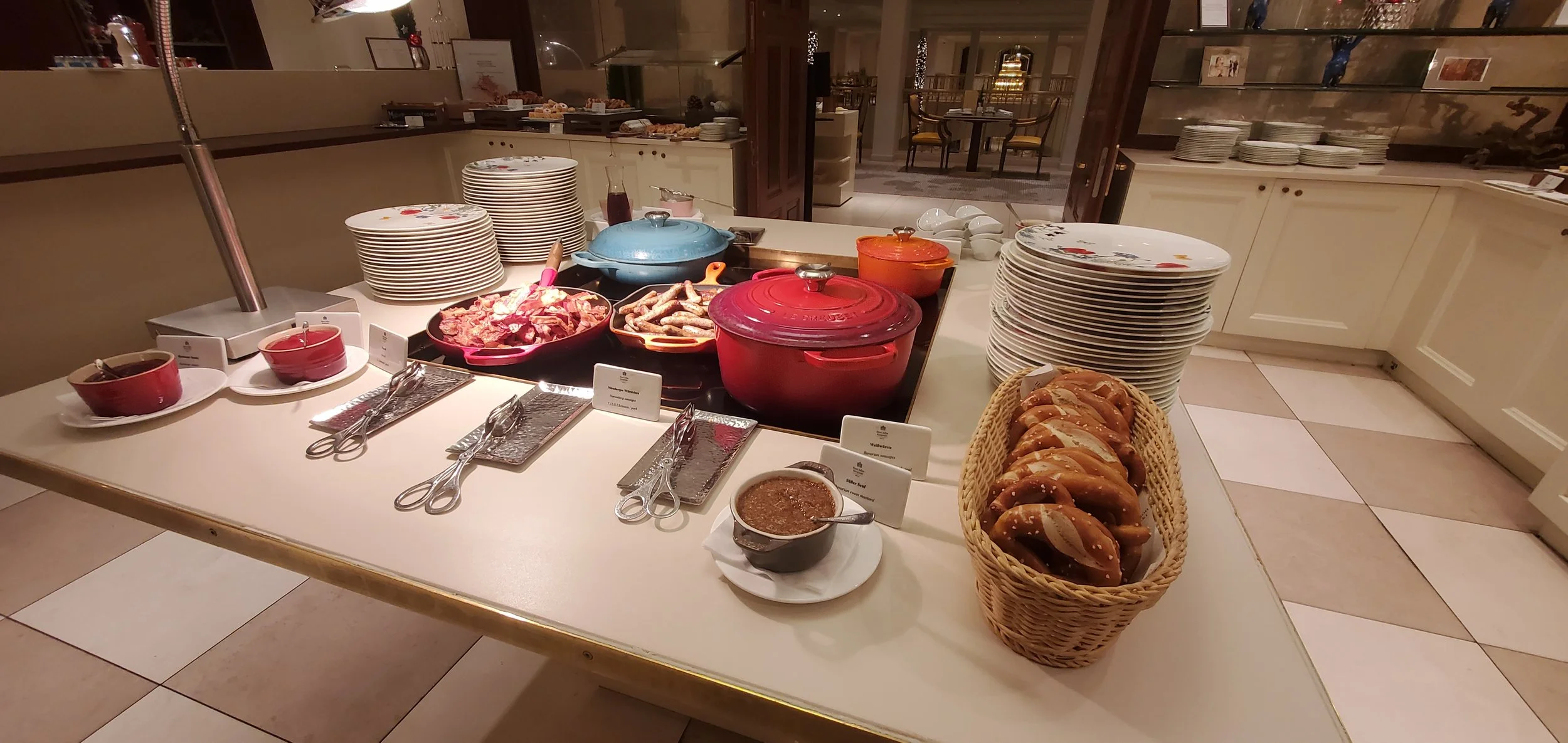
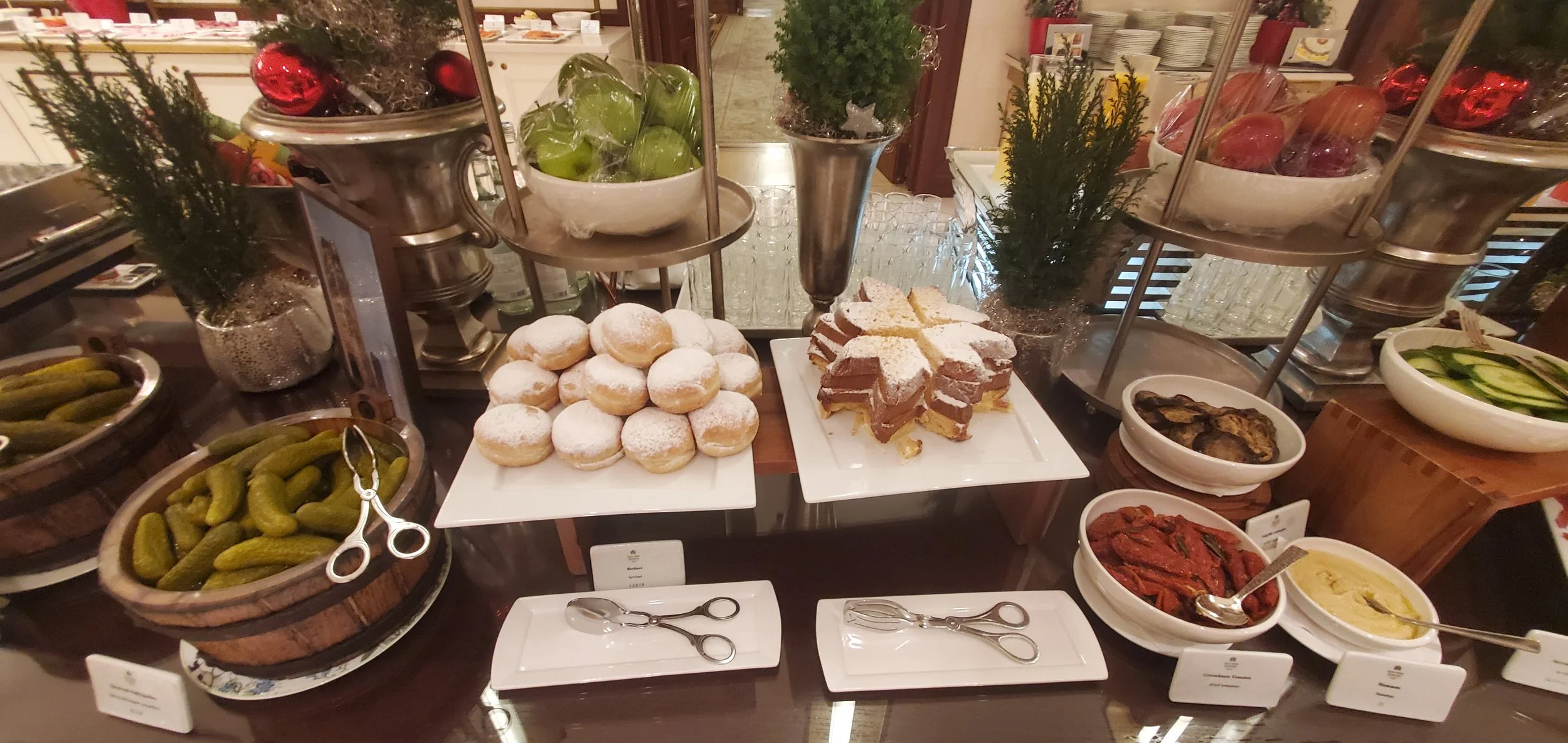
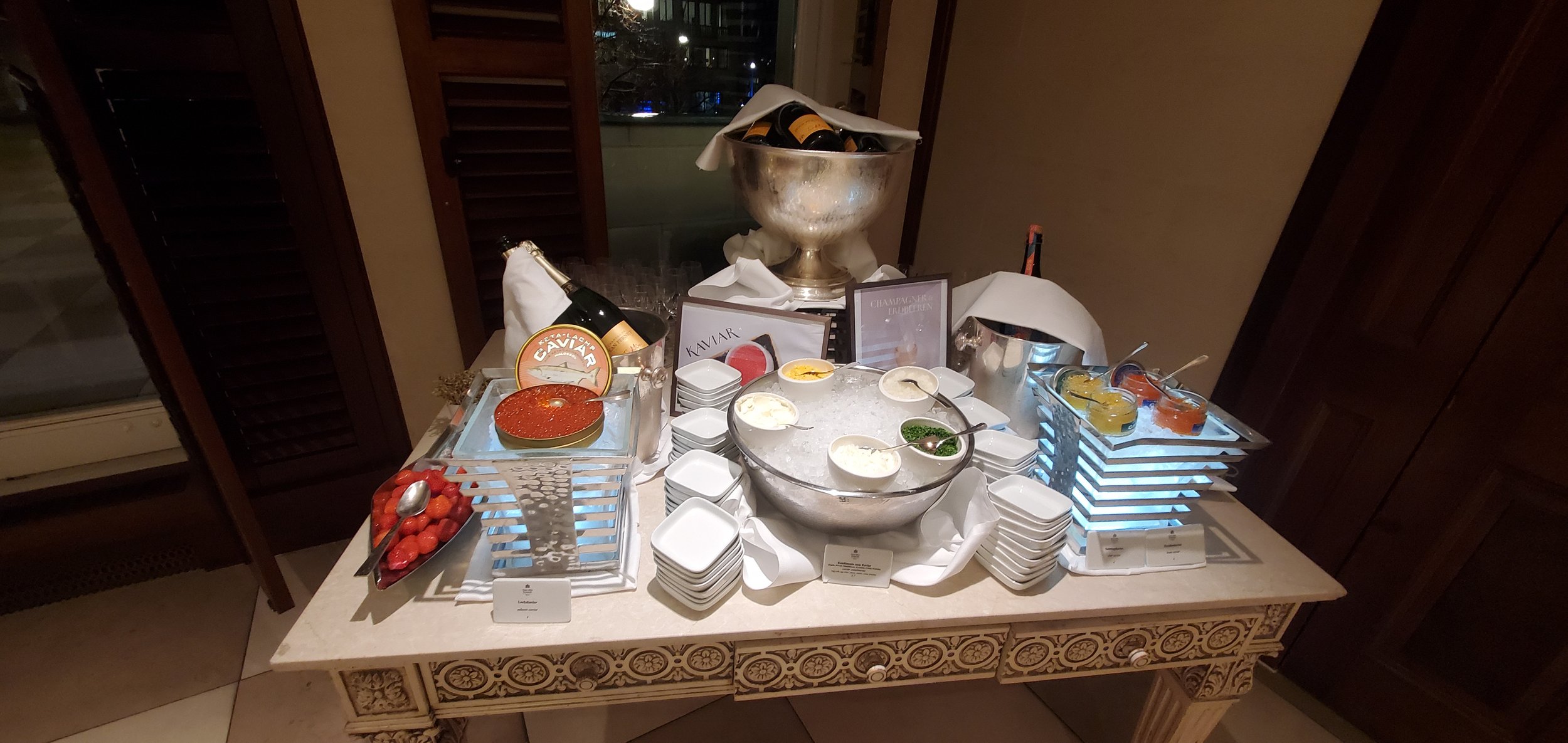
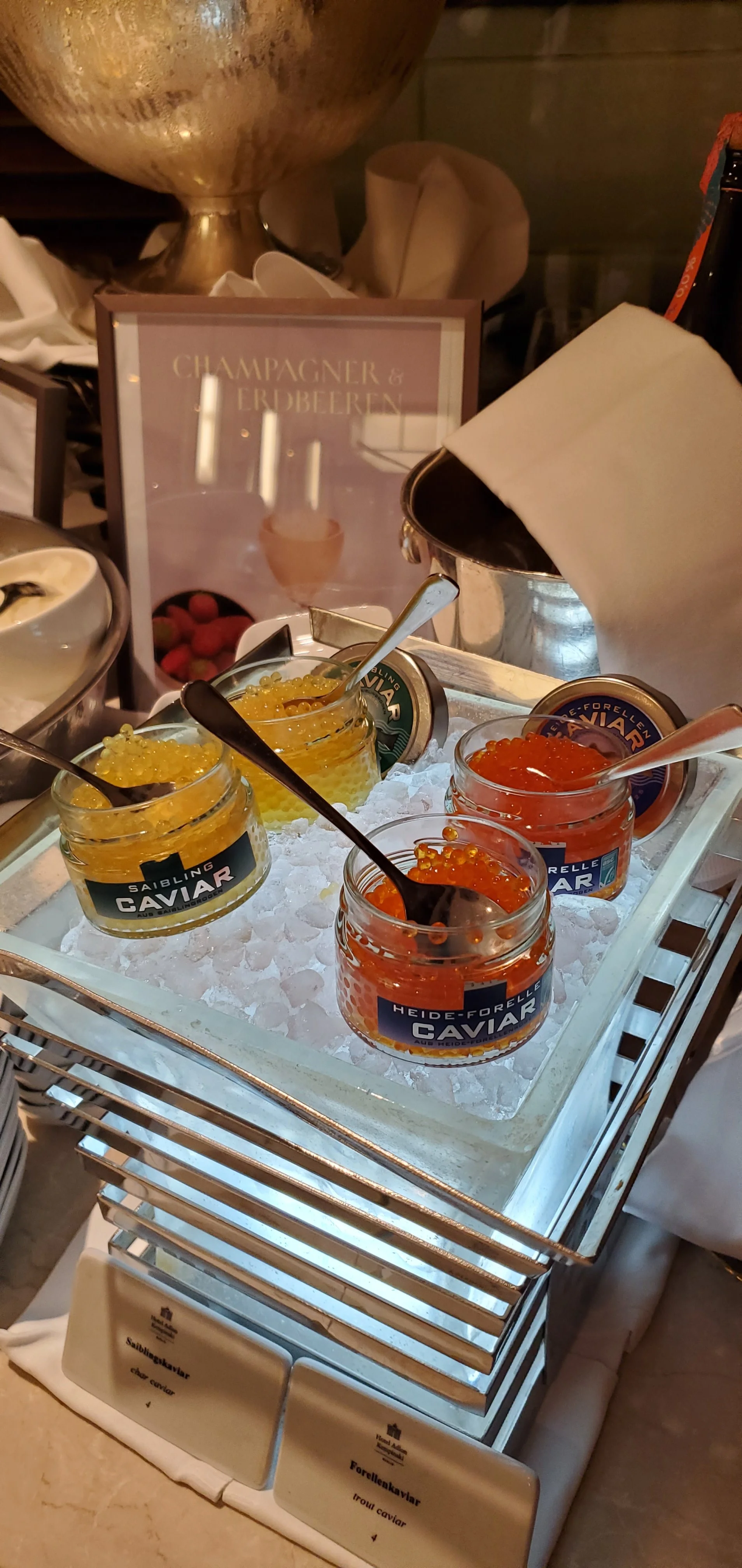
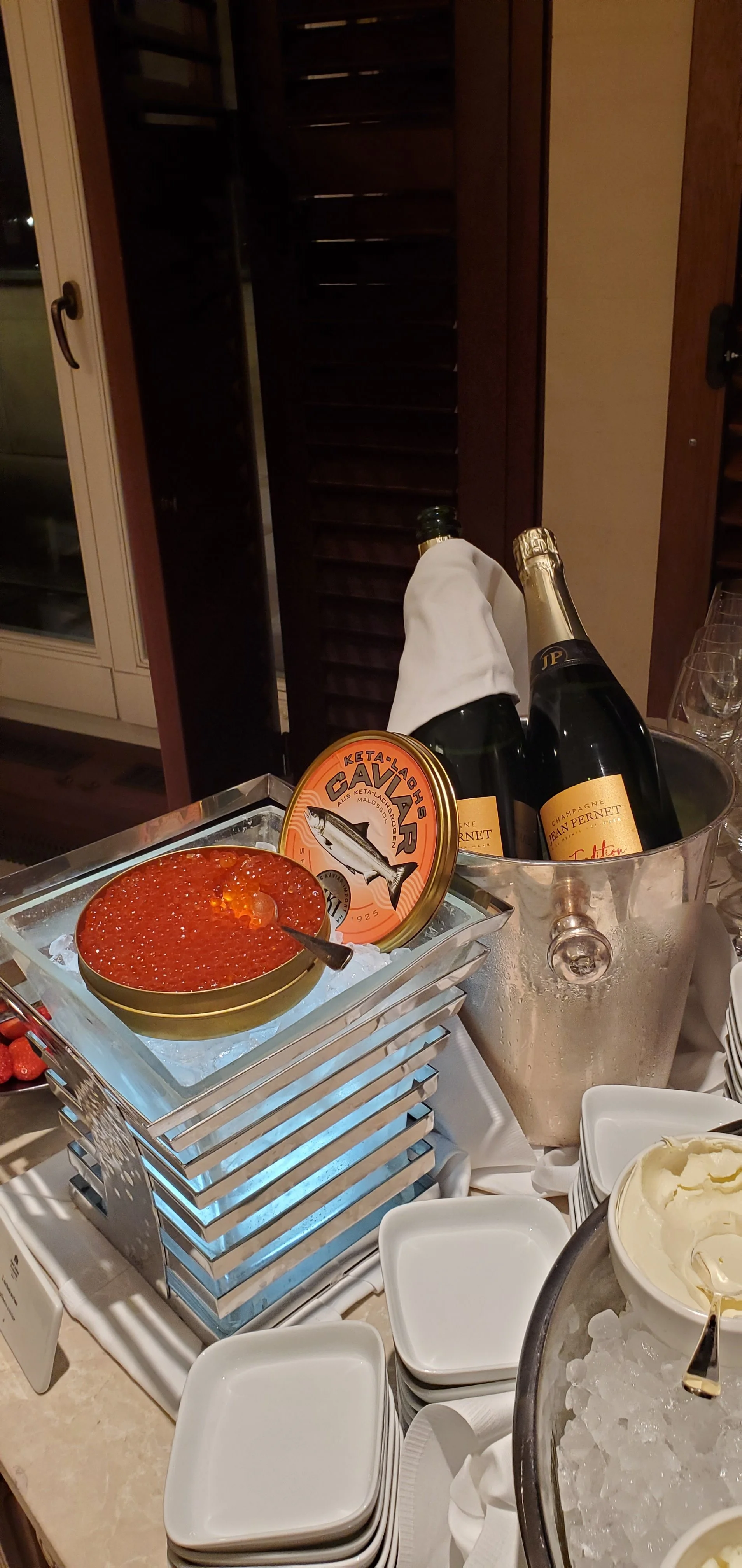
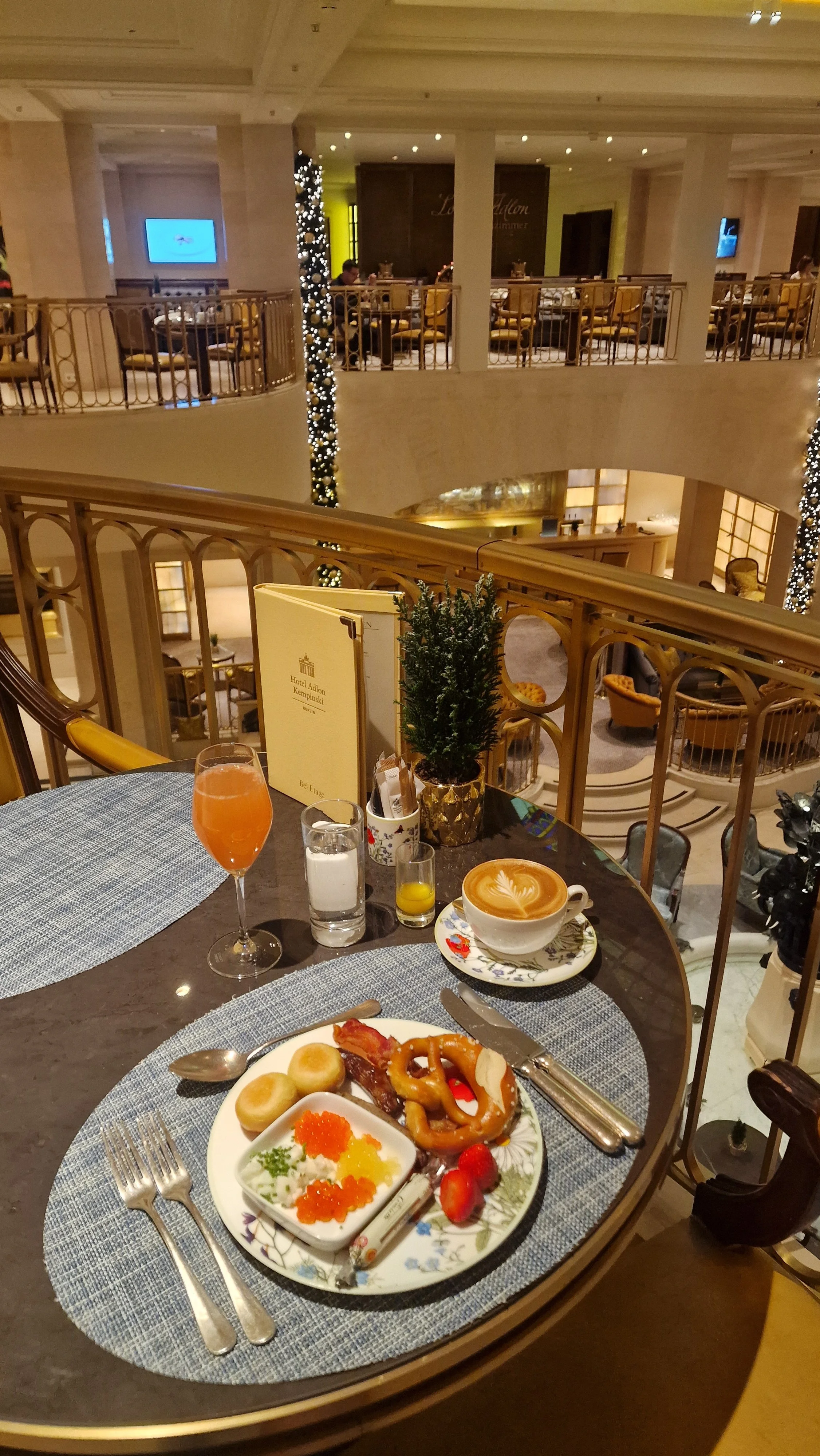
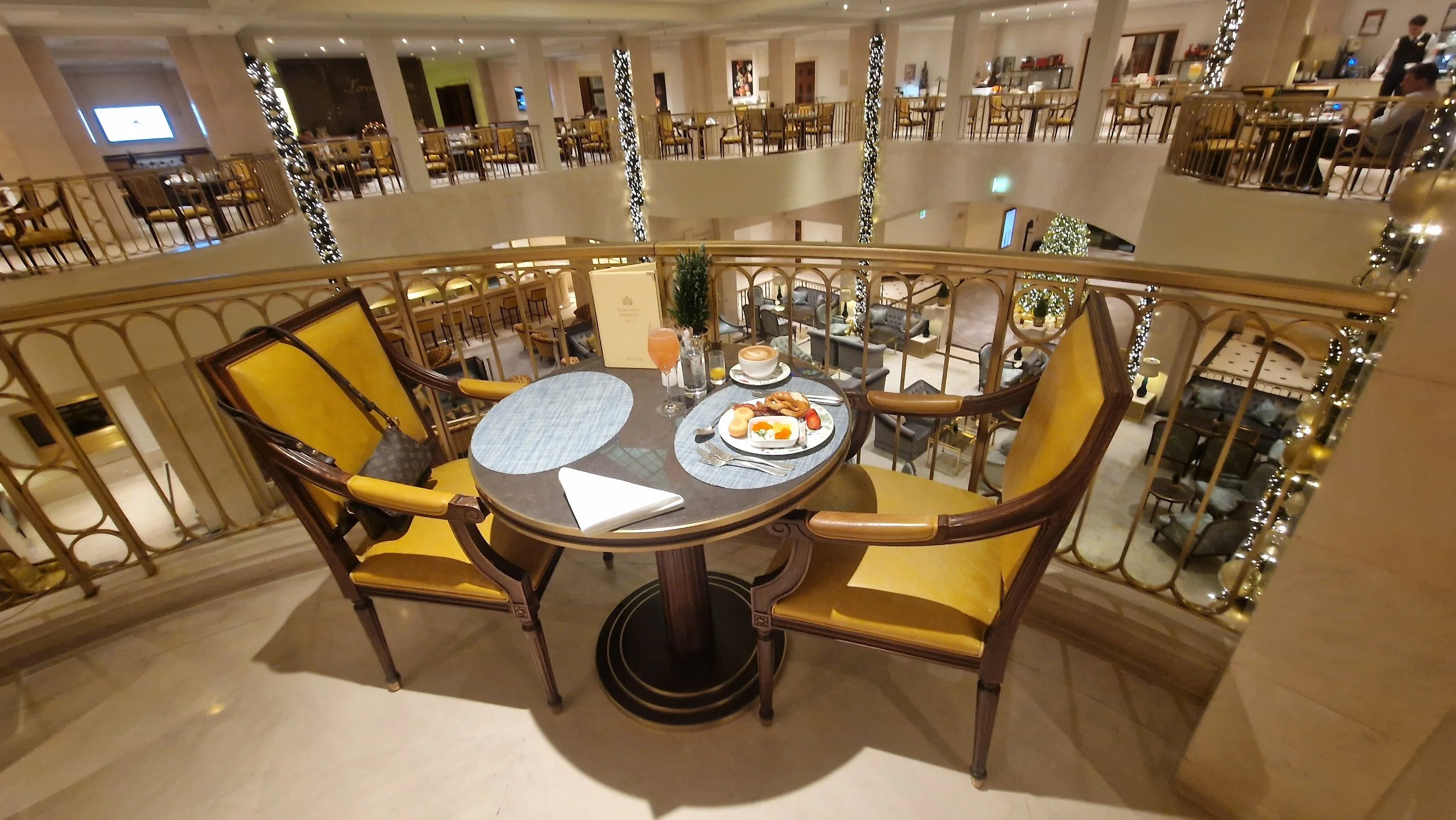
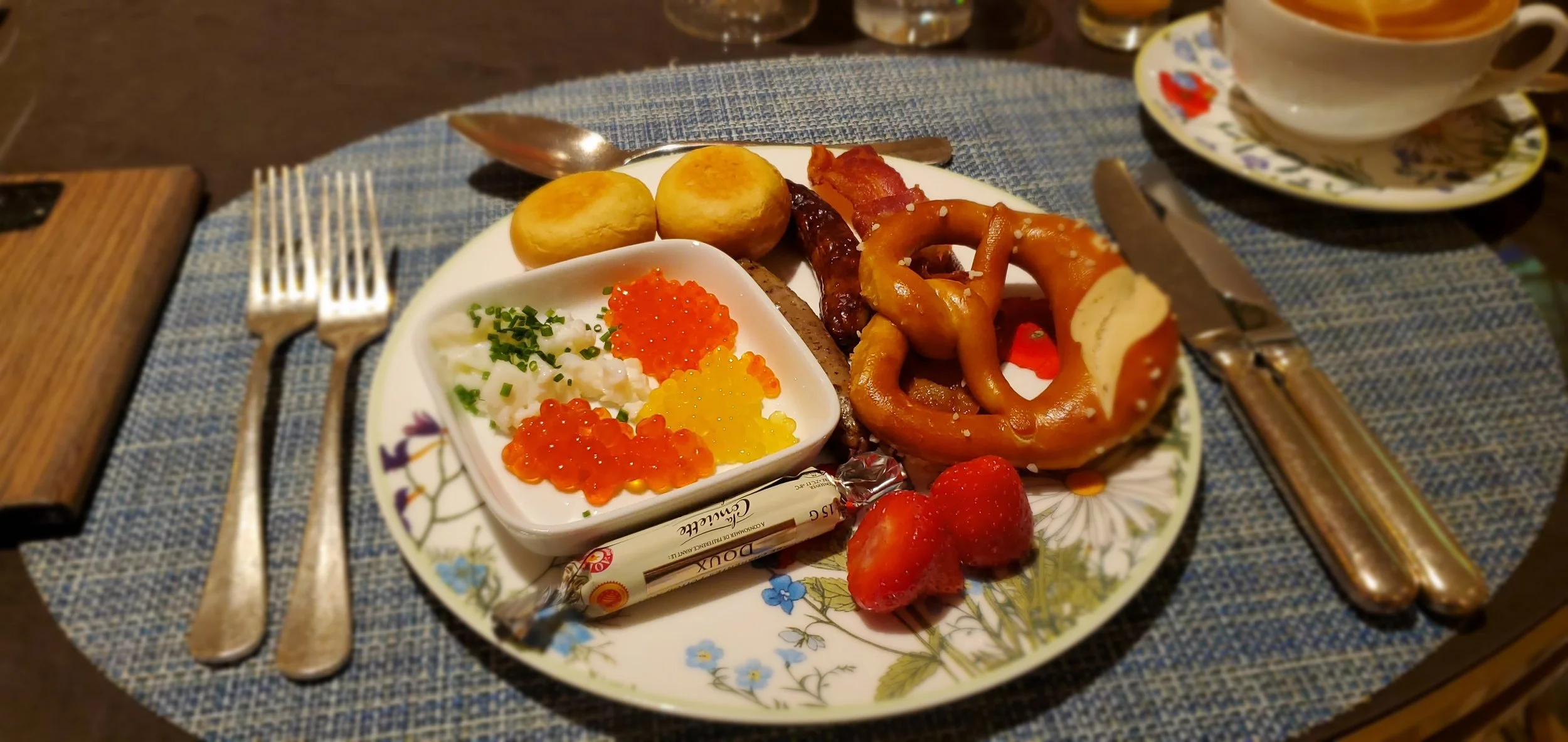
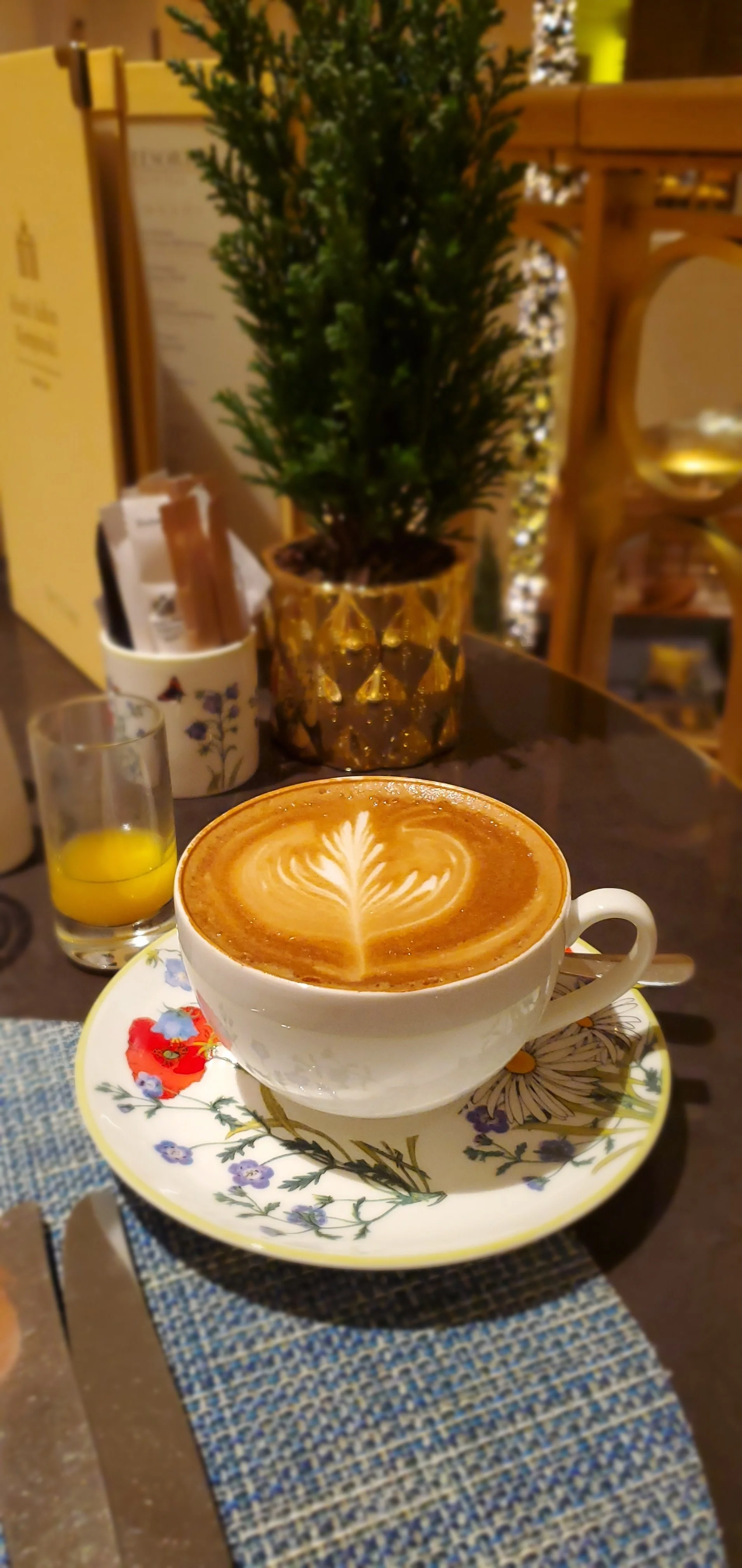
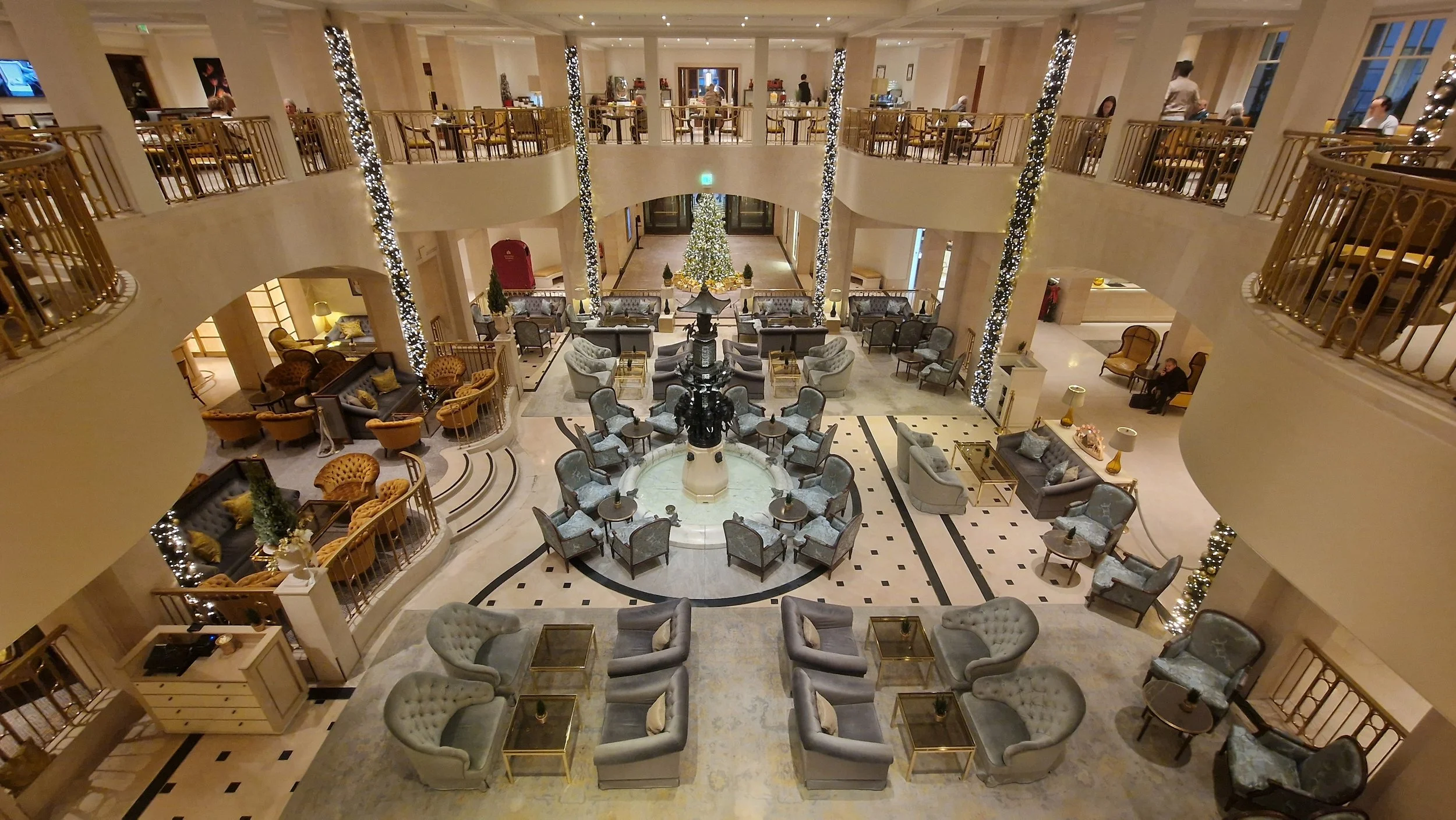
Despite dealing with "Hotel K" and their Kafkaesque hospitality, the breakfast early the next morning was, miraculously, a revelation of calm amidst chaos. The dining space hummed with understated order, unburdened by the dissonance of the evenings before.
Everything felt aligned, like a composition precisely balanced—clean linens, silverware reflecting the warm interior light while the world remained dark outside at 06:30, and courteous staff who moved like clockwork in their delicate dance of service. Each plate, each gesture, arrived with a sense of intention, as if to apologize for the tangled narrative of the stay. Whatever storms raged in other corners of the property, the F&B department stood as a quiet testament to what could be—a promise fulfilled, however fleeting.
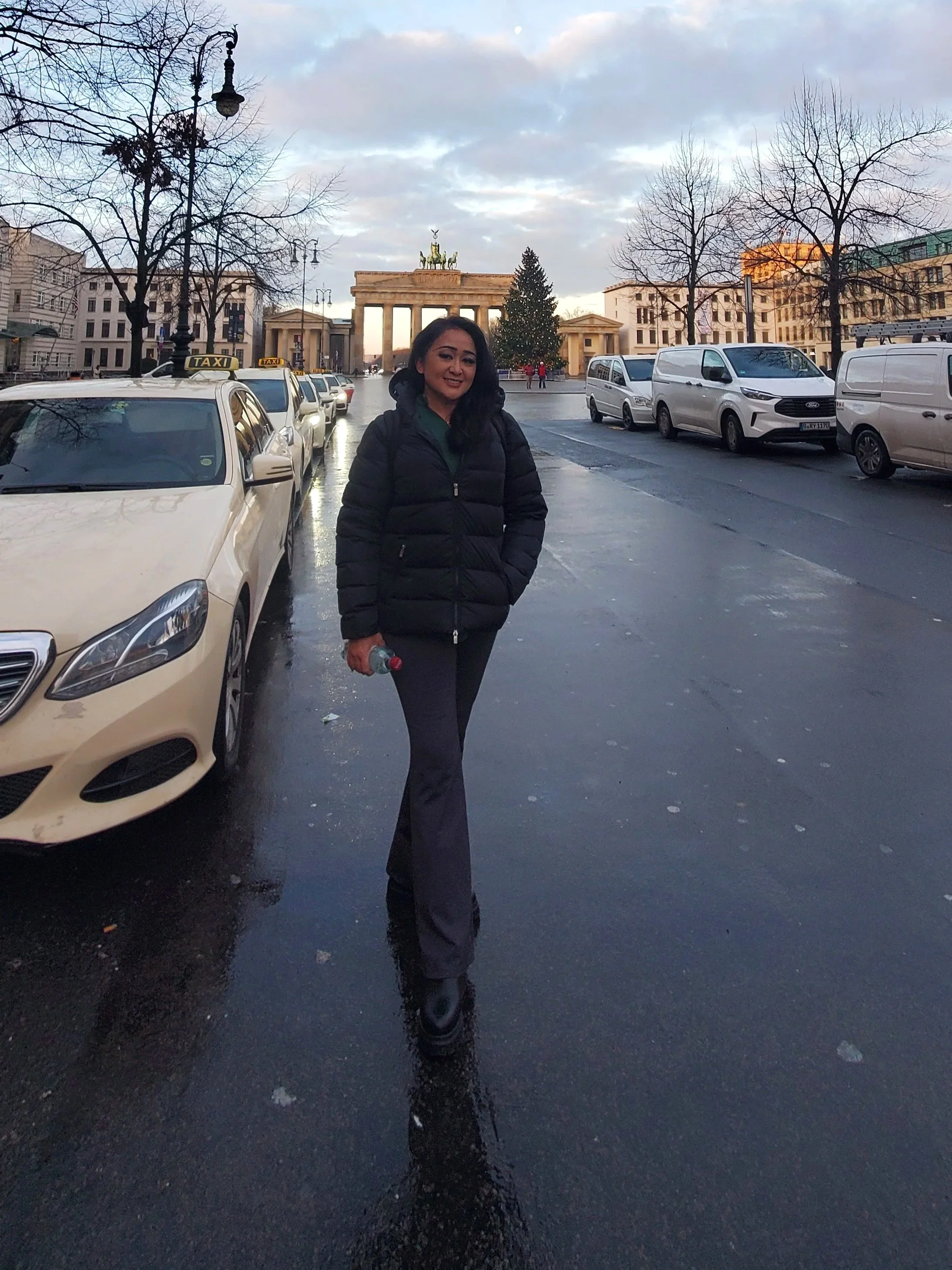
Looking unusually tall in Berlin. I’m only 162 cm (5’3” in ‘freedom units’)
My departure from Berlin offered a sharp, physical jolt back to the present. Passing through airport security, I was pulled aside for a pat-down.
A fellow English tourist—a man in his sixties with a paisley sweater and the resigned posture of someone who'd seen every airport indignity—caught my eye across the security line. We exchanged knowing glances, his left eyebrow arching slightly as mine did the same, both half amused and half unnerved as we watched the Berlin airport's security theater unfold. The guards moved with a mechanical precision that bordered on performance art: crisp uniforms without a wrinkle, faces blank as freshly wiped slates, hands that patted and prodded with such meticulous rhythm they might have been keeping time to some unheard cadence.
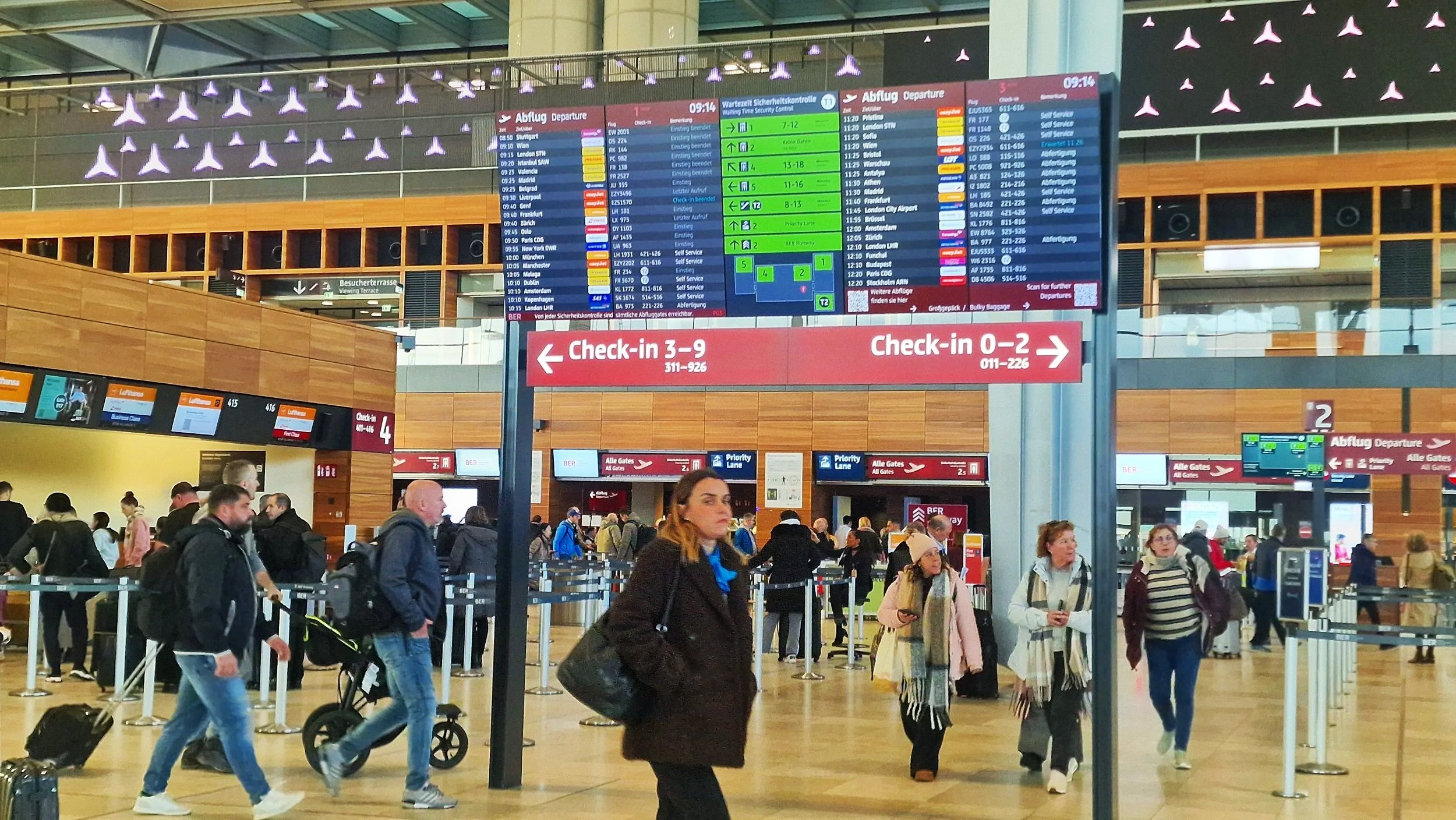
Berlin Brandenburg Airport
The process was so thorough, so deeply invasive, that it hovered right on the fragile line between hilariously confusing and strangely erotic. The woman—with her reddish-brown hair grazing her pale skin taut across sharp cheekbones—barked commands in a staccato mix of English and German that echoed against the sterile walls mahogany and eggshell.
Instead of feeling the underside of my bra, she cupped my breasts with both hands, her fingers pressing with such clinical firmness that I half expected her to announce she'd tune in Tokyo next. Her cold knuckles grazed my ribs while her thumbs dug methodically along the underwire. When she reached my waistband, her fingers—dry as autumn leaves—slipped past the elastic border and probed the sensitive skin where no security protocol should reasonably venture.
At least buy me dinner first—I thought, biting back a laugh that threatened to bubble up, a laugh born not from humor but from the sheer absurdity of being manhandled under the guise of protocol. Did she know that “disappointed” is my safeword?
As Ali Wong brilliantly puts it in Baby Cobra, "I don't wanna die. I just don't wanna know if I'm gonna live." It was a grounding, farcical moment of pure ridiculousness before I launched back into the sky.
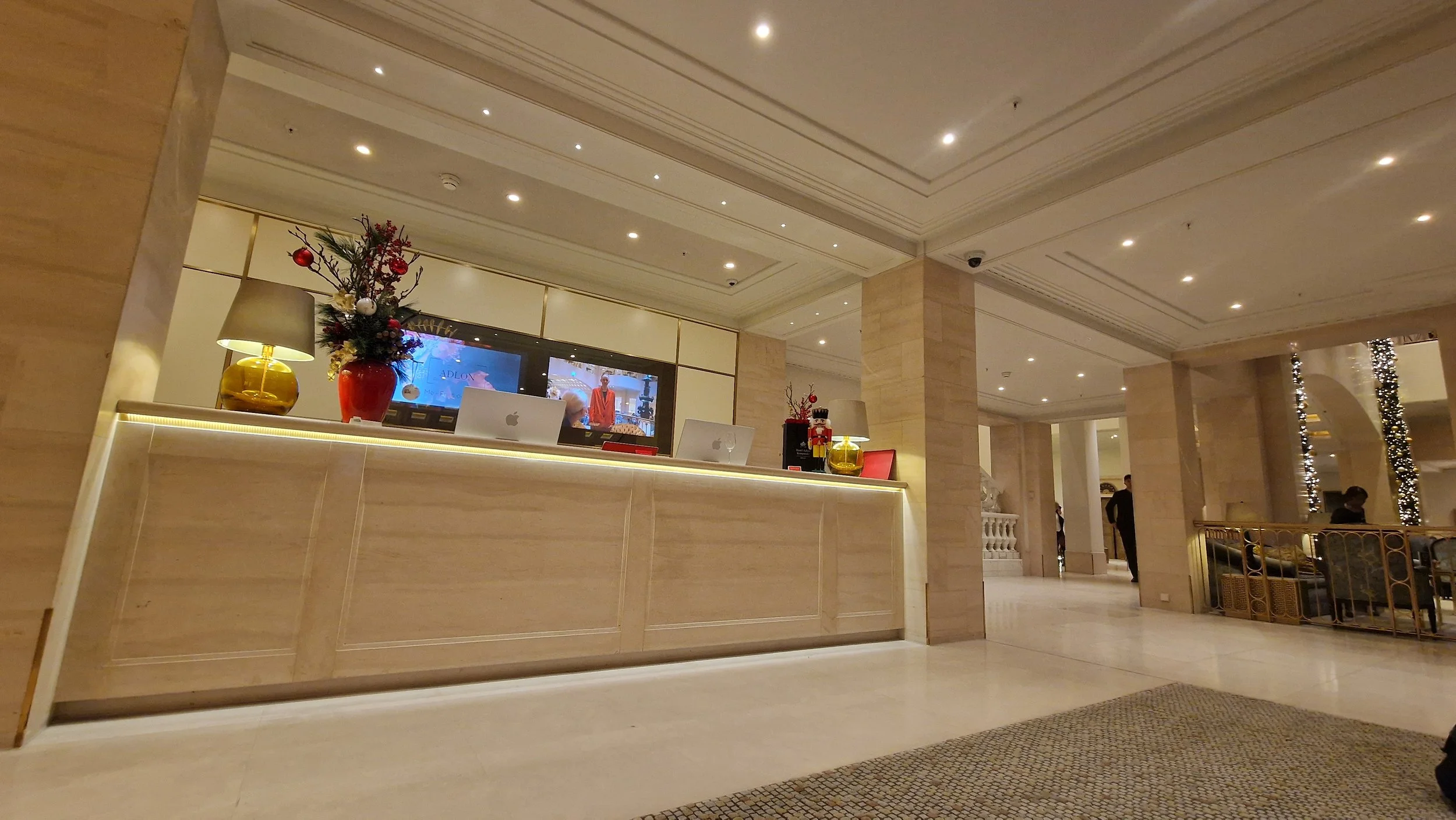
The room key
The crisp air of Milan greeted me like an old friend. Back within the walls of my own home, I picked up the phone to call my mother. I wanted to untangle the threads of my dream, to share the strange peace I felt with my brother while waking up in Berlin.
In Chamorro culture, especially when laced in Suruhana traditions, dream interpretation is as imperative as knowing how to make kelaguen. I told her about the dream. The line grew thick with a sudden, heavy silence.
When she finally spoke, her voice was quiet. She told me his wife was dying.
The world around me seemed to stop spinning, as if the universe itself had caught its breath. The wandering through Berlin's winter streets, the midnight conversations that had unraveled like silk across hotel bar couches, the absurd Kafkaesque hotel with its sour pipes and hollow promises, the airport comedy of invasive hands and raised eyebrows—all of it receded like tide waters pulling back from shore. I sat alone in the quiet of my room, the afternoon light casting golden trapezoids across the parquet floor, staring down at the glowing screen of my phone, its blue light illuminating the contours of my face.
The device felt unnaturally heavy, as if gravity itself recognized the weight of this moment. A fragile bridge to forgiveness—twenty years in the making—rested right in the palm of my hand, leaving me to wonder if my feet would remember how to cross it.