Communist in Cashmere
The castle has a dress code, and I wasn't on the list.
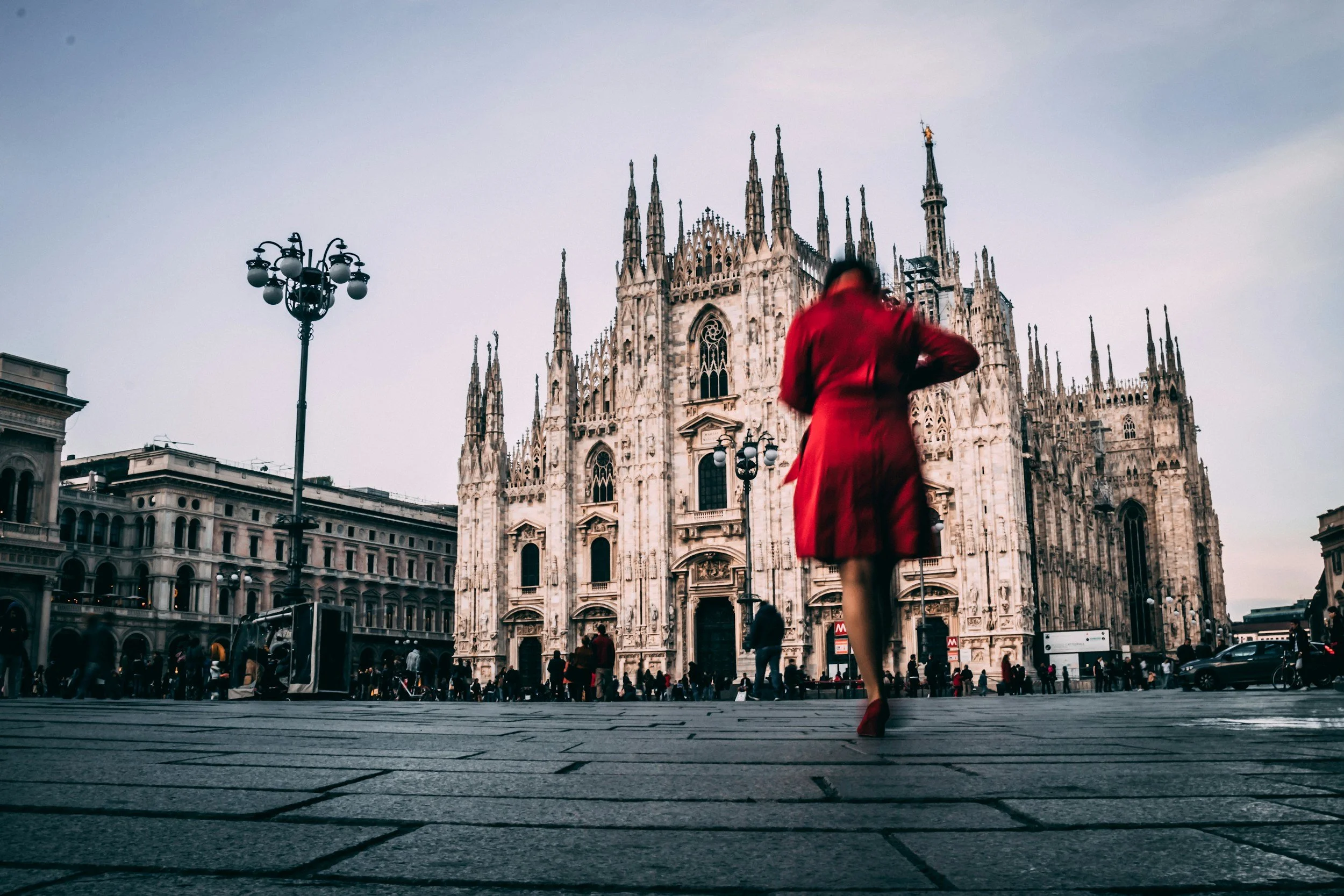
The call came from them. That part matters, so I'll say it first.
Nobody likes to admit they were courted. It feels vain, like bragging about a love letter. But the order of events is the whole story here, and Kafka taught me that order is everything. So, for the record: I was sought out by a couple of gallery curators. I was invited. I said yes, the way you do when someone in your adopted city waves you toward a door you've been circling for a while.
The first meeting took place in one of those spaces Milan does so well. Concrete floors, good light, a coffee machine more expensive than my first car. I arrived on time. I arrive on time unless something outside of my control impedes me. The Army installs that in you like firmware, and twenty years later I still can't uninstall it.
One of my hosts was there, pleasant in a distracted, half-present way. The other was not. He arrived more than an hour late. When I came back to sit near him, he didn't introduce himself. His colleague had to nudge him, the way you'd prompt a child at a christening, and I received a single buongiorno. Then he turned back to his desktop PC, and that was the end of our conversation.
I let it go. Italy runs on its own clock, I told myself. Everyone is busy. Busyness here, or at least the appearance of it, is practically a nobility title.
Then came the second invitation. Come see our other space. Again, they reached out to me. Again, I planned, traveled, and showed up.
My host did not.
When I messaged to say I'd arrived a bit early but no rush, she told me she'd forgotten and wasn't on site. Then, with the ease of someone who has never once been forgotten, she offered me a workspace. It was cramped and dark in a makeshift attic. The people around it carried themselves with the warmth of a tax office on a Friday afternoon. She quoted me a price. And then she said the sentence that has been living rent-free in my head ever since, which is more than I can say for that room:
"If money is a problem for you, or if you cannot afford it…"
I had said nothing about money. I'd said nothing at all, really. I'd only stood there, being myself, in my body, in my skin.
Then came the second sentence. I wouldn't be part of the exhibitions, she explained. But if I rented the space and did something interesting, poi vedremo. Then we'll see.
I've been accused of a great many things in my life. Being uninteresting has never been one of them.
The Land Surveyor
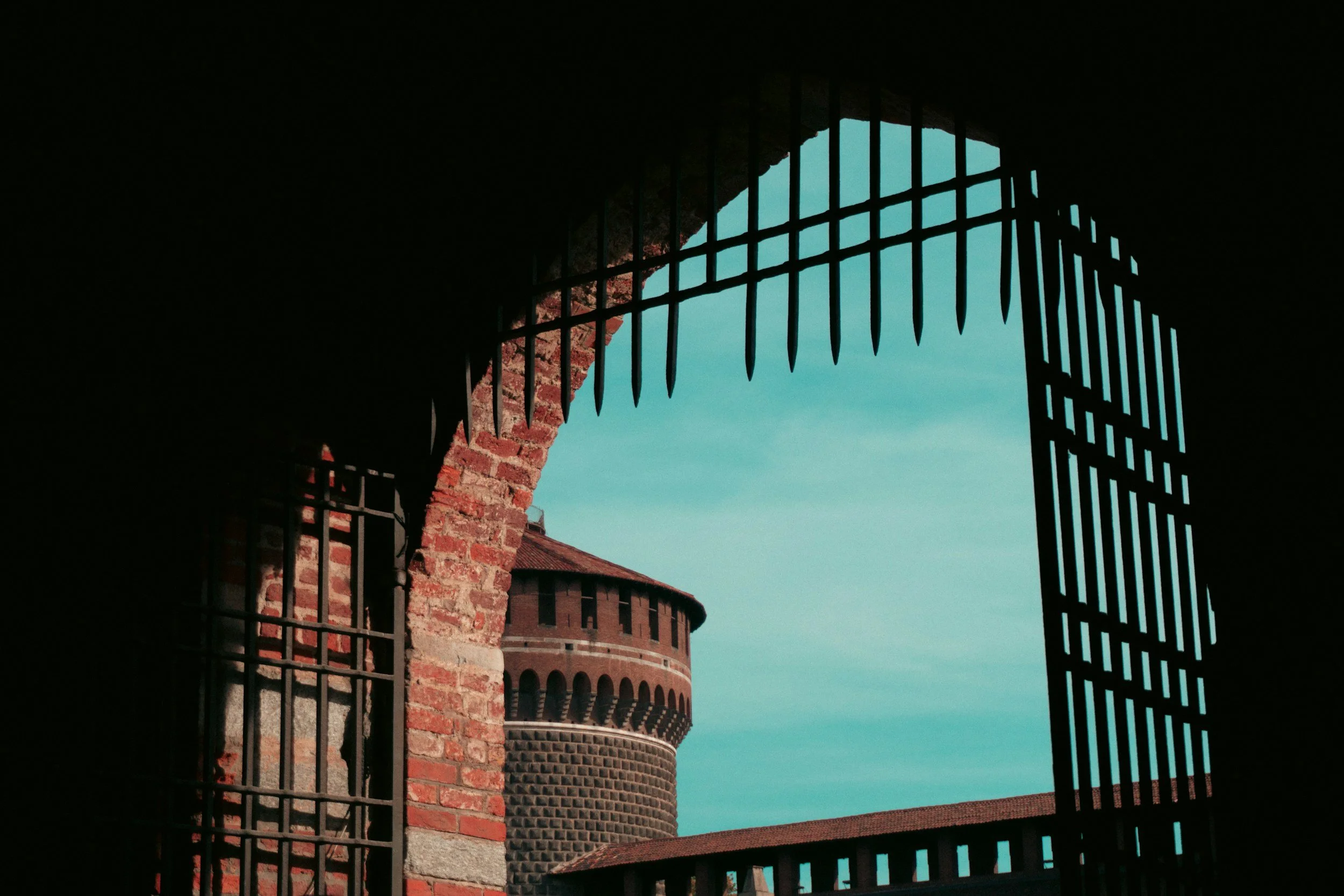
Castello Sforzesco | Milan
If you've read my other Dispatches, you know Kafka and I go way back. I've had coffee with his ghost in Prague, coffee with his Gen Z archetype in Berlin as a matter of fact, chased his shadow along the Adriatic in Trieste, and dragged him with me through interpersonal hell on the Emerald Coast. He's the most reliable companion I have. He never forgets an appointment, mostly because he's dead.
So, of course I thought of K.
In The Castle, K. arrives in a snowbound village claiming he's been summoned as a land surveyor. The Castle on the hill has called for him. Or perhaps it hasn't. The village mayor eventually explains, with exhausting patience, that a surveyor was requested at some point. A clerical tangle followed. Files were lost, letters crossed, departments argued. In the end, nobody really needs a surveyor. Nobody tells K. to leave, either. He's simply left to wait, to petition, to chase officials he'll never meet, and to decode messages that mean nothing.
K. is never refused, and that's the genius of it. A refusal would be a kind of recognition. Instead, he's processed. He's summoned, then deferred, then invited and forgotten. He's handled in every way except the one that counts. He's never actually seen.
I laughed out loud reading it as a student. I don't laugh quite so hard now.
Kafka spent his days as an insurance lawyer at the Workers' Accident Insurance Institute in Prague. He knew bureaucracy from the inside, the way a surgeon knows the body. He understood that the cruelest systems never raise their voices. They don't slam the door. They leave it ajar, smile, and tell you the key-holder is at lunch.
He once wrote that a cage went in search of a bird.
I've been thinking about that line a lot. Some invitations are cages that came looking for you.
Dumplings and Delayed Fury
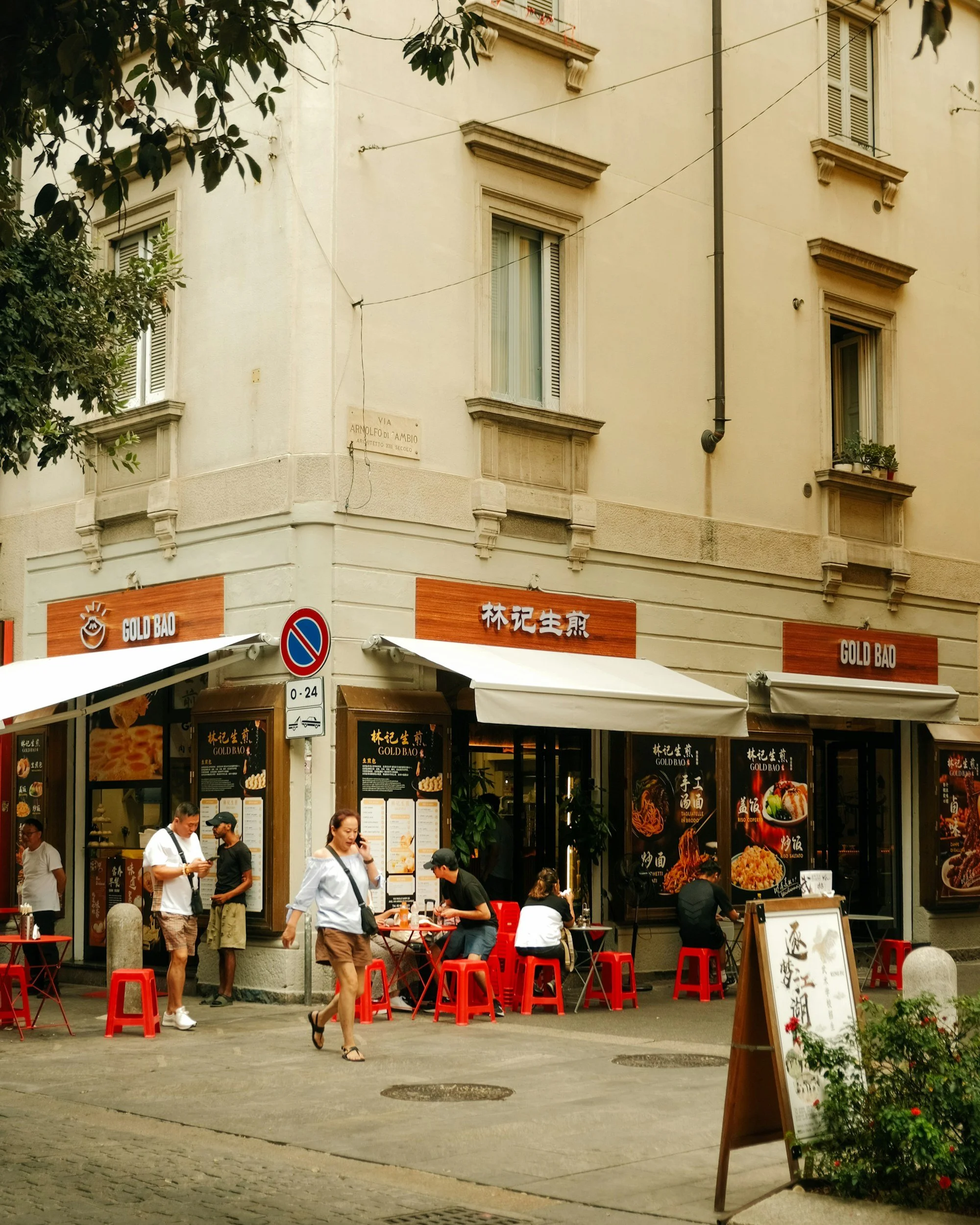
Via Paolo Sarpi | Milan
I left that dark little room disappointed, but I didn't go home. I walked to Milan’s Chinatown on via Paolo Sarpi instead and treated myself to lunch. Steam, chili oil, and a plate of Cantonese rice that asked nothing of me. The aunties at the next table were arguing about something that sounded far more important than my afternoon. It was exactly where I needed to be.
Anger is a slow cooker. It doesn't boil right away. It simmers while you're dragging a dumpling through vinegar, and somewhere between the second and third plate it finally comes to temperature.
Here's what came to temperature.
As a disabled veteran living with complex PTSD and a mild TBI, showing up is not a small thing for me. Every in-person meeting involves planning that most people never have to consider. I think about my body, my energy, the commute, and the recovery afterward. When I arrive somewhere, it's because I've spent something to get there. I mean that literally. It's a budget, and I don't get unlimited withdrawals.
So, when someone forgets I exist, they haven't just wasted an afternoon. They've spent my currency on their convenience.
And as a Chamorro woman in Italy, that sentence about money wasn't new. It was a greatest hit. I've been assumed to be the nanny, the cleaner, and the woman who must surely be lost. In shops, clerks follow me. At dinners, guests ask where I'm really from, then ask how I ended up here, as if I’d drifted in to scrounge for government benefits. The script is always polite, and it's always deniable. Nobody ever says the quiet part. They don't have to, because the room says it for them.
If money is a problem for you. Translation: I've sorted you. I sorted you before you opened your mouth.
That's what plausible deniability does. It makes you do all the interpretive labor. You replay the moment, translate it, and cross-examine yourself. Was that about race? About class? Am I overreading? Is this just Italy, or just the art world? Or is it just me, standing in a room, being visibly not one of them?
That second-guessing is exhausting precisely because it's rational. It's the 5D chess of microaggressions, and you're expected to play it smiling.
I'm done playing.
Where the Cashmere Comes In

The next morning, I switched up my routine and went to a café across town. On the wall hung some cheeky fashion illustrations: long-legged models, oversized sunglasses, a handbag the size of a loveseat. Silly, glamorous, and a little bit mean.
And I thought: oh, I could do this.
The title arrived already dressed. Communist in Cashmere.
I can't take credit for the phrase. It came out of an argument my partner once had with a family friend. She's a self-described leftist married to serious money, with houses scattered across Italy like loose change. Her activism consists almost entirely of arguing with strangers on Facebook. She loves the people. She just prefers them at a scenic distance, ideally from a terrace in Lake Como.
We've all met her. She's not one woman so much as a whole species.
Communist in Cashmere is my new series of satirical illustrated works about that species and its habitat. It's about performative leftism, gatekeeping, and the class and racial hypocrisy that thrives in European art spaces. It lives in the gap between what's declared and what's done. It sits between the manifesto and the guest list, and between the raised fist and the closed wallet.
These figures are fluent in the vocabulary of justice. They quote Gramsci between sips of Franciacorta. They support inclusion as a seasonal theme, a panel topic, and a soft-focus brand texture. Their solidarity runs on a long-distance profit and loss forecast. They'll champion the margins right up until the margins want a chair at the table. As the saying goes, if you don’t have a seat at the table, it’s because you’re most likely to be on the menu.
I've started cataloging them like an anthropologist with a sketchbook and a grudge.
There's the Velvet Gatekeeper, who never says no. She says it depends, perhaps later, and then we'll see. There's the Facebook Partisan, typing an essay-length comment from the second of four vacation homes, villa just out of frame. There's the Administrative Sadist, who forgets meetings selectively and wears calendar chaos like a family crest. And there's the Inclusivity Sommelier, who loves tasting diversity but would never actually swallow it.
Some of the working titles tell you everything:
Se i soldi sono un problema per te (If Money Is a Problem for You)
Poi vedremo (Then We'll See)
Armiamoci e partite (Let's Take Up Arms, and You Go)
Buongiorno, e basta (Good Morning, and That's It)
Inclusiva, su invito (Inclusive, By Invitation Only)
Yes, I'm hanging their sentences on the wall. They spoke them so casually. The least I can do is frame them properly and light them well.
Two Proverbs Walk Into a Gallery
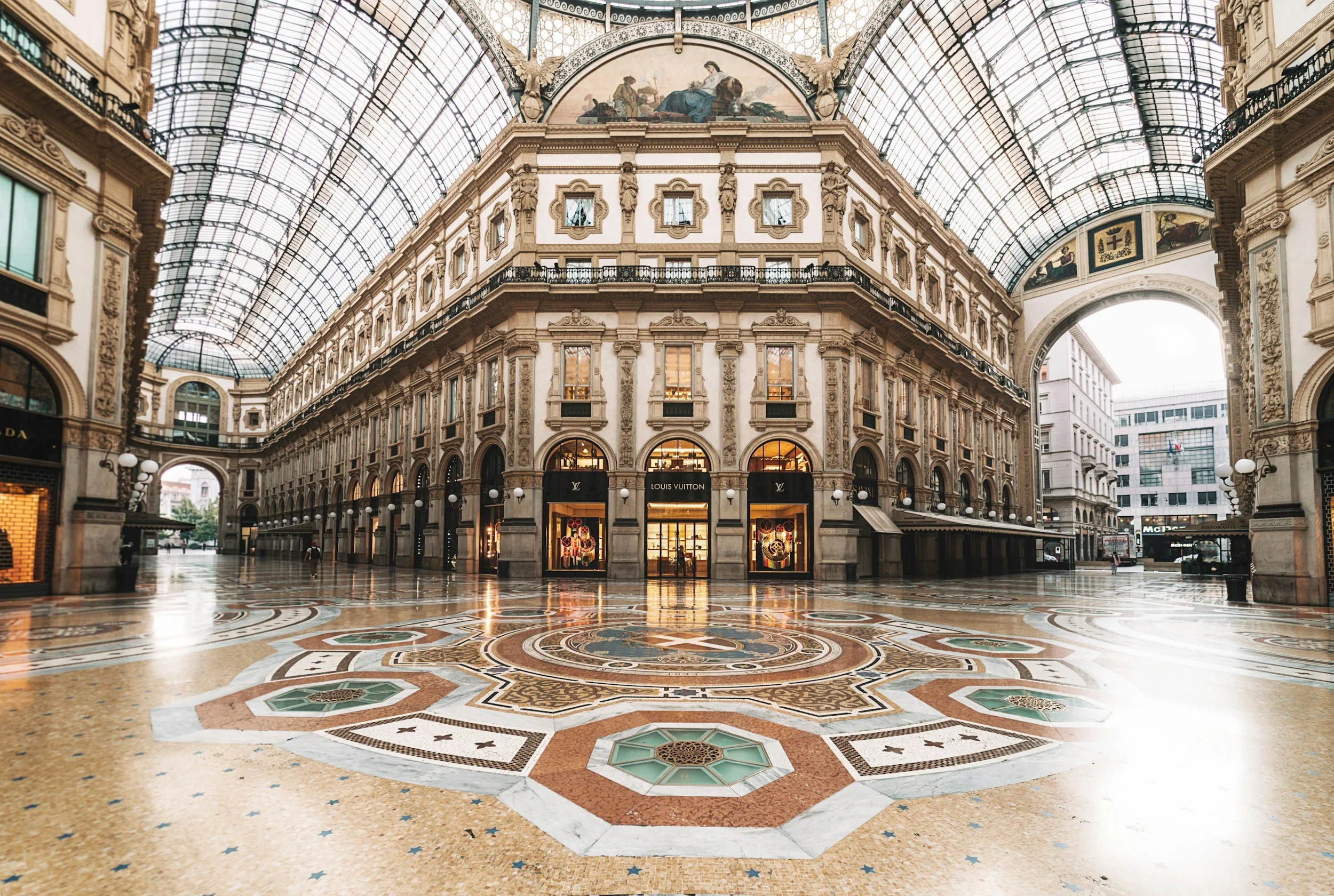
Galleria Vittorio Emanuele II | Milan
Italian is a gorgeous language for poetry and an even better one for insults. Two colloquial sayings sit at the center of this series, and I won't be cleaning them up.
The first:
Tutti vogliono fare i gay con il culo di qualcun altro.
Literally, everyone wants to play gay with someone else's ass. I told you I wasn't cleaning them up.
Its meaning is simple and savage. Everyone wants to look daring, radical, and brave, as long as someone else's body pays the price. It's a proverb about Italian politics, mostly, but it fits the art world like a bespoke glove. The comfortable collect the credit. The vulnerable absorb the risk. The courage gets claimed upstairs, and the consequences roll downhill.
That's the engine of the whole world I'm drawing. Credit flows up. Cost flows down. Somebody else always takes the hit.
The second:
Chi vive sperando, muore cagando.
Whoever lives on hope dies shitting. It's wishful thinking with a bitchier punchline.
I love this one because it punctures every sweet, passive, poi vedremo fantasy. Hope isn't a political strategy. Waiting to be noticed isn't a career. And standing outside the Castle gate, petitioning officials who'll never come down the hill, is no way to spend a life.
K. lived on hope. Kafka never finished his novel, and K. never reached the Castle. I've decided not to wait for the final chapter.
Yes, I'm in the Frame Too

Before anyone sharpens their pitchfork, let me hand you mine.
I joke about being a Champagne Socialist. I mean it with a grin and a glass in hand. I love beautiful things: good tailoring, a perfect negroni, and a hotel lobby with velvet chairs. I don't think pleasure is a crime. I don't think having money cancels your conscience, and I don't think style is the enemy.
So, the series makes room for me, too. There's a self-portrait coming, receipt attached.
But here's the distinction, and it's the whole point: My comfort doesn't erase the other parts of me. I'm a social worker and a community organizer. I served eight years in the Army as a medic and mental health sergeant. In Ramadi, I walked into rooms most people only see on the news and in disturbing documentaries. I'm a Chamorro woman carrying an island's worth of colonial history in my bones. I know what it costs to show up, because I've paid it in sweat, in my body, and in years.
The target of Communist in Cashmere isn't money, beauty, or pleasure. It's people who use those things instead of showing up. It's comfort without conscience and politics without cost. It's taste mistaken for ethics, and curation mistaken for courage.
Some of us live with our contradictions and examine them. Others simply accessorize theirs.
Beautiful Surfaces, Acid Underneath

“C U Next Tuesday in Florence”
Visually, the series will look like the thing it mocks. Expect elegant silhouettes, fashion-plate glamour, and the soft, seductive ease of a gallery opening. Long coats. Little glasses of prosecco going warm. Hands gesturing with exquisite concern.
That's the bait. The captions are the hook.
I want these pieces to charm the very rooms they indict. I want them hanging at an opening while someone in a camel coat admires the linework, sips something sparkling, and laughs. Then, halfway home, it lands. Maybe they recognize the fabric. Maybe they recognize the sentence. Maybe they remember a meeting they forgot.
That's the sting on the second read.
This isn't a complaint. Complaints ask for something. I'm not asking for an apology, a better room, or a slot in the next show. I've already said what I needed to say, privately and professionally, and I've declined. I'm not waiting at the gate.
Communist in Cashmere is an indictment with good tailoring. It's funny because it's accurate. And if it stings, that's only because it fits.
Before the Law
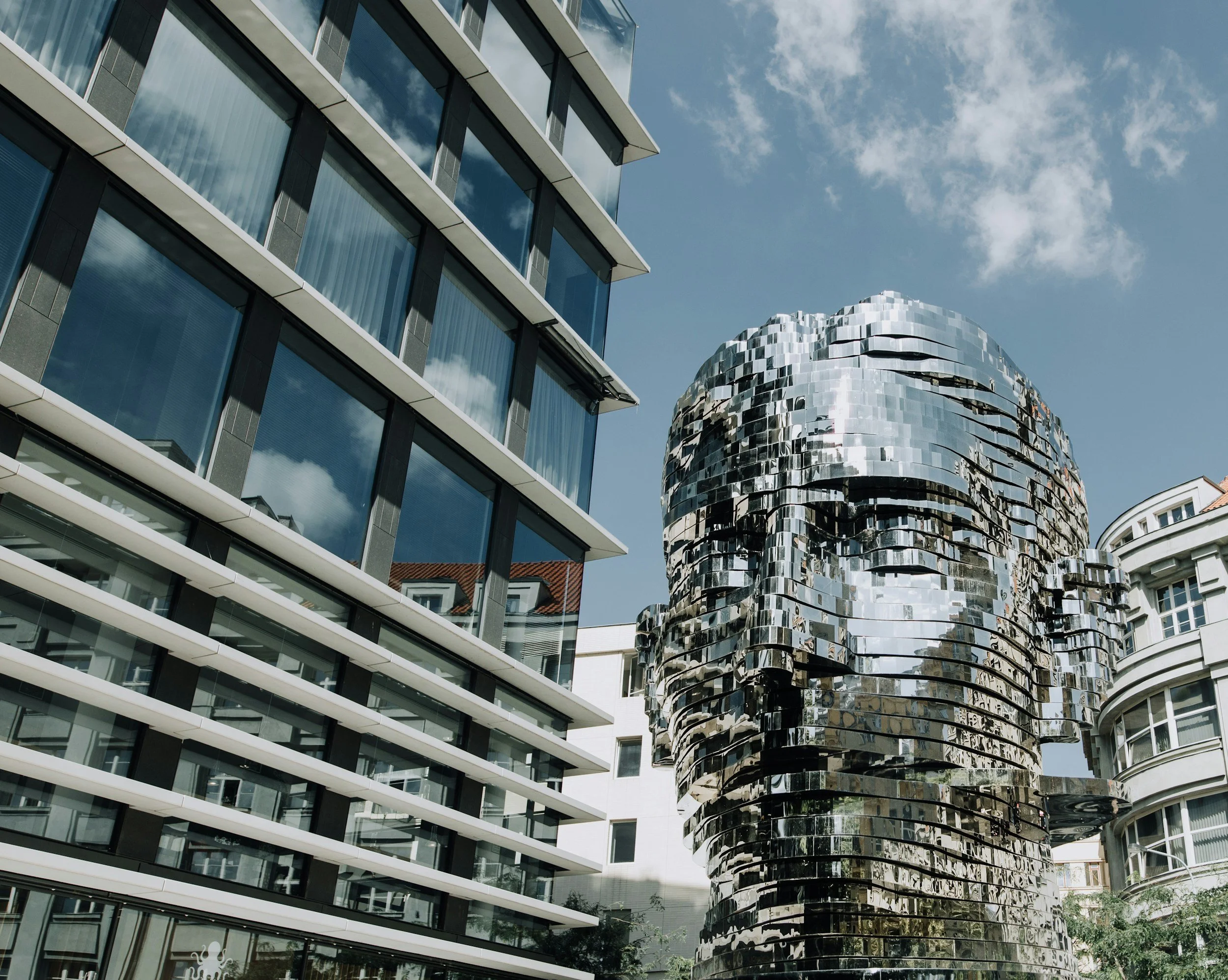
Forever bringing Kafka into this because I can…
Kafka wrote a short parable called Before the Law. A man from the country arrives at a door and asks to enter. The doorkeeper says not now. Maybe later. The man waits for days, then years. He bribes, he pleads, he grows old on a stool beside the entrance. As he's dying, he asks why no one else has ever come to this door. The doorkeeper leans down and tells him: This entrance was meant only for you. Now I'm going to shut it.
For a long time, I read that as a tragedy about the cruelty of the gatekeeper.
These days, I read it differently. The man's real mistake was believing the door was the only way in. He never thought to build his own.
Here's my door. I built it out of dumplings, rage, two filthy proverbs, and a café wall full of silly sketches. It opens onto a world of camel coats and conditional invitations, where everyone loves the aesthetics of the struggle and nobody remembers your name.
Come in. I'll even introduce myself properly.
Then we'll see.